Picture this: it's 11pm and a homeowner's boiler has given up. They grab their phone, search "emergency plumber near me," and click the first result. They land on a page with a wall of text about a company's 30-year history, no phone number in sight, and a contact form that takes three scrolls to find. They hit back immediately and call whoever's next on the list.
This article is part of my guide to marketing for tradespeople and my small business website guide.
That lost call could have been yours — or it could be your competitor's.
A plumbing landing page isn't just a page on your website. It's the moment a panicked or price-conscious homeowner decides whether to trust you or move on. Get it right and it works like a 24/7 salesperson. Get it wrong and you're paying for clicks that go nowhere.
In this guide, I'll walk you through exactly how to build a plumbing landing page that converts visitors into calls, enquiries, and booked jobs.
What Is a Plumbing Landing Page (and Why It's Not Just Any Page)?
A plumbing landing page is a standalone web page built with a single, focused goal: to turn visitors into leads. It's different from your homepage, which tries to do many things at once.
Landing pages are typically used in two situations. First, as the destination for paid advertising — when someone clicks a Google Ads ad for "drain unblocking London," they should land on a page dedicated to exactly that service, not your general homepage. Second, as targeted organic pages — individual service or location pages built to rank for specific search terms and convert the traffic they generate.
The key distinction is focus. Every element on the page — the headline, the images, the form, the buttons — exists to guide the visitor towards one action. That single-mindedness is what makes landing pages so effective.
Step 1 – Define Your Goal Before You Build Anything
Before you think about colours, copy, or layout, answer one question: what do you want visitors to do?
For most plumbers, the answer is one of three things: call you directly, fill in a contact or quote form, or book an appointment online. Pick one primary action and design the entire page around it. Every element should either build the case for that action or remove barriers to it.
If you're running Google Ads, your goal should match your ad. If your ad says "Get a Free Quote," your landing page needs to deliver that promise the moment someone arrives. A mismatch between ad and landing page — known as poor message match — is one of the most common reasons plumbing campaigns waste money.
Step 2 – Write a Headline That Earns the Scroll
Your headline is the first thing a visitor reads. If it doesn't immediately communicate what you offer and why it matters, most people will leave without reading another word.
Weak headlines like "Welcome to ABC Plumbing" or "Quality Plumbing Services" do nothing. They're generic, they don't address the visitor's problem, and they give no reason to stay.
Strong headlines are specific, benefit-led, and tailored to the situation. Here are a few examples of the difference:
| Weak | Strong |
|---|---|
| Quality Plumbing Services | Emergency Plumber in Manchester — We're There in 60 Minutes or Less |
| Welcome to Our Website | Blocked Drain? Fixed Today or You Don't Pay |
| Professional Plumbing | Gas Safe Registered Plumbers Covering [Town] — Free Quotes, No Call-Out Fee |
Once you have a headline, follow it with a short subheading that adds one more layer of reassurance — your coverage area, your response time, or your key differentiator. Keep it to one sentence.
Step 3 – Put Your Contact Information Above the Fold
"Above the fold" means the area visible on screen before a visitor scrolls. On mobile — where the majority of plumbing searches happen — this is a small amount of space, so every element must earn its place.
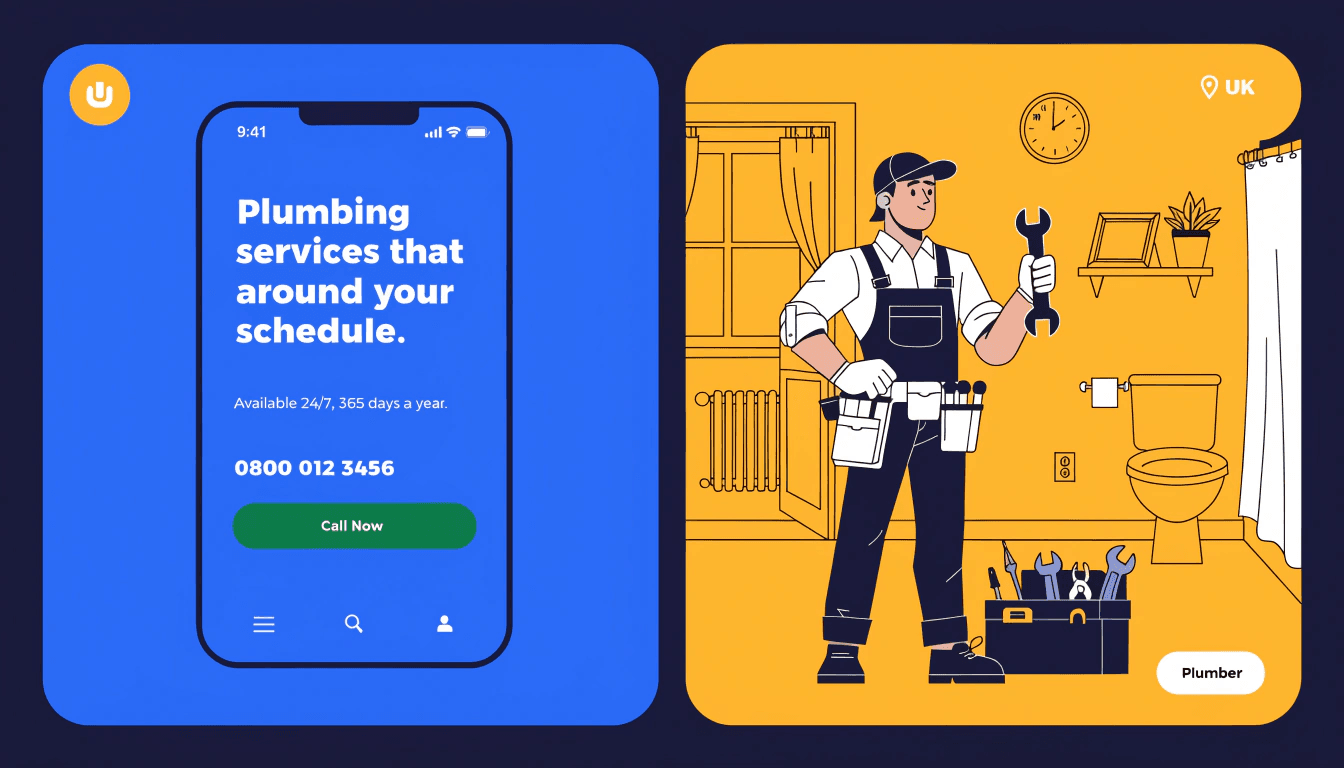
Your phone number should be here. On mobile, it should be a click-to-call link so that tapping it dials you instantly. Don't make someone hunt for how to contact you. If they have to scroll to find a number, many won't bother.
If you use a contact form as your primary conversion mechanism, keep it short. Name, phone number, and a brief description of the problem is plenty. Every additional field reduces the likelihood someone will complete it.
Step 4 – Use Visuals That Build Trust, Not Fill Space
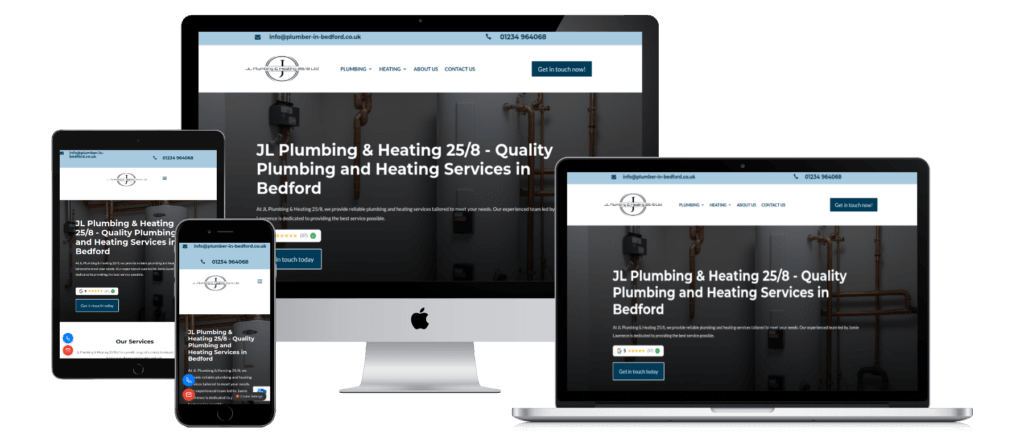
Every image on a landing page should serve a purpose. The goal isn't to make the page look nice — it's to build confidence in you and your work.
The most effective visuals for plumbing landing pages are:
Photos of your actual work. Before-and-after shots of real jobs are far more persuasive than any stock image. They prove you can do what you say.
Photos of your team. People hire people. A clear, professional photo of you or your engineers — ideally in uniform, on the job — makes your business feel real and trustworthy.
Accreditation logos. Gas Safe registration, Which? Trusted Trader, Checkatrade, or TrustMark badges belong prominently on your landing page. They signal legitimacy at a glance.
Star ratings and review counts. If you have strong Google reviews, display your rating visually. Seeing "4.9★ from 214 reviews" is more persuasive than any claim you could write yourself.
Avoid generic stock photos of smiling people pointing at pipes. Homeowners can spot inauthenticity immediately, and it undermines the trust you're trying to build.
Step 5 – Let Your Customers Do the Selling
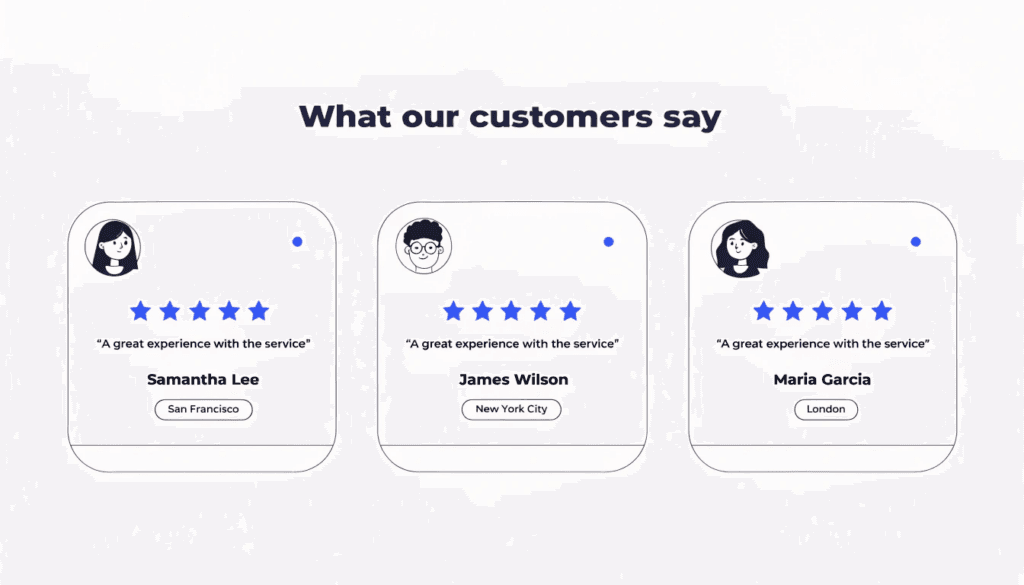
Testimonials are your most powerful conversion tool, and most plumbing websites don't use them well enough.
A generic "Great service, would recommend" adds almost nothing. A specific testimonial — one that describes the problem, the response time, the engineer's manner, and the outcome — is genuinely persuasive. It mirrors the exact anxieties of your potential customers and resolves them.
When collecting testimonials, ask satisfied customers a few prompting questions: What was the problem? How quickly did we respond? How did the job go? Would you use us again? These prompts naturally produce the detail that makes testimonials work.
Where possible, include the customer's name, location, and ideally a photo. A real person attached to a real quote is far more credible than an anonymous review.
If you have Google or Checkatrade reviews, consider embedding them directly rather than copying quotes across. Third-party reviews carry more weight because visitors know they can't be edited.
Step 6 – Design Your CTAs to Convert, Not Just Decorate
A call to action (CTA) is any button or prompt that asks the visitor to take the next step. Most landing pages have weak CTAs — grey buttons with vague text like "Submit" or "Click Here."
Strong CTAs do two things: they use action-oriented, benefit-led language, and they stand out visually from the rest of the page.
Compare these:
- "Submit" vs. "Get My Free Quote"
- "Contact Us" vs. "Call Now — We Answer 24/7"
- "Book Here" vs. "Book a Same-Day Appointment"
Use a colour that contrasts clearly with your page background so the button is impossible to miss. If your brand palette is blue and white, an amber or green button will immediately draw the eye.
Repeat your CTA throughout the page — not just at the top. Include it after your service list, after your testimonials, and at the bottom of the page. Every section should give the visitor a natural opportunity to act.
Step 7 – Optimise for Mobile (Most Plumbing Searches Happen on Phones)
The vast majority of emergency plumbing searches happen on mobile devices. Someone standing in front of a leaking pipe doesn't reach for a laptop.
Mobile optimisation isn't just about making your page look good on a smaller screen — it's about making the experience frictionless for someone in a hurry. That means:
- Large, tappable buttons (at least 44px high so they're easy to press on a touchscreen)
- A click-to-call phone number that dials immediately
- Short paragraphs and concise copy — mobile users skim, they don't read
- Forms with as few fields as possible
- Fast load times (more on this below)
Test your landing page on your own phone before you launch it. If you find yourself pinching to zoom, scrolling past irrelevant content, or struggling to find the phone number, your visitors will too.
Step 8 – Keep Navigation Simple or Remove It Entirely
This is one of the most counterintuitive aspects of landing page design, and it's where a lot of plumbing websites go wrong.
Your main website navigation — the menu with links to your homepage, about page, blog, and so on — gives visitors a way to leave your landing page without converting. Every exit option is a potential lost lead.
For dedicated pay-per-click landing pages, remove the navigation entirely. The visitor arrived there via an ad; the only thing they should be able to do is convert or leave. For organic service pages that form part of your main site, keep navigation minimal — but make sure your primary CTA is always more prominent than any nav link.
This isn't about trapping people on your page. It's about removing distractions and keeping the focus on the one action that benefits both of you: getting in touch.
Step 9 – Speed Matters More Than You Think
A slow landing page is a leaking landing page — you're losing visitors before they've even had a chance to read a word.
Research consistently shows that page load time has a significant impact on bounce rates. If your page takes more than a few seconds to load on a mobile connection, a substantial proportion of visitors will give up. For emergency plumbing searches, where the visitor is already stressed and impatient, this effect is amplified.
The most common causes of slow landing pages are:
Oversized images. Compress every image before uploading. Tools like Squoosh (free, browser-based) can dramatically reduce file sizes without visible quality loss.
Render-blocking scripts. Unnecessary JavaScript and CSS that loads before your page content can add significant delays. A developer or a plugin like WP Rocket can help if you're on WordPress.
No caching. Browser caching stores elements of your page locally for returning visitors, making repeat visits much faster.
No CDN. A Content Delivery Network (CDN) serves your page from a server geographically close to the visitor, reducing load times across the UK.
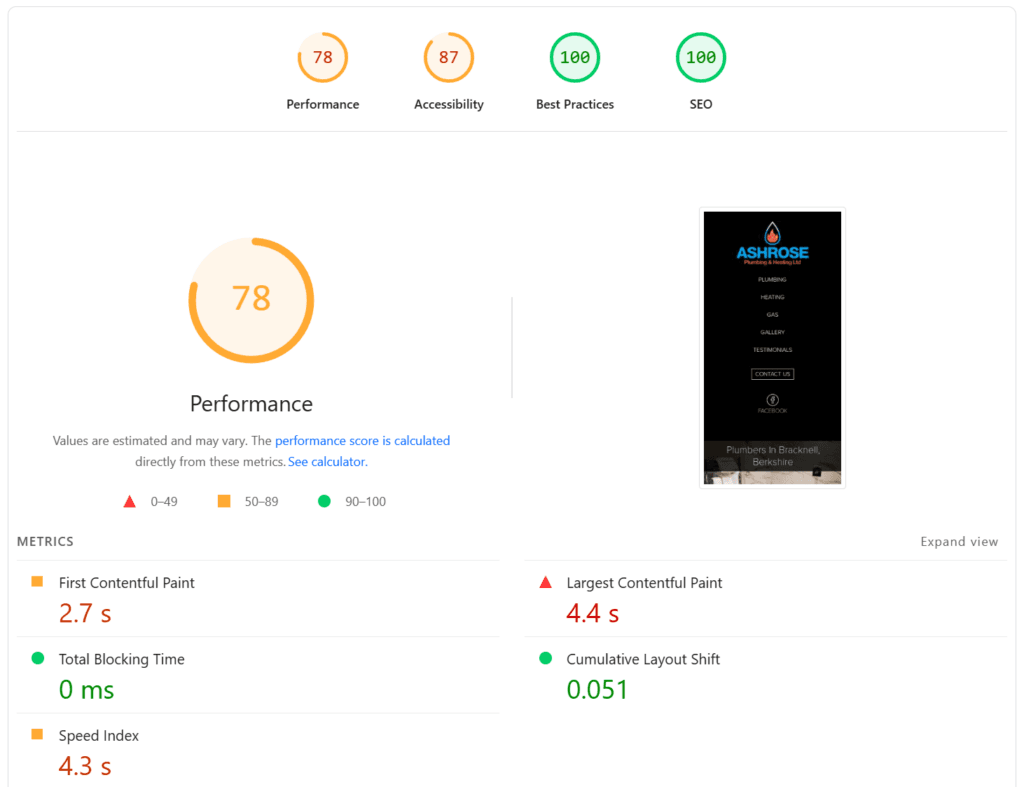
Run your landing page through Google PageSpeed Insights and address any issues it flags. Aim for a score above 80 on mobile as a starting baseline.
Step 10 – Track Performance and Keep Improving
A landing page is never finished. The most effective ones are constantly being tested, refined, and improved based on real data.
Set up Google Analytics 4 on your site and create conversion events for the actions that matter: form submissions, phone number clicks, and appointment bookings. Without this data, you're guessing.
Key metrics to monitor:
Conversion rate. The percentage of visitors who complete your desired action. For plumbing landing pages, a well-optimised page might achieve 5–15% depending on the traffic source and service type.
Bounce rate. The percentage of visitors who leave without interacting. A high bounce rate suggests something isn't connecting — whether that's a mismatch between your ad and the page, slow load speed, or a headline that doesn't resonate.
Form abandonment. If visitors start filling in your form but don't complete it, the form may be too long or asking for information they're not ready to share.
Once you have data, test changes systematically. Run A/B tests — try two different headlines, two different CTA colours, or two different form lengths — and measure which version performs better. Small improvements compound over time.
Common Plumbing Landing Page Mistakes to Avoid
Even well-intentioned landing pages often fall into the same traps. Here are the most common ones I see:
Sending ad traffic to your homepage. If someone clicks an ad for "boiler repair," they expect a page about boiler repair, not a general overview of your business.
Too many goals on one page. Asking visitors to call you, fill in a form, read your blog, follow you on social media, and visit your about page all at once dilutes the focus. One page, one goal.
Hiding the phone number. Your number should be in the header, repeated mid-page, and in the footer at minimum. On mobile, every instance should be a click-to-call link.
Generic stock photography. Photos that look like they came from a photo library undermine trust. Use real images of your team and your work wherever possible.
No local signals. Visitors want to know you cover their area before they get in touch. Mention your service area prominently — in the headline, the subheading, or a dedicated coverage section.
Ignoring page speed. A beautiful landing page that takes six seconds to load is a landing page that doesn't convert.
Frequently Asked Questions
What's the difference between a plumbing landing page and a website? A website serves multiple purposes — it tells your story, lists your services, houses your blog, and more. A landing page has a single focus: converting a specific visitor with a specific intent into a lead. Landing pages are more focused, less cluttered, and designed to act as digital salespeople for particular services or campaigns.
Should I have a different landing page for each service? Yes, wherever possible. A dedicated page for boiler repairs, a separate one for drain unblocking, another for bathroom installations — each one can be optimised for the specific keyword, the specific audience, and the specific action you want them to take. This is especially important for Google Ads, where message match between your ad and landing page directly affects both conversion rates and your cost per click.
How long should a plumbing landing page be? Long enough to answer every objection a visitor might have, and no longer. For emergency services, a shorter, faster-loading page often outperforms a long one. For higher-value services like bathroom fitting or underfloor heating installation, a longer page with more detail, more social proof, and more reassurance typically converts better.
Do I need a contact form or is a phone number enough? Ideally, both. Some visitors prefer to call immediately; others want to enquire in writing, especially outside office hours. Offering a phone number and a short form covers both behaviours without adding clutter.
Conclusion
A high-converting plumbing landing page isn't complicated — but it does require intentional thinking about what your visitor needs at the exact moment they arrive.
They need clarity: what do you do and where do you cover? They need trust: are you qualified, reliable, and well-reviewed? And they need a clear, frictionless path to get in touch. If your page delivers all three — quickly, on mobile, with a load time that doesn't test their patience — you'll convert far more of the traffic you're already getting.
Whether you're building a page to support a Google Ads campaign or creating a dedicated service page to rank organically, the principles are the same. Get the fundamentals right, track your results, and keep refining.
If you'd like help creating landing pages that actually convert — or want to know how your existing pages are performing — run a free SEO audit and I'll show you exactly where the gaps are.