Most small business websites bleed leads every single day — not because the traffic is wrong, but because it lands on the wrong page. If you're sending Google Ads clicks or SEO traffic to your homepage, you're almost certainly leaving money on the table.
This article is part of my small business guide to Google Ads and my small business website guide.
Landing pages fix that. A well-built landing page can be the difference between a visitor clicking away in three seconds and picking up the phone. In this guide, I'll walk you through exactly what a landing page is, what it needs to contain, and how to build one that actually converts — whether you're a plumber, solicitor, salon owner, or any other service business competing for local leads.
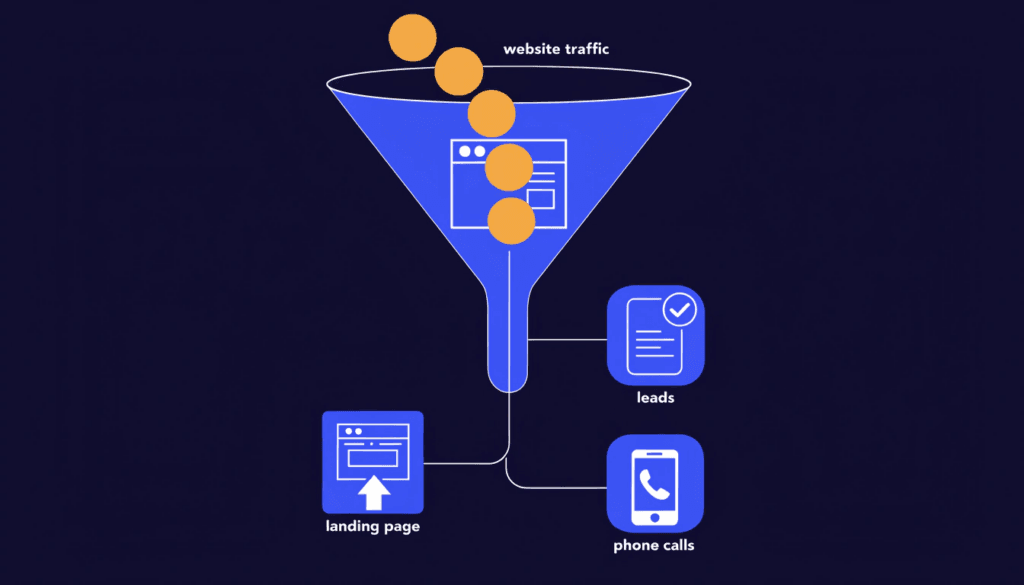
What Is a Landing Page?
Technically, any page a visitor lands on is a landing page. But in digital marketing, the term means something more specific: a standalone web page built around a single goal.
Unlike your homepage — which introduces your business, showcases your services, and points visitors in multiple directions — a true landing page has one job. It guides a visitor towards one specific action: filling in a contact form, calling your number, booking a consultation, or downloading a resource.
That single-minded focus is exactly why landing pages outperform homepages for paid and organic campaigns. When someone clicks an ad for "emergency plumber in South London," they don't want to browse your full range of services. They want confirmation that you can solve their problem — and a clear way to contact you. A focused landing page delivers that. A homepage rarely does.
What Are Landing Pages Used For?
Landing pages are most powerful when paired with a specific traffic source or offer. Common uses include:
PPC and Google Ads campaigns. Every ad should point to a page that mirrors the ad's promise exactly — same headline, same offer, same audience. This alignment (known as message match) lifts your Quality Score and your conversion rate.
Local SEO. Service-area and location pages act as landing pages for organic search. A plumber targeting "boiler repair in Croydon" needs a dedicated page for that term, not a generic services overview.
Lead magnets and free resources. A free guide, checklist, or consultation offer converts well on a focused page with a simple email capture form.
Seasonal or promotional offers. Running a January discount or a summer maintenance package? Give it its own page rather than burying it in a sidebar.
Email marketing. When you email your list about a specific offer, link to a page built around that offer — not your homepage.
The principle is the same in every case: match the page to the intent of the person arriving on it.
The Anatomy of a High-Converting Landing Page
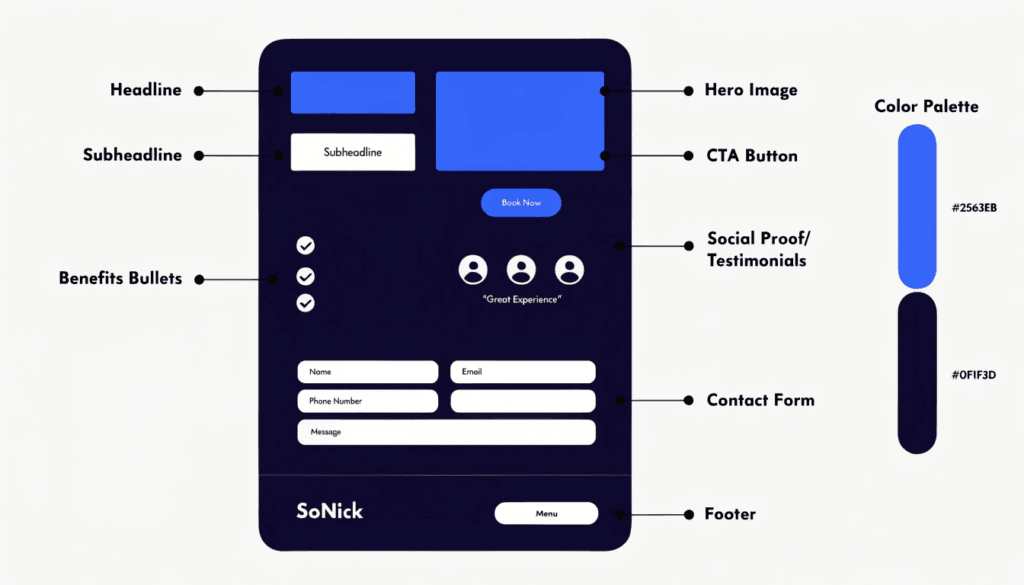
Before we get into the step-by-step build, it helps to understand the core elements every high-converting landing page shares.
A clear, specific headline. This is the first thing visitors read. It should confirm they're in the right place and tell them what they'll get. "Get a Free Boiler Quote in 60 Seconds" works. "Welcome to Our Website" does not.
A strong hero section above the fold. Everything visible before the visitor scrolls needs to do heavy lifting — headline, subheadline, a relevant image, and ideally your primary CTA or form. Research consistently shows that visitors decide within seconds whether to stay or leave; your above-the-fold content is what keeps them.
Concise, benefit-led copy. Nobody reads walls of text on a landing page. Write short paragraphs, use bullet points to highlight benefits, and focus on outcomes — what the visitor gets, not what you do.
A focused lead capture form. Keep it short. Name, email, and phone number is usually enough for a service business. Every additional field you add reduces the number of people who complete it.
Social proof. Reviews, testimonials, star ratings, case study results — these reduce the risk a visitor feels about getting in touch. Place them near your CTA for maximum impact.
A single, prominent call to action. One page, one goal, one CTA. Repeating it at intervals throughout the page is fine; asking visitors to do five different things is not.
How to Create a Landing Page That Converts: Step by Step
1. Define Your Single Goal Before You Build Anything
The biggest mistake I see is people opening a page builder before they've answered a simple question: what is the one action I want visitors to take?
Write it down. "I want visitors to submit a callback form." "I want visitors to book a free consultation." Everything you put on the page — every headline, image, and button — should push towards that single outcome.
2. Match the Page to the Traffic Source
Your landing page headline needs to echo the ad, email, or search result that brought the visitor there. If your Google Ad says "Free SEO Audit for London Businesses," your landing page headline should say the same — not something vague like "Digital Marketing Solutions."
This consistency, called message match, builds immediate trust. When the page confirms what the visitor was promised, they relax. When it doesn't, they leave.
3. Write Your Copy Around Benefits, Not Features
Features describe what you do. Benefits describe what the visitor gets. There's a significant difference.
Feature: "We offer 24-hour emergency callouts." Benefit: "You'll never be left without a plumber — day or night."
Lead with benefits in your headline and opening copy. Save the technical detail for further down the page, where visitors who are seriously considering getting in touch will find it.
4. Remove Navigation and Unnecessary Links
Every link on your landing page is an exit route. Your main site navigation — with its dropdown menus and footer links — gives visitors dozens of reasons to wander off without converting.
Strip it out. A landing page should have no top navigation menu and minimal footer. The only links on the page should be your CTA buttons and any legally required links (privacy policy, for example). Research from Unbounce consistently shows that removing navigation from landing pages lifts conversion rates.
5. Use Social Proof Strategically
A review sitting at the bottom of a page that nobody scrolls to does very little. Place testimonials and trust signals where they can actually influence the decision to convert — next to your CTA, below your form, or directly after your headline.
For service businesses, specificity matters. "Nick helped us rank on page one for our main keyword within four months — leads went up 300%" is far more convincing than "Great service, highly recommend!"
If you have Google reviews, star ratings, or case study results, use them. Real numbers and real names carry weight in ways that generic praise never will.
6. Optimise Your Call to Action
Your CTA button copy should tell visitors exactly what they're getting, not just what they're doing. "Submit" tells them nothing. "Get My Free Quote" tells them something valuable is coming. "Book My Free SEO Audit" is even better — it's specific and low-commitment.
Use a contrasting colour that stands out from the rest of the page. Place it above the fold, after your benefits section, and again at the bottom of the page. Don't make visitors hunt for it.
7. Make It Fast and Mobile-First
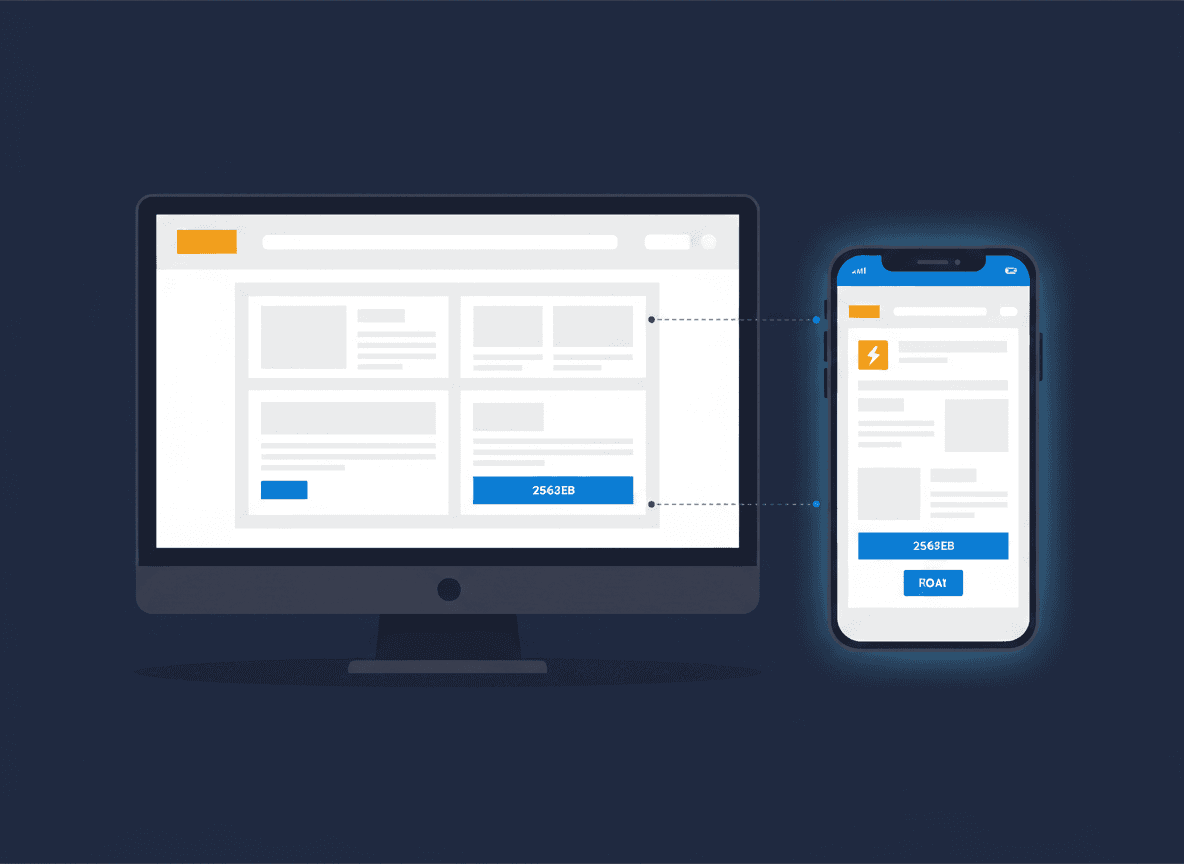
A one-second delay in page load time can reduce conversions by around 7%, and on mobile the tolerance is even lower. Most local search traffic arrives on a phone, so if your landing page looks great on desktop but struggles on a small screen, you're losing a significant proportion of potential leads.
Test your page on multiple devices before you launch. Check load speed using Google PageSpeed Insights. Compress images, remove unnecessary scripts, and keep the design clean. Speed and simplicity aren't just good for user experience — they're good for your ad Quality Score too.
8. Test, Measure, and Improve
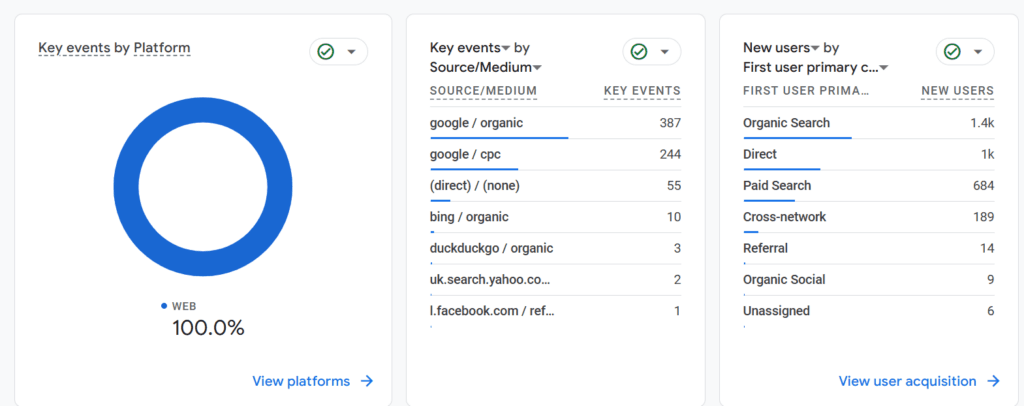
A landing page is never truly finished. Once it's live, set up conversion tracking in Google Analytics or your ads platform so you know exactly how many visitors are completing your goal. Then test variations — a different headline, a different CTA colour, a shorter form — and compare results.
Even small improvements compound over time. A page converting at 4% that you test up to 6% is 50% more leads from the same ad spend. That's the real power of treating your landing page as an ongoing asset rather than a one-time build.
Landing Page Mistakes That Kill Conversions
Most underperforming landing pages share the same handful of problems. Here are the ones I see most often with small business clients:
Sending traffic to the homepage. The homepage is an introduction to your business. It's not designed to convert a visitor who arrived with a specific intent. Always create a dedicated page for each campaign or keyword.
Too many offers on one page. If you're promoting a free consultation, a seasonal discount, and a downloadable guide all on the same page, you're splitting the visitor's attention and weakening the conversion of each. One page, one offer.
Forms that ask for too much too soon. Asking for a visitor's name, email, phone, address, company name, and project budget before they've even decided they trust you will cost you leads. Start with the minimum you need to follow up — you can gather more later.
No trust signals. For a visitor who's never heard of you, getting in touch is a small act of trust. Reviews, accreditations, logos of organisations you belong to, and real results all reduce the friction of that first contact.
Slow load times. A page that takes five seconds to load on a mobile connection loses a huge proportion of visitors before they even see the headline.
Where Should You Host Your Landing Page?
A quick but important point: wherever possible, host your landing pages on your own website rather than a third-party landing page platform.
There are two reasons for this. First, any SEO value from links and traffic to that page builds your own domain authority rather than someone else's. Second, it keeps your brand consistent — visitors stay on your domain throughout the experience.
If you're building on WordPress, you can create dedicated landing page templates that strip out navigation and focus entirely on conversion. It's one of the things I include as standard when building web design packages for service businesses — because a well-designed site that can't convert is just an expensive brochure.
Build Pages That Work as Hard as You Do
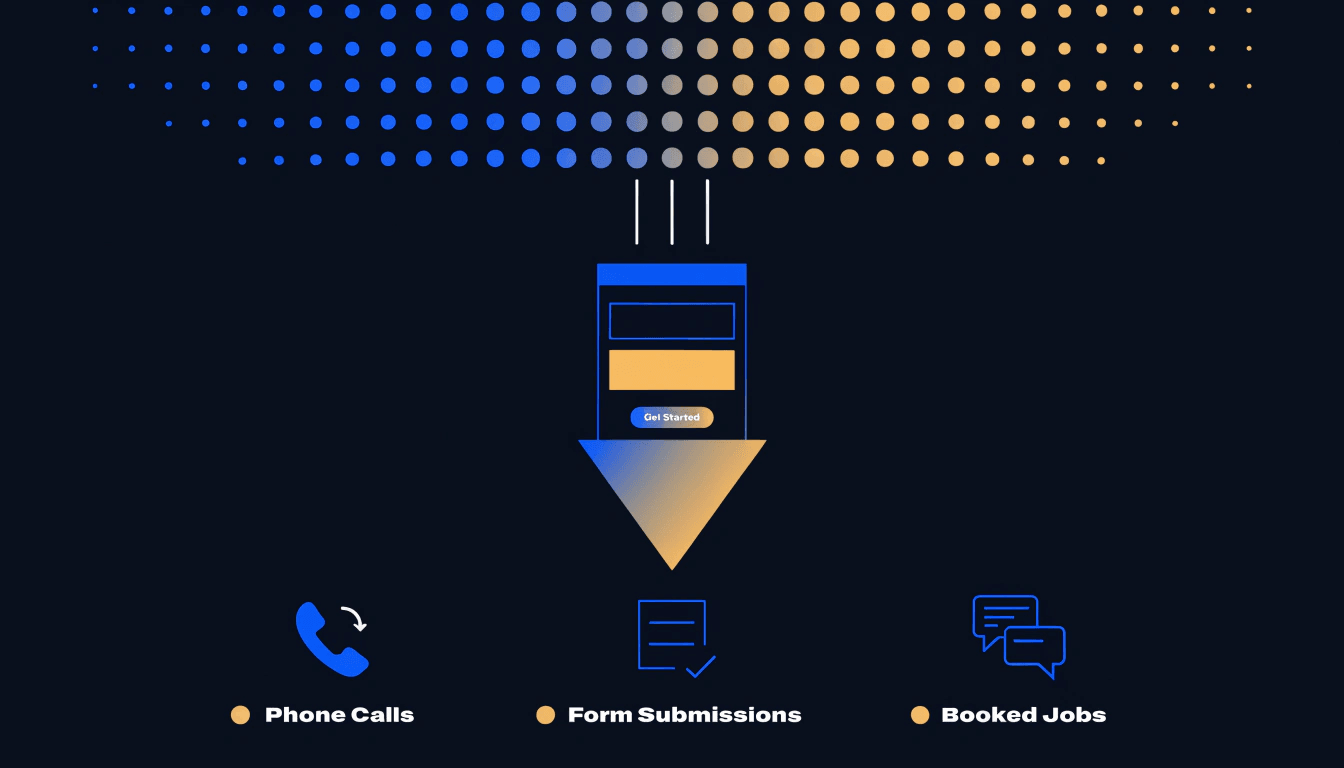
A landing page isn't a nice-to-have — it's one of the most important assets in your digital marketing toolkit. Done well, it's the page that turns your ad spend into actual leads, your SEO rankings into booked jobs, and your email campaigns into revenue.
The principles here apply whether you're a plumber running Google Ads, a salon promoting a seasonal offer, or a solicitor targeting local commercial clients. Get the fundamentals right — clear headline, focused offer, no distractions, strong social proof, fast load time — and you'll have a page that consistently earns its place in your marketing.
If you'd like to see how your current site is performing, run a free SEO audit — it takes under a minute and gives you an immediate picture of where you stand.
Or if you're ready to build landing pages designed to convert from day one, get in touch and let's talk through what's possible for your business.