Most plumbing websites follow the same tired template: a stock photo of a wrench, a phone number buried in the footer, and a wall of text nobody reads. If you're a plumber looking to build a new site — or finally fix the one you've got — it helps to start by looking at what actually works.
This article is part of my guide to marketing for tradespeople and my small business website guide.
I've pulled together ten of the best plumbing website designs in the UK, all of which do something genuinely worth stealing. I've also included two examples of what not to do, because sometimes the contrast is the clearest teacher.
If you spot a design in this list that appeals to you, get in touch and we can build something similar for your business.
Best UK Plumbing Websites
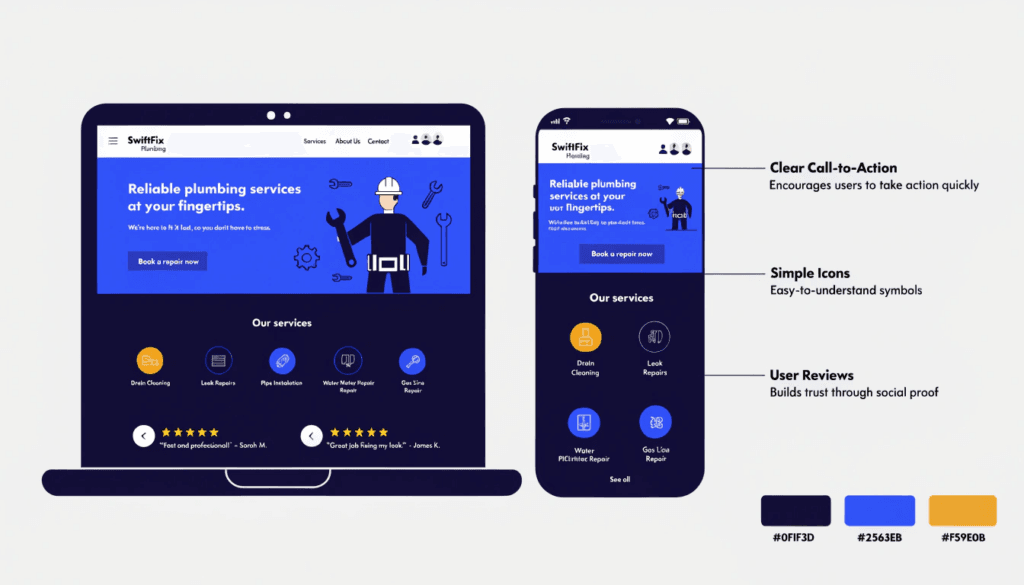
The examples below aren't just attractive — they're built to convert. Each one makes it easy for a visitor to understand what the business does, where it operates, and how to get in touch. Those three things, done well, are what separate a website that generates leads from one that just exists.
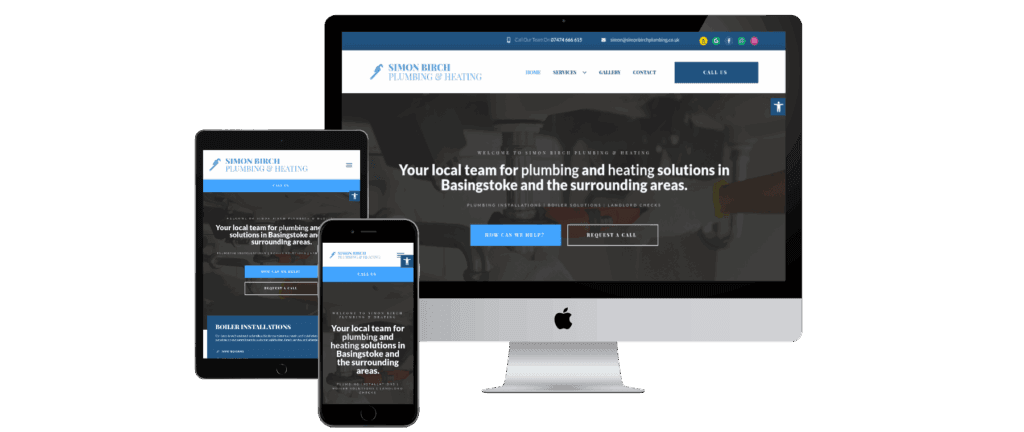
1. Simon Birch Plumbing and Heating
What works well:
- Attractive, modern design. Clean layout with strong branding that immediately signals a professional business.
- CTAs throughout the site. Multiple well-placed prompts to get in touch, so visitors never have to go looking for a next step.
- Sticky header. The navigation stays visible as you scroll, keeping the phone number and contact options within reach at all times.
2. Ace Plumb
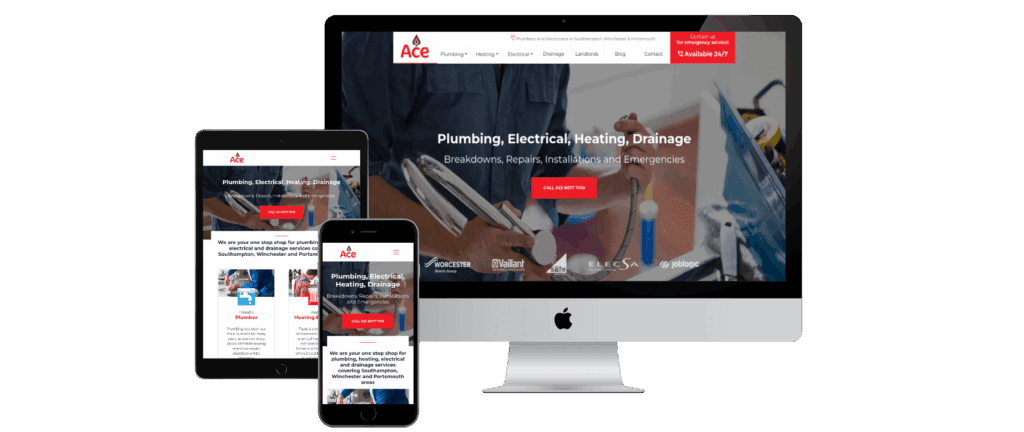
What works well:
- Full-screen design. Makes strong use of visual space and immediately feels premium.
- Local SEO investment. The site has dedicated pages for specific service locations, which is exactly the right approach for attracting local search traffic.
- Blog section. Regularly updated content helps the site rank for more keywords and gives visitors genuinely useful information.
3. Premier Heating
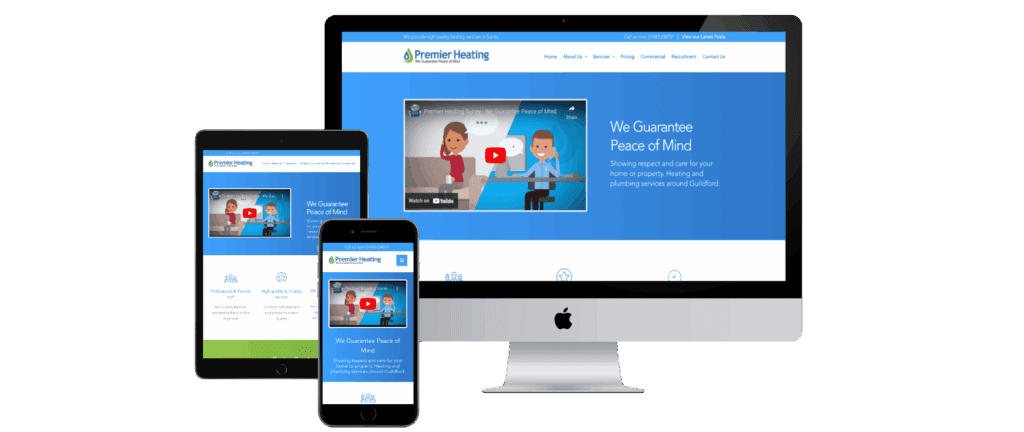
What works well:
- Clean, uncluttered design. Nothing fights for attention — the visitor's eye goes exactly where it should.
- Homepage video. A short background video or embedded clip adds movement and personality without overwhelming the page.
- Separate service pages. Each service has its own dedicated page, which is better both for user experience and for search rankings.
4. R.J. Plumbing and Heating Ltd
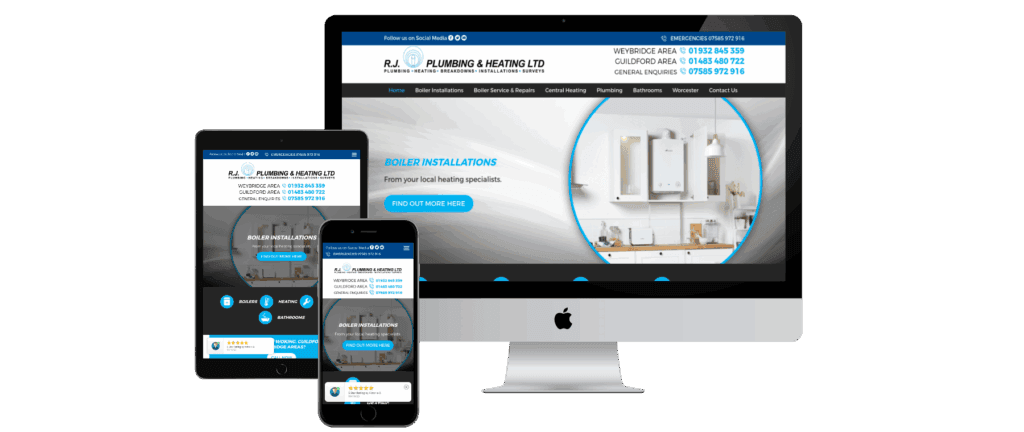
What works well:
- Customer reviews front and centre. Social proof is one of the most powerful trust signals a plumber can have. Displaying reviews prominently removes hesitation before someone picks up the phone.
- Clickable contact details on every page. Phone numbers and email addresses link directly, so mobile visitors can call or message without copying anything out.
5. Amanzi
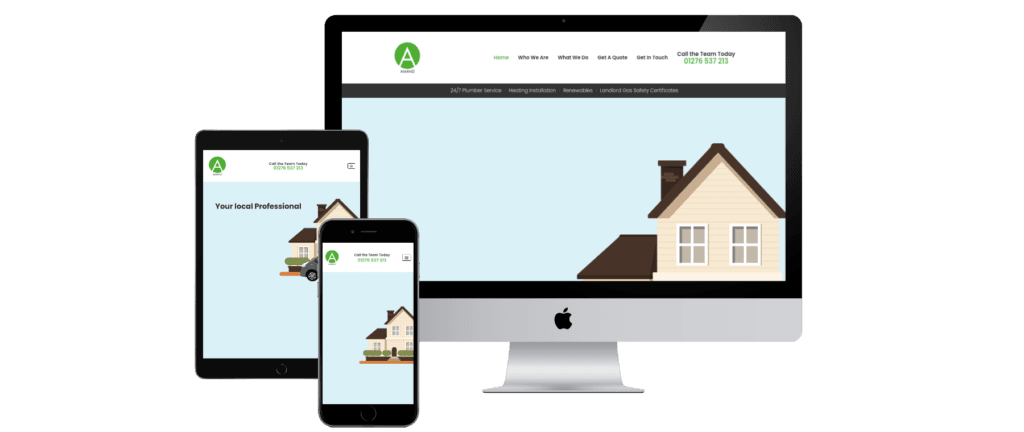
What works well:
- Homepage animation. Subtle movement catches the eye and makes the first impression feel polished.
- Boiler quote generator. An interactive tool like this is an outstanding lead capture mechanism — it gives the visitor immediate value and collects their details in the process.
- Plenty of written content. More content gives Google more to index, and it gives visitors more reasons to stay on the site.
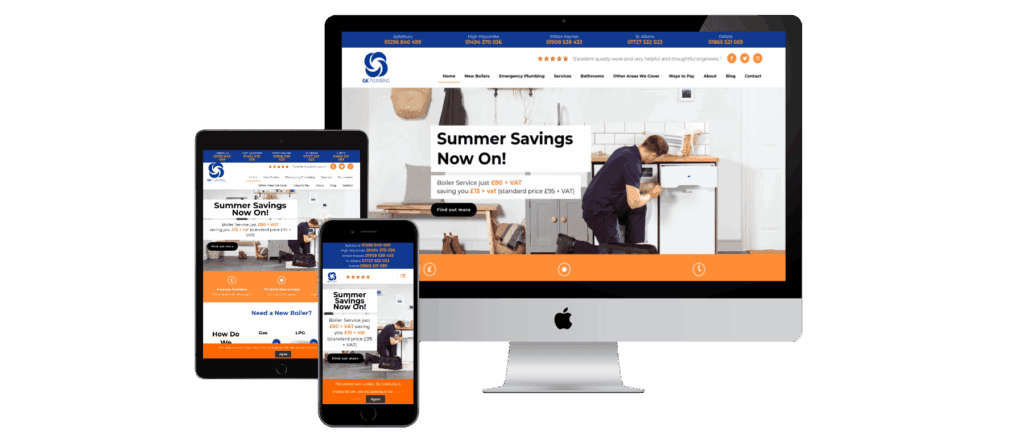
6. GK Plumbing
What works well:
- Optimised for multiple locations and services. Each area and service type has its own page, which is the foundation of effective local SEO for a trade business.
- Sticky click-to-call button. A phone link that stays visible at the top of the page as you scroll removes any friction for mobile users who are ready to call.
- Social media links. Connecting the website to active social profiles helps build trust and keeps the business looking current.
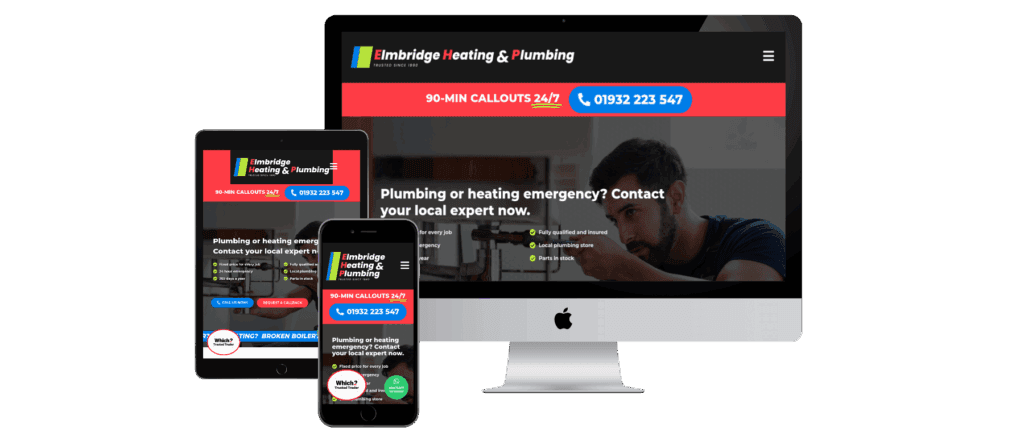
7. Elmbridge Heating and Plumbing
What works well:
- Good use of animation. Tasteful motion effects make the site feel dynamic without being distracting.
- Slide-in menu. A different navigation style that feels modern and keeps the main content uncluttered.
- Clear typography. The font sizes are generous and easy to read — a small detail that makes a real difference, especially on mobile.
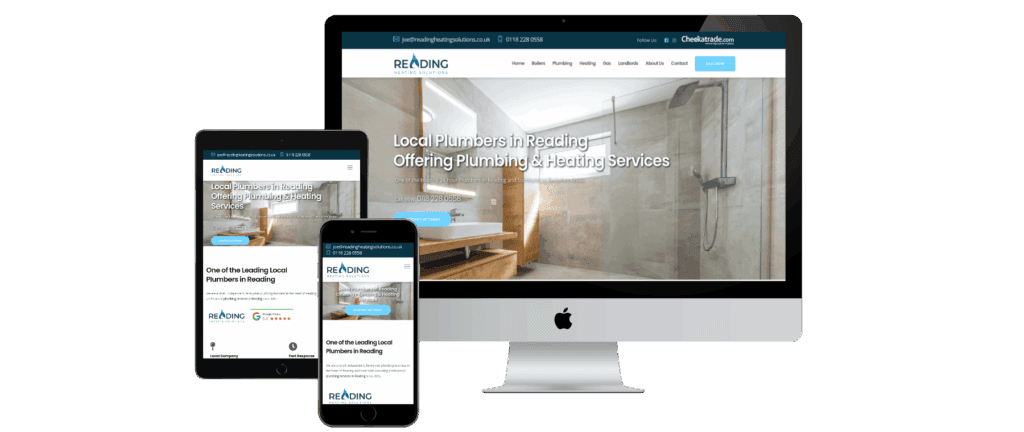
8. Reading Heating Solutions
What works well:
- Strong local SEO practices. The site clearly signals which areas it serves, helping it appear in the right local search results.
- High-quality imagery. Real photos of work and the team build far more trust than generic stock images.
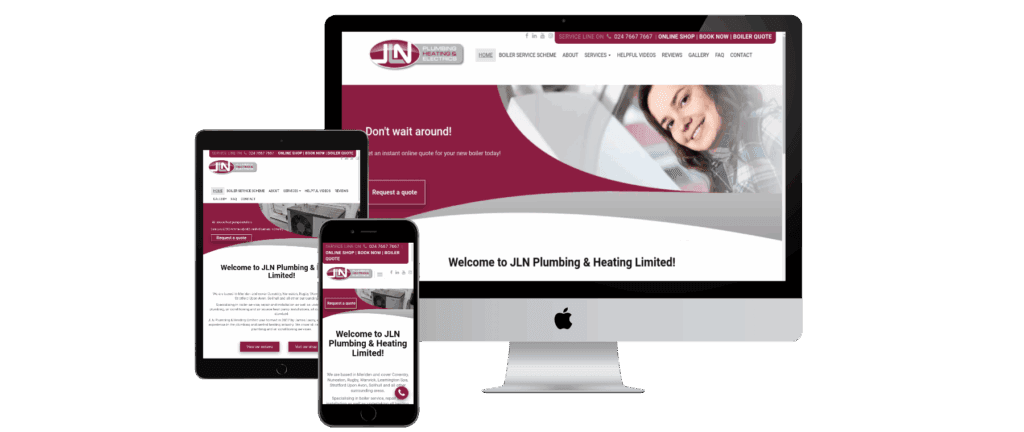
9. JLN Plumbing
What works well:
- Online booking form. Letting visitors book directly from the site — without having to call first — removes friction and captures leads that might otherwise drop off.
- Live Google reviews feed. Pulling in real-time reviews directly from Google keeps the social proof current and impossible to fake.
10. East Goscote Plumbers
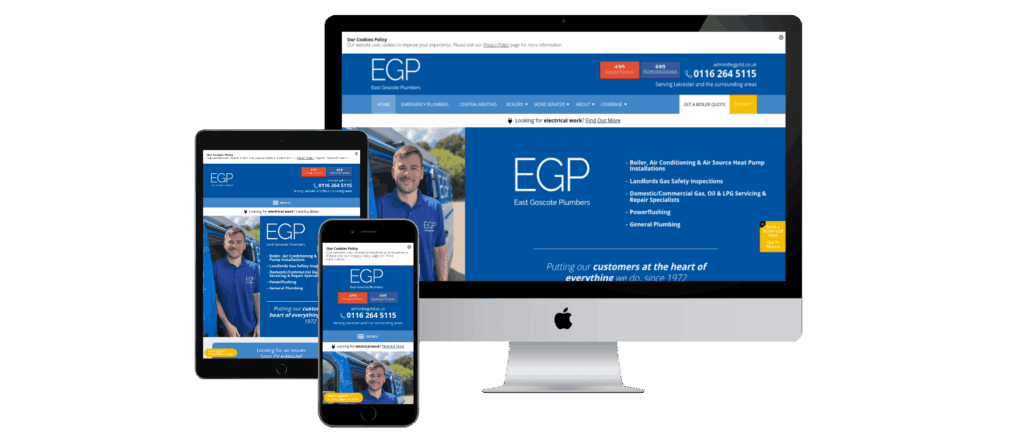
What works well:
- Sharp, modern design. Strong visual identity that makes the business look established and trustworthy.
- Animation used to guide the eye. Movement draws attention to the most important parts of the page without feeling gimmicky.
- Live reviews from both Facebook and Google. Displaying reviews from multiple platforms maximises social proof.
- Good local SEO practices. Clearly optimised for the areas it serves.
Two Examples of Plumbing Websites That Aren't Following Best Practice
Not every plumbing website is worth copying. While researching this post, I came across two sites that illustrate exactly what to avoid.
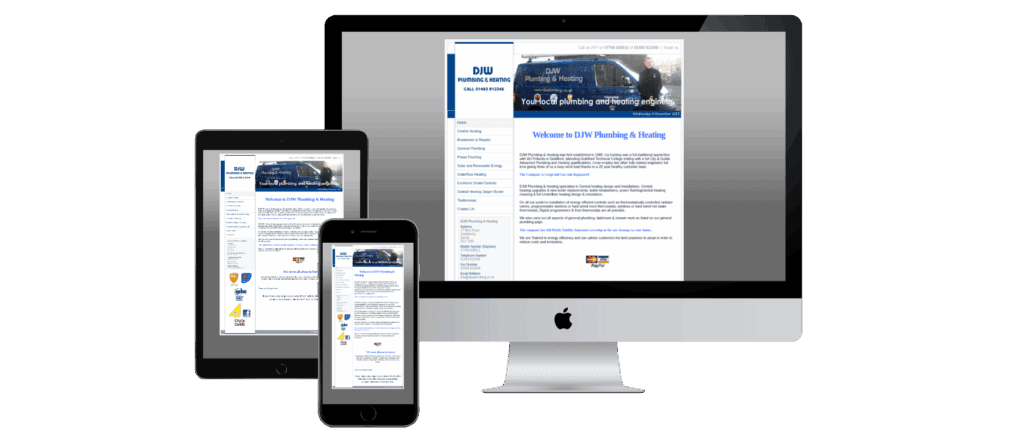
The first had several significant problems:
The design looked dated. First impressions happen in under a second online — a tired design signals a business that hasn't kept up.
Not responsive. The vast majority of plumber searches now happen on a mobile device — Google actively deprioritises sites that don't adapt to smaller screens.
No HTTPS. Secure certificates have been a Google ranking signal since 2014, and most browsers now flag non-secure sites with a warning. That kills trust instantly.
Didn't use the full width of the screen. A symptom of an outdated, non-responsive build.
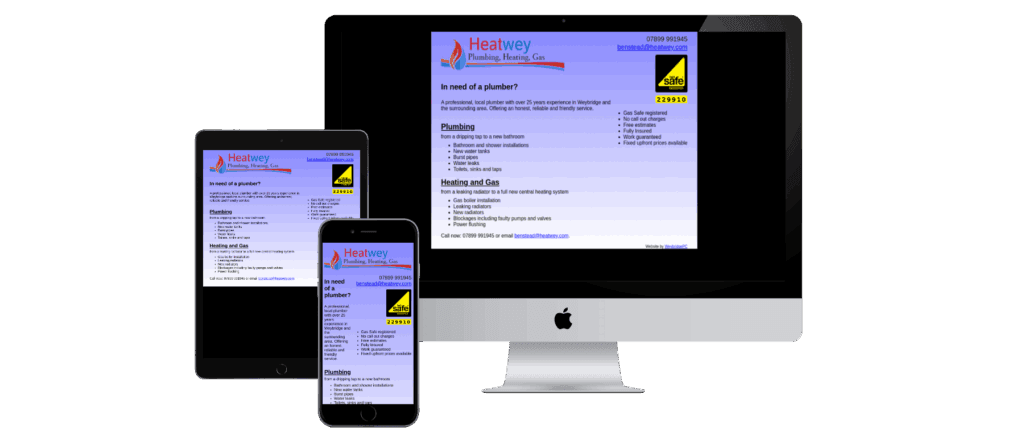
The second was a single-page site that appeared to have gone untouched for around ten years.
Both sites are losing business to competitors with better online presences. Given that most plumber searches now happen on a phone, a non-mobile-friendly site isn't just an aesthetic issue — it's a lead generation problem.
Why Does Your Plumbing Business Need a Website?
When someone's boiler stops working or a pipe bursts, their first move is a Google search — not a flick through the Yellow Pages. Your website is often the first impression a potential customer gets of your business, and in most cases it will determine whether they call you or move on to a competitor.
A well-built plumbing website does several things at once. It showcases your services, confirms your service area, provides social proof through reviews, and makes it straightforward for someone to get in touch. Done well, it works for you around the clock — even when you're on a job.
What Does the Perfect Plumbing Website Need?
A Responsive Design
Your website needs to look good and load quickly on every device — desktop, laptop, tablet, and phone. This isn't optional. Mobile accounts for the majority of local plumbing searches, and Google's mobile-first indexing means your mobile experience directly affects how well your site ranks.
If your site isn't responsive, you're not just losing visitors — you're losing rankings too.
User-Friendly Navigation
| Element | What it means in practice |
|---|---|
| Clear menu structure | Visitors can find what they need within one or two clicks |
| Contact details prominently placed | Phone number visible without scrolling |
| Dedicated service pages | One page per service, not everything crammed onto one |
| Search functionality | Useful for larger sites with multiple locations or services |
Keep it simple. If someone lands on your site with a plumbing emergency, they want to find your number immediately — not hunt through a complex menu.
Consistent Branding
Your logo, colour scheme, and font choices should be consistent across every page. Consistent branding does two things: it makes your business look professional and established, and it makes you more memorable. A visitor who sees a cohesive, well-presented site is more likely to trust you with access to their home.
A Clearly Defined Service Area
Make it easy for people in your area to confirm that you cover them. List the towns and postcodes you serve — and if you serve multiple areas, consider building dedicated location pages. This is one of the most effective things you can do for local SEO, and it means customers in your target area can find you more easily. Our SEO services include building out exactly this kind of local structure.
Engaging Calls to Action
Every page of your site should have a clear next step. "Call Now", "Get a Free Quote", and "Book Online" are all strong options. Place CTAs above the fold (visible without scrolling), at natural breaks in the content, and at the bottom of each page. Don't make visitors go looking for a way to contact you.
Contact Information That's Easy to Find and Use
Your phone number and email address should be visible on every page, and they should be clickable — particularly on mobile. A customer who has to copy and paste a number is a customer who might not bother.
| Contact method | What to include |
|---|---|
| Phone | Clickable link on mobile |
| Clickable mailto link | |
| Contact form | Simple — name, number, brief description of the job |
| Live chat | Optional, but can increase conversions |
Links to Social Media
Connecting your website to your Facebook, Instagram, or other active profiles adds another layer of credibility. It shows the business is active and gives visitors another way to check reviews and see examples of your work. Just make sure the profiles you link to are actually maintained — a Facebook page with the last post from three years ago does more harm than good.
Frequently Asked Questions
When Does Your Plumbing Website Need a Redesign?
A few clear signs it's time:
- Traffic has dropped and you're not sure why
- The bounce rate is high — visitors are landing and leaving without enquiring
- The site looks noticeably dated compared to competitors
- It's not mobile-friendly
- You've rebranded or expanded your service area and the site no longer reflects that
- You're getting visits but very few enquiries
If any of these sound familiar, it's worth getting a free SEO audit to understand where the site is falling short — it takes under a minute and gives you a clear picture of what needs fixing.
What Pages Should Your Plumbing Website Have?
At a minimum, your site should include:
- Home — your main landing page, optimised for your primary location
- About — who you are, how long you've been trading, your accreditations
- Services — a separate page for each service (boiler installation, emergency plumbing, bathroom fitting, etc.)
- Contact — phone, email, and a simple form
Once those are in place, the site can be expanded with location pages for each area you serve, an FAQ page to handle common queries, and a blog to bring in search traffic. This is exactly the kind of web design work we do for plumbing businesses — building a site that's not just attractive, but structured to rank and convert.
How Do I Create a Plumbing Website?
For most plumbers, there are two realistic routes:
DIY with a website builder. Platforms like Squarespace and Wix make it straightforward to get something live without technical knowledge. They're fine if you just need a basic online presence. The honest caveat is that none of the sites featured in this article were built on these platforms — and the reason they weren't near the top of Google's results is partly because of the SEO limitations those platforms carry.
Use a specialist. If you want a site that actually brings in leads through organic search, the build and the SEO strategy need to work together from the start. That means proper site structure, local SEO foundations, fast load times, and content written to rank. It's a bigger investment upfront, but the returns are measurable. If you're serious about growing your plumbing business online, get in touch and let's talk through what makes sense for your situation.
Conclusion
A great plumbing website isn't complicated, but it does require getting the fundamentals right: responsive design, clear navigation, genuine social proof, a defined service area, and calls to action that make it easy for the right people to get in touch.
The examples in this article show what that looks like in practice. If one of them resonates with you — or if your current site has some of the issues shown in the bad examples section — it might be time to do something about it.
Ready to take this further? Get in touch and let's talk through what's possible for your business.