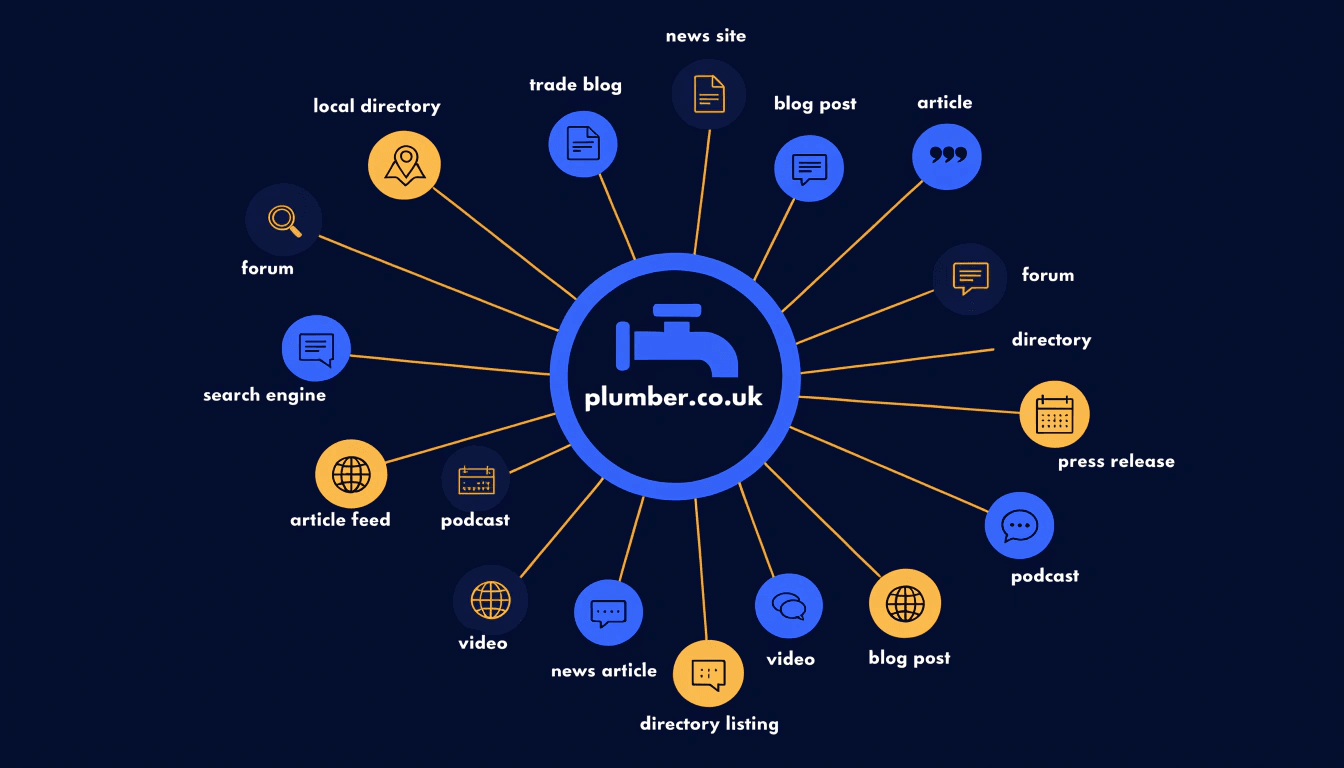
If your plumbing website isn't generating enquiries, the problem often isn't your content or your service pages — it's authority. Google needs to trust your site before it will send customers to it, and the primary way it measures that trust is backlinks: links from other websites pointing to yours.
This article is part of my small business guide to SEO and my guide to marketing for tradespeople.
Link building is the process of earning those links. It's one of the most impactful things you can do for your plumbing SEO, and one of the most misunderstood. Done right, it can move your site from page two to page one and keep it there. Done wrong — by chasing cheap, spammy links — it can actively damage your rankings.
This guide covers everything you need to know about link building as a plumber, from the quickest wins to the longer-term strategies that build lasting authority.
What is Link Building and Why Does it Matter for Plumbers?
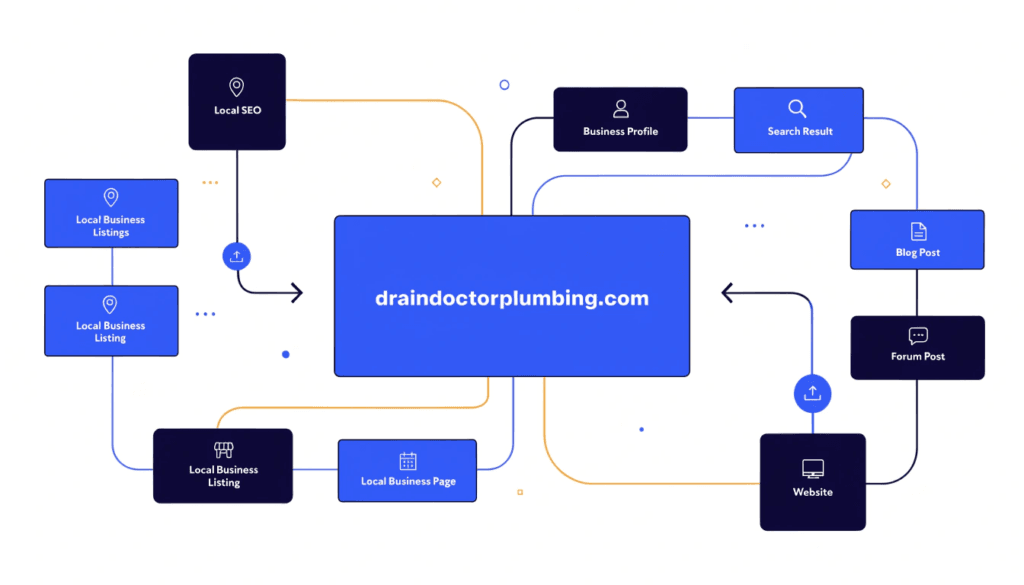
A backlink is simply a hyperlink on another website that points to yours. When a local news site, a trade directory, or a home improvement blog links to your plumbing website, it's effectively casting a vote of confidence in your content and your business.
Google treats these votes as a signal of authority. Sites with more high-quality backlinks tend to rank higher in search results than sites with fewer. For plumbers competing in local search — where the top three Google Maps results capture the vast majority of clicks — link authority can be the difference between consistent leads and near-total invisibility.
It's not just about rankings, either. Quality backlinks bring referral traffic directly. A link from Checkatrade, for instance, doesn't just help you rank — it also sends homeowners who are already looking for a plumber to your website.
The key word throughout is quality. A single link from a trusted, relevant site is worth more than 100 links from low-authority directories nobody visits. Google has become very good at identifying low-quality link schemes, and sites that pursue them often find themselves penalised rather than rewarded.
What Makes a Backlink Valuable?
Not all links are equal. When I assess the value of a potential backlink opportunity, I look at a handful of factors:
Domain authority. How well-established and trusted is the linking site? A link from a regional newspaper or a recognised trade association carries far more weight than one from a brand-new blog with no readership. I recommend targeting sites with a Domain Rating (DR) of 20 or above at minimum — higher if you're in a competitive local market. You can check DR using a tool like SE Ranking before you invest time pursuing a link.
Relevance. A backlink from a home improvement blog, a local builder's website, or a plumbing trade publication is far more valuable than one from a completely unrelated niche. Google looks at context.
Traffic. Links from sites that actually have visitors tend to carry more weight than links from sites no one reads. Aim for sites with at least 500 monthly organic visitors.
Anchor text. The clickable text of the link matters. Descriptive anchor text — "emergency plumber in Bristol" or "local plumbing services" — helps search engines understand what your linked page is about. Avoid over-optimised anchor text that looks manipulative.
Link placement. A link embedded naturally within the body copy of an article is more valuable than one buried in a footer or a sidebar widget.
The Fastest Wins: Local Citations and Directories
For most plumbers, the quickest and most straightforward place to start is local citations. A citation is any online mention of your business name, address, and phone number (NAP) — and when that citation includes a link to your website, it builds both local authority and your backlink profile simultaneously.
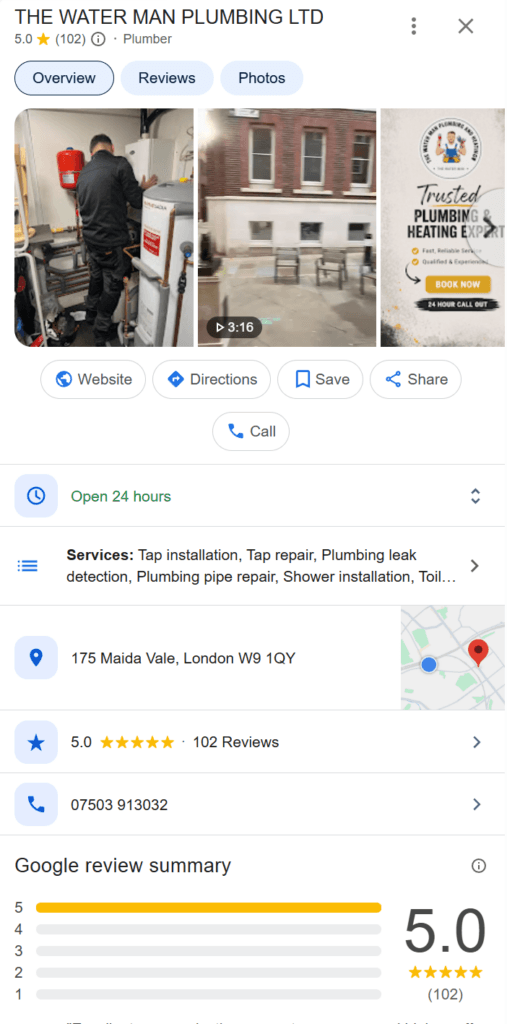
The most important listing is your Google Business Profile. If you haven't claimed and fully optimised yours, that's your first job before anything else. Beyond Google, Bing Places is worth doing, as is Apple Maps.
Then work through the main UK directories. Most of these are free to list on:
- Google Business Profile
- Bing Places
- Yell.com
- Yelp UK
- 192.com
- FreeIndex
- Cylex UK
- Hotfrog
- Bizify
- Opendi UK
- UK Small Business Directory
- Business Magnet
There are also paid directories worth considering if you're in a competitive area — Checkatrade and Rated People both send referral traffic alongside the citation value, which makes the investment easier to justify.
One critical rule: keep your NAP consistent across every listing. The exact same business name, address format, and phone number everywhere. Inconsistencies confuse both search engines and potential customers.
You can read more about specific options in our guide to directory sites for plumbers.
Guest Posting and Niche Edits: The High-Impact Strategies
Citations are a solid foundation, but they won't take you to the top of competitive local search terms on their own. To really build authority, you need editorial backlinks — links from genuine, relevant content on established websites.
The two most effective methods for this are guest posting and niche edits.
Guest posting means writing an article for another website in your niche and earning a backlink within that content. For plumbers, relevant targets include home improvement blogs, property management sites, landlord forums, construction and builder websites, and local trade publications. The content you produce needs to be genuinely useful — a guide on preventing frozen pipes in winter, for example, or advice on what to do before calling a plumber. The link within that article points back to a relevant page on your site.
Niche edits (also called link insertions) work differently. Instead of writing new content, you identify existing articles on relevant sites and reach out to the site owner to have your link added naturally within the content that's already there. This can be faster than guest posting and often carries strong authority because the page already has existing backlinks of its own.
For both approaches, the quality thresholds I mentioned earlier apply: DR 20 minimum, 500+ monthly organic visitors, topical or geographic relevance. If someone offers you 50 links for £20, walk away.
Local Link Building Beyond Directories
One area where plumbers often overlook link building opportunities is in their own local community. These hyper-local links carry significant weight for local search rankings because they signal to Google that your business is genuinely embedded in the area you serve.
Practical options include:
Local sponsorships. Sponsoring a local football team, a community event, or a charity fundraiser often comes with a mention and link on the organisation's website. These are typically low-cost and generate goodwill alongside the SEO benefit.
Supplier and trade relationships. If you have a regular relationship with a plumbing merchant, a boiler manufacturer, or a building materials supplier, it's worth asking whether they'd be happy to feature you in a case study or partner page. These are naturally relevant links.
Local chambers of commerce. Most local chambers have member directories with links to member websites. Annual membership is usually modest, and the link authority from an established local chamber is solid.
Local press coverage. If you complete a particularly interesting job, respond to a local flooding situation, or have an opinion on a relevant local issue, reaching out to your local paper or regional news site is worth trying. Even a short mention with a link carries weight.
Neighbouring trade businesses. If you work alongside electricians, builders, or heating engineers, a mutual linking arrangement — where each recommends the other on their website — makes sense from a business and an SEO perspective. Keep it natural and relevant.
Content-Led Link Building: Creating Assets Worth Linking To
The most sustainable form of link building isn't outreach — it's creating content so useful that other websites link to it without being asked. This is sometimes called earning links rather than building them.
For plumbers, the content types that tend to attract natural links include:
Genuinely helpful guides. Not generic content that regurgitates what's already on dozens of other sites, but specific, detailed guides on topics homeowners actually search for. "How to know when your boiler needs replacing" or "What to do if your pipes freeze overnight" — written with real expertise and specific detail — can attract links from local news sites, property blogs, and homeowner forums over time.
Local data and statistics. If you can pull together data relevant to your area — average callout response times, the most common emergency plumbing issues in your town, seasonal spikes in certain jobs — local publications and bloggers have a genuine reason to reference and link to it.
Comparison content. Guides that compare products, explain options, or help homeowners make decisions (such as a combi boiler versus a system boiler comparison, or an explanation of different pipe materials) tend to be referenced by other websites naturally.
FAQs with real depth. A detailed FAQ page that answers the questions plumbers actually get asked every day is valuable both for users and for other websites looking for a reliable source to link to.
None of this replaces active outreach — but it makes outreach significantly more effective, because you have something genuinely worth linking to.
Social Media, Internal Links, and the Supporting Cast
Two areas that often get overlooked in link building conversations are worth addressing briefly.
Social media doesn't directly pass SEO authority — links from Facebook, Instagram, or Twitter are generally nofollow and don't contribute to your rankings in the traditional sense. However, social media amplifies your content. When a blog post or guide gets shared widely, it increases the chance that someone with a website comes across it and links to it. It's an indirect benefit, but a real one. Make sure your business profiles are active and complete — they also provide citation signals that support local SEO.
Internal links are links from one page on your own website to another. They're often underutilised by small businesses, but they matter. A well-structured internal linking strategy helps Google understand the relationship between your pages and distributes authority across your site. If you write a blog post about boiler servicing, link it to your boiler service page. If you write a guide on emergency plumbing, link it to your emergency callout service page. Simple, but effective.
For more on the broader picture of SEO for plumbers, including on-page optimisation and technical foundations, that guide covers the full picture.
What to Look For When Hiring a Link Building Service
If you decide to outsource your link building rather than doing it yourself, approach it carefully. The market is full of services offering large volumes of links at very low prices, and the vast majority of these will either do nothing for you or actively harm your site.
When evaluating a link building service, ask:
- What sites will they build links on, and can you see examples?
- What are the minimum DR and traffic thresholds for sites they use?
- Will the links be from topically relevant sites, or from generic PBNs and link farms?
- Do they use guest posts, niche edits, or something else?
- Will you retain the links if you stop using the service?
Effective link building is not cheap. A single high-quality niche edit or guest post from a relevant, authoritative site typically costs upwards of £100–£150. If someone is offering you 20 links for £50, those links will not help you and may actively set back your rankings.
At SoNick Marketing, our link building service focuses exclusively on DR 20+ sites with genuine organic traffic and topical or geographic relevance to your business — the kind of links that actually move the needle.
How Long Does Link Building Take to Work?
This is the question I get asked most often, and the honest answer is: it depends, but you should expect to wait.
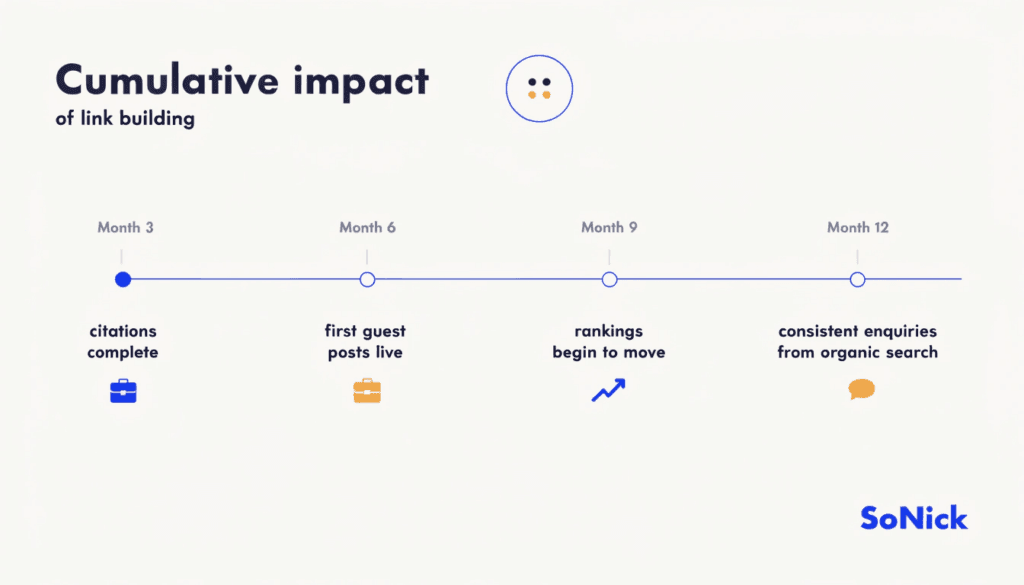
Most plumbers see meaningful movement in their local search rankings within three to six months of a consistent link building campaign. Competitive local markets — cities with dozens of established plumbing businesses — may take longer. Less competitive towns and specific service niches can move faster.
The important thing to understand is that link building is cumulative. Every quality link you earn adds to your site's authority, and that authority compounds over time. A business that builds links consistently for 12 months will be significantly harder for a newcomer to displace than one that does a one-off burst and stops.
Think of it less like a campaign and more like a reputation. You're building something that lasts.
Conclusion
Link building is one of the most powerful tools available to a plumbing business looking to compete online — but it rewards patience, quality, and consistency over quick fixes and cheap shortcuts.
Start with the foundations: get your Google Business Profile fully optimised, claim your key directory listings, and make sure your NAP is consistent everywhere. Then move on to the higher-impact work: guest posting, niche edits, local partnerships, and content that earns links naturally.
If you'd like to understand where your site currently stands before investing further, run a free SEO audit — it takes under a minute and shows you exactly where the gaps are.
Ready to take things further? Get in touch and let's talk through a link building strategy built around your business and your local market.