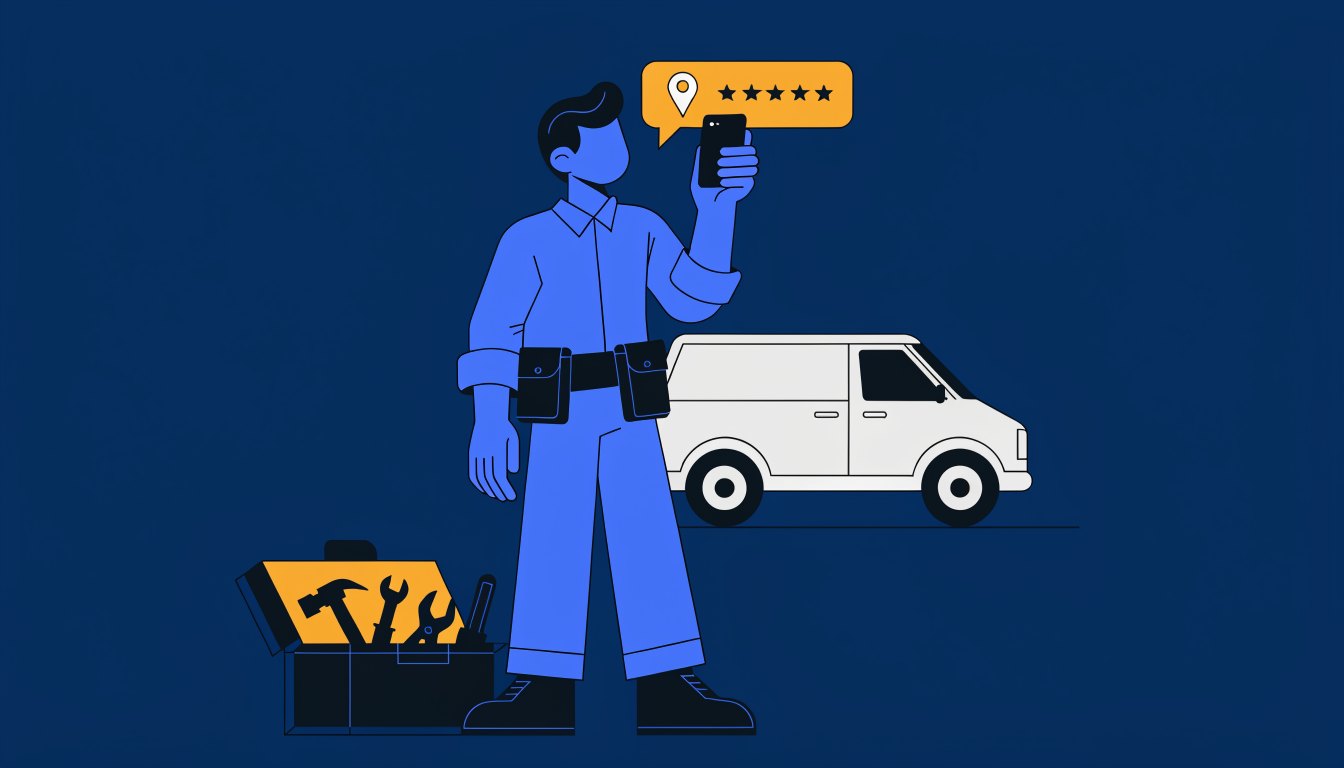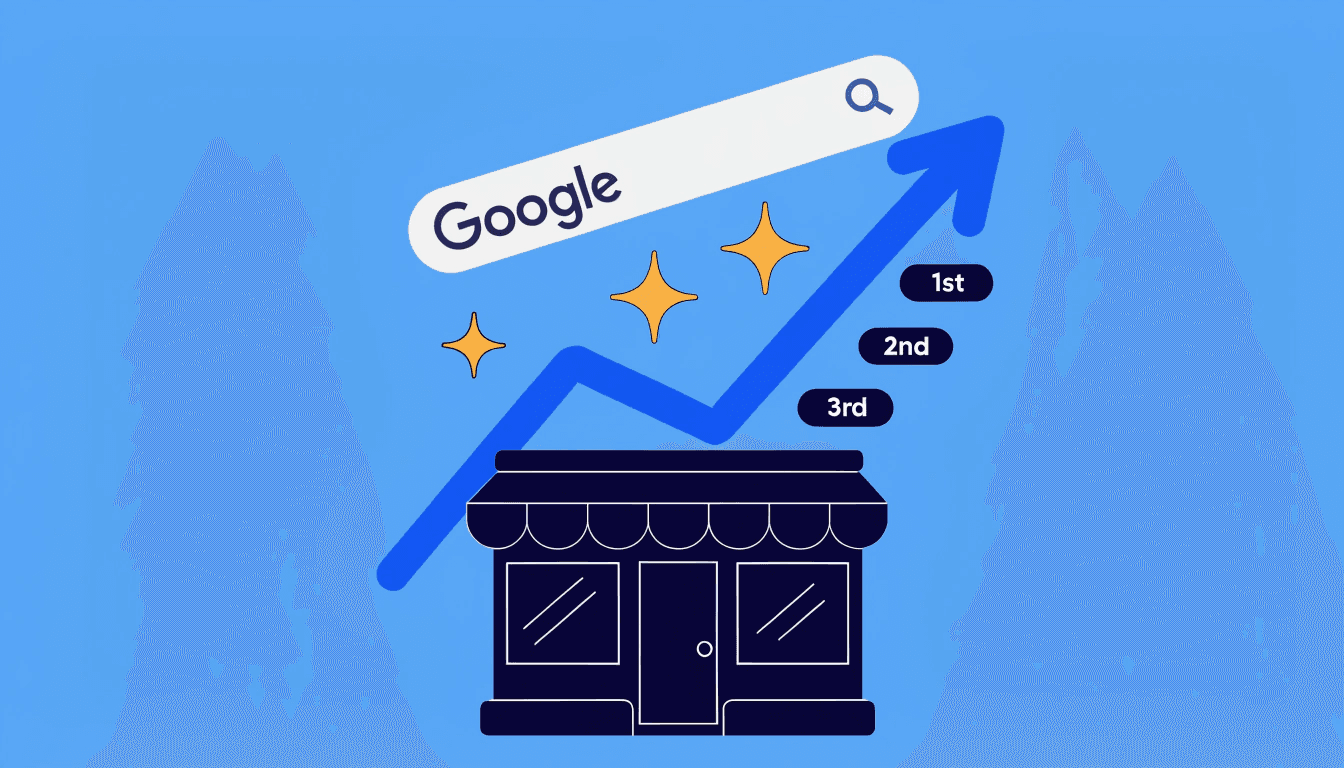
If your business isn't showing up on Google, it effectively doesn't exist for a large portion of your potential customers. That sounds dramatic, but consider this: the majority of people searching for a local service or product never scroll past the first page of results. If you're not there, you're handing those customers to whoever is.
This article is part of my small business guide to SEO.
I've worked with small businesses across a range of industries, from plumbers and tradespeople to law firms and salons, and the pattern is almost always the same. The businesses that invest in SEO consistently and treat it as a long-term strategy are the ones that generate a steady stream of inbound enquiries. Those that don't are either over-reliant on word-of-mouth referrals or spending heavily on paid ads just to stay visible.
This post covers the ten most compelling reasons why your business needs SEO in 2026, with practical context for what each one means for a small or local business.
What Is SEO and Why Does It Matter?
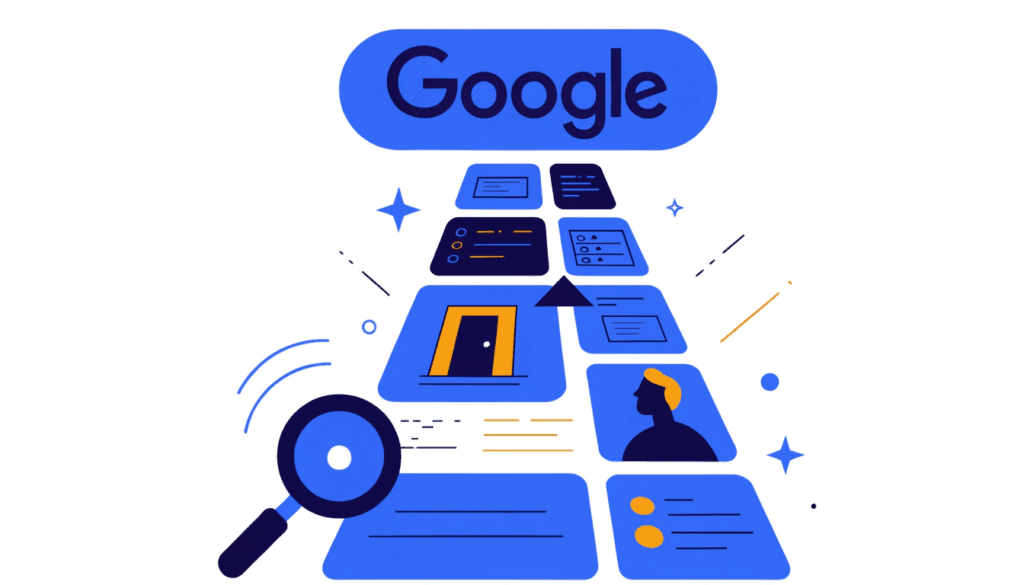
SEO stands for Search Engine Optimisation. In plain terms, it means making your website easier for Google (and other search engines) to understand, so that it appears higher in search results when someone looks for the products or services you offer.
It covers three main areas:
- On-page SEO. The content on your pages, how you use keywords, how clearly you explain what you do.
- Technical SEO. Site speed, mobile-friendliness, and crawlability. These are the structural factors that affect how well Google can index your site.
- Off-page SEO. Links from other reputable websites, citations, and signals that tell Google your site is trusted and authoritative.
Done well, SEO makes your website more visible to people who are already looking for what you offer. That distinction matters. You're not interrupting someone's browsing to show them an advert. You're appearing at the exact moment they're searching for a solution.
1. You're Invisible Without It
If your website doesn't appear on the first page of Google for the searches your customers are making, most of them will never find you. Studies consistently show that the vast majority of clicks go to results on page one. Position one alone captures roughly a quarter of all clicks for a given search.
This doesn't mean you have to rank for every keyword immediately. But for your core service and location searches, not ranking is a real commercial problem. Someone searching for "plumber in Fleet" or "family solicitor in Guildford" will click one of the top results. If that's not you, it's a competitor.
SEO is how you change that. It's how you move from invisible to findable.
2. It Brings in Traffic That Actually Wants What You Offer
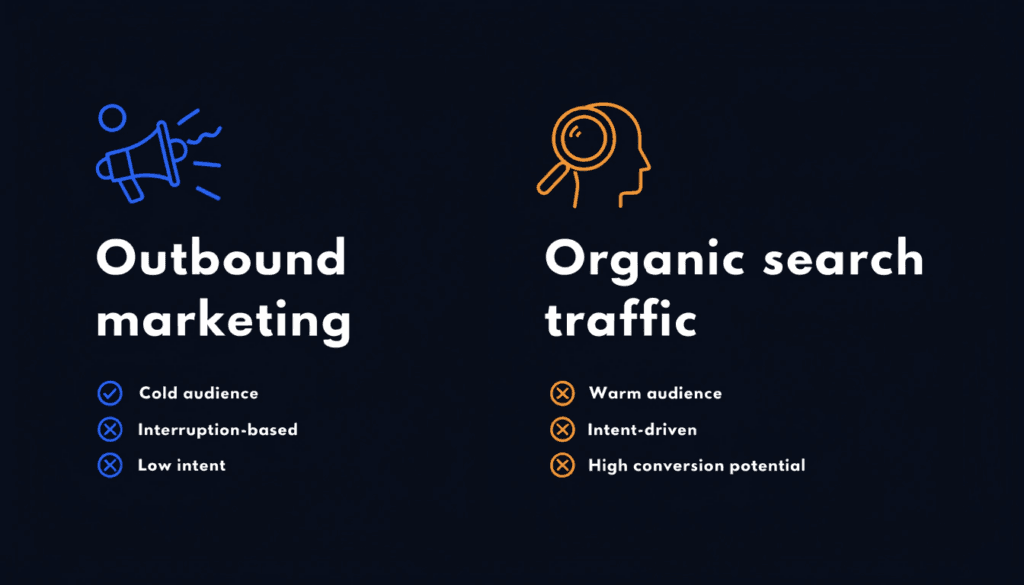
Not all website traffic is equal. Someone who lands on your site after clicking a social media post may be mildly curious. Someone who found you by searching "emergency boiler repair near me" is ready to buy.
That's the nature of organic search traffic. It's intent-driven. The person typing that query has a specific problem and is actively looking for someone to solve it. When your site appears and they click through, you're speaking to a warm prospect, not a cold audience.
This is why SEO leads tend to convert at a significantly higher rate than outbound marketing methods like cold calling, print advertising, or unsolicited email. The intent is already there. Your job is simply to show up.
3. SEO Builds Trust That Ads Can't Buy
Think about your own behaviour when you search for something. You probably skip past the ads at the top and go straight to the organic results. Most people do.
Ranking organically signals credibility. Google's algorithm takes into account hundreds of factors before deciding who ranks where: content quality, backlinks from reputable sites, site speed, and user engagement. When your site appears near the top, it carries an implicit endorsement from Google. Potential customers read it that way, even if subconsciously.
Paid ads have their place (and I use them for clients alongside SEO), but they don't build that same sense of authority. The moment you stop paying, the ads stop. Organic rankings, once earned, keep working.
4. It's More Cost-Effective Than Paid Advertising Over Time
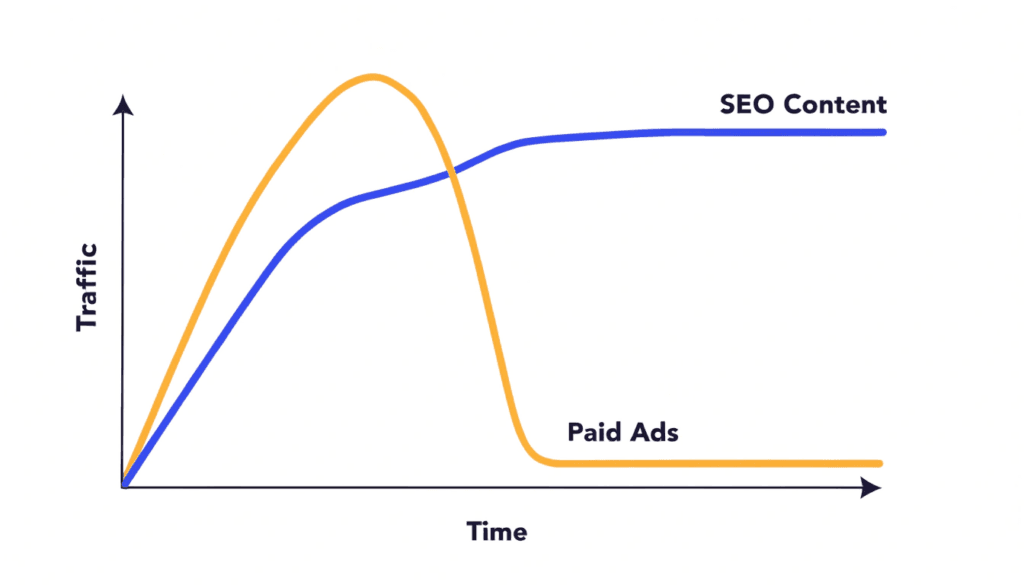
SEO requires an upfront investment of time and resource. You won't see results overnight. But here's the crucial difference between SEO and paid advertising: once your pages are ranking well, the traffic is essentially free.
Compare that with Google Ads, where you pay for every click. The moment your budget runs out, your visibility disappears. SEO compounds. A well-optimised blog post or service page can continue generating enquiries for years without any additional spend.
That's not to say SEO and PPC are mutually exclusive. For many businesses I work with, the right strategy is to run Google Ads for immediate leads while building organic rankings for long-term, lower-cost traffic. But for businesses that rely entirely on paid ads and have no organic presence, the cost per lead only ever goes in one direction.
If you want to understand how SEO and PPC can complement each other, it's worth thinking about both channels together.
5. Local SEO Puts You in Front of Nearby Customers
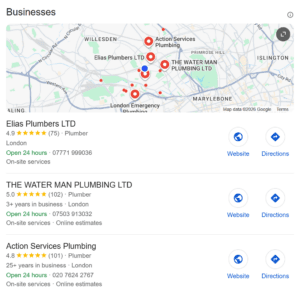
For small and local businesses, local SEO is arguably the most valuable form of marketing available. When someone searches for a service "near me" or includes a location in their query, Google returns a local pack. This is the map and three business listings that appear above the organic results.
Getting into that local pack requires a combination of:
- A fully optimised Google Business Profile with accurate information, categories, and photos
- Consistent citations across directories (your business name, address, and phone number matching across the web)
- Genuine customer reviews that signal trust and relevance
- Location-specific content on your website
The businesses that appear in that map pack receive a disproportionate share of local clicks. For a plumber, a salon, or a tradesperson operating in a defined service area, ranking in the local pack can be the single most impactful thing you do for lead generation.
6. Your Competitors Are Already Doing It
This one is straightforward but worth saying plainly. If you're not investing in SEO, there's a high probability that your competitors are. Every position they hold in the search results is a position you're not holding.
SEO isn't a sprint. It takes months to build meaningful rankings. That's actually an argument for starting sooner rather than later. The longer a competitor has been investing in SEO, the harder it becomes to displace them.
I've seen businesses come to me after years of neglecting their SEO, and the gap they've allowed to open up is significant. It can be closed, but it takes time. Starting now is always better than starting later.
7. It Improves Your Website, Not Just Your Rankings
One underrated benefit of SEO is what it does to your website beyond rankings. A proper SEO audit will surface issues that affect the user experience of your site: slow page load times, broken links, confusing navigation, pages that don't work properly on mobile.
Fixing those problems improves your rankings, but it also improves the experience for every visitor regardless of how they found you. A faster, cleaner, better-structured website converts more visitors into enquiries.
Technical SEO work, in particular, tends to benefit the whole site rather than individual pages. If you've never had a proper audit done, it's worth running a free SEO audit to see where the most obvious issues lie.
8. SEO Gives You Measurable, Actionable Data
One of the strongest arguments for SEO is how much data it generates. Unlike a billboard or a leaflet drop, every aspect of your SEO performance is trackable. You can see:
- Which keywords are bringing visitors to your site
- Which pages they land on, and what they do next
- Where visitors drop off before making an enquiry
- How your rankings change over time
- Which competitors are outranking you and for which terms
Tools like Google Search Console (free) and an SEO platform like SE Ranking give you the data to understand what's working and where to focus effort. That kind of visibility lets you make informed marketing decisions rather than guessing.
9. Content You Create Today Keeps Working
One of the most powerful aspects of an SEO content strategy is its longevity. A well-researched, well-optimised blog post or service page can rank and generate traffic for years after it was published. You write it once; it keeps working.
That's a fundamentally different model from paid advertising or social media, where visibility requires constant input. The moment you stop paying for ads or posting on social, the activity stops. SEO content compounds over time as it earns links, gets indexed more deeply, and accumulates engagement signals.
For small businesses with limited marketing budgets, this makes SEO content one of the highest-return activities available. A good post on why keyword research matters or a detailed guide to your service can attract enquiries for years.
10. AI Overviews and Evolving Search Make It More Important, Not Less
A question I hear from business owners is whether AI is making SEO obsolete. The short answer is no. In many ways it's making it more important.
Google's AI Overviews (the summaries now appearing at the top of many question-style searches) draw on content from authoritative, well-optimised websites. If your site doesn't have strong content and good technical foundations, it won't be cited in those summaries. The sites that get referenced are the ones that have invested in SEO.
Meanwhile, people are using AI tools like ChatGPT and Perplexity to research and compare services. Those tools also pull from indexed, credible web content. A strong SEO presence means your business is more likely to appear in those answers too.
Local searches work differently. When I tested 10 searches like "electrician in Basingstoke" across Surrey and Hampshire, Google showed no AI Overview on any of them: the map pack still dominated. Where AI did matter was ChatGPT, and the businesses in Google's local pack appeared in ChatGPT's recommendations in 74 of 87 cases. You can read the full results in my ChatGPT vs Google local search study. It's also why I see AI search optimisation as SEO, not something separate you need to pay extra for.
The landscape is changing, but the underlying principle remains the same: publish genuinely useful, well-structured content, earn authority and links from credible sources, and make your site technically sound. That's what SEO has always been. It's just that the stakes are getting higher.
Frequently Asked Questions
Is SEO worth it for a small business? Yes, and in many cases it's the highest-return marketing investment available to a small business. It takes time to build momentum, but once your pages are ranking, the traffic is ongoing and doesn't require a recurring ad budget. Local SEO in particular can have a significant impact for businesses serving a defined geographic area.
How long does SEO take to work? You'll typically start to see meaningful movement in rankings within three to six months of consistent effort, though competitive markets can take longer. SEO isn't instant, which is why starting sooner matters. The work you do today is building results for three, six, and twelve months from now.
Do I need to do SEO if I'm already running Google Ads? SEO and Google Ads serve different purposes and work well together. Ads give you immediate visibility but cost money per click. SEO builds organic traffic that doesn't require ongoing spend. Relying solely on paid ads means your visibility stops the moment your budget does. A combined approach typically delivers better long-term results.
What's the difference between SEO and local SEO? Standard SEO focuses on improving your rankings across Google generally. Local SEO is specifically about appearing in location-based searches, including the map pack and "near me" results. For most small and local businesses, local SEO is the priority because that's where your customers are searching.
Conclusion
SEO isn't a luxury reserved for large businesses with big marketing budgets. It's one of the most practical, cost-effective ways for a small business to generate consistent, qualified enquiries. In 2026, it's genuinely difficult to compete online without it.
Whether you're a tradesperson, a professional services firm, or a local retailer, the fundamentals are the same: show up where your customers are searching, build trust through quality content and a well-structured site, and let that foundation compound over time.
If you'd like to understand how your site is currently performing before investing further, run a free SEO audit. It takes under a minute and gives you a clear picture of where to focus. Or if you'd prefer to talk through what an SEO strategy could look like for your specific business, get in touch and let's have a conversation.