Most small businesses approach link building the wrong way. They chase quantity, submitting to dozens of directories and swapping links with anyone willing, then wonder why their rankings barely move. Here is the truth: a single backlink from a trusted, relevant website will do more for your visibility than a hundred low-quality links from sites nobody reads or trusts.
This article is part of my small business guide to SEO.
This guide covers 14 backlink strategies that genuinely work in 2026, explained in plain terms for a small business owner rather than an SEO agency with a dedicated outreach team. Some deliver results quickly. Others compound over months and years. All of them are worth understanding before you spend a minute on link building.
Why Backlinks Still Matter in 2026
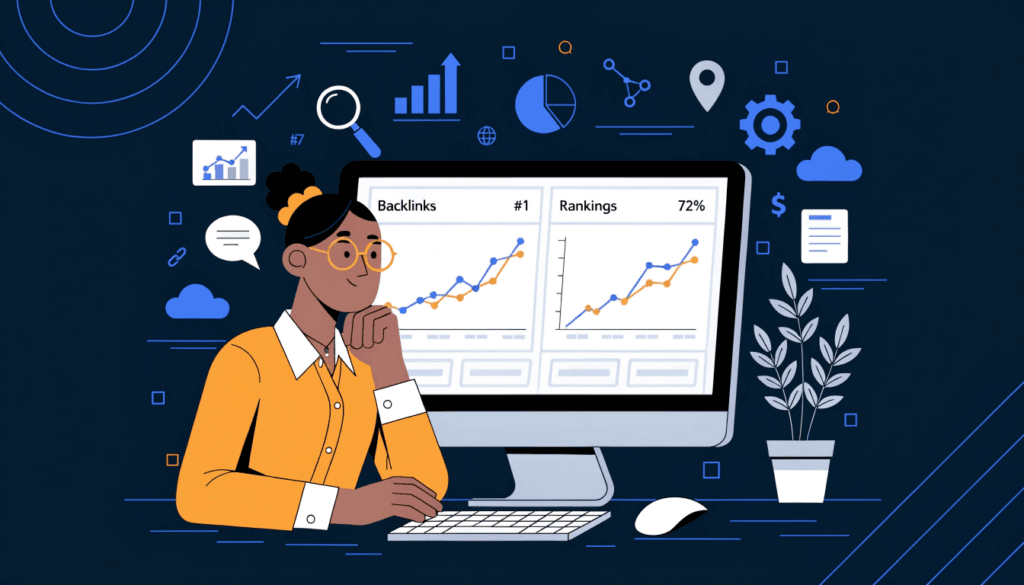
Google has repeatedly confirmed that backlinks are one of its top three ranking signals. When another website links to yours, Google treats it as a vote of confidence. The more credible and relevant those votes are, the more authority your site accumulates, and the higher it ranks.
What has shifted is how those votes are weighted. Relevance and trust now matter far more than volume. A link from a respected trade publication or a regional newspaper carries more weight than fifty links from generic directories. Google has also become significantly better at detecting unnatural link patterns, and sites relying on manipulative tactics increasingly find themselves penalised rather than rewarded.
There is a newer dimension worth understanding too. AI-powered search tools including Google AI Overviews, ChatGPT, and Perplexity all use authority signals to decide which sources to reference in generated answers. Earning backlinks from trusted sources does not just help you rank in traditional search; it trains AI systems to associate your business with credibility on your topic. In 2026, backlinks are about discoverability across all search surfaces, not just the Google blue links.
The practical takeaway: build links you would be comfortable showing a potential client. If a linking site looks spammy or irrelevant, it probably is.
1. Create Content Worth Linking To
The most sustainable link building strategy is not outreach. It is making your website the kind of place people naturally want to reference. If your content is genuinely the best available resource on a topic, links accumulate over time without you having to ask for every single one.
Three formats consistently earn links:
Original research and data. Bloggers, journalists, and other writers need facts to support their points. If you provide those facts, you become the source. A local plumber who surveyed 300 homeowners about the heating problems they ignored longest would have a genuinely citable asset. Even a small survey of 100 to 200 people in your niche can produce data nobody else has.
Comprehensive reference guides. Long-form, thorough guides that stay accurate over time attract links from other sites looking for reliable references. This post is an example of the approach. The investment is significant upfront, but a single well-built guide can earn links for years after publication.
Tools, calculators, and templates. Practical resources that save people time attract links because useful things get shared and cited. A free quote calculator, a job cost estimator, or a checklist relevant to your trade are all linkable assets that also generate leads directly.
If you are not sure which topics to target, my guide to why keyword research is so important covers how to find the questions your audience is actively searching for, which is where your linkable content should start.
2. The Skyscraper Technique
Popularised by Brian Dean of Backlinko, the Skyscraper Technique is a systematic approach to earning links that are currently going to your competitors. The concept is straightforward: find a piece of content in your niche that has already attracted a strong backlink profile, create a demonstrably better version, then reach out to the sites linking to the original and show them why your version is the stronger reference.
In 2026, "better" does not simply mean longer. It means sharper data, more recent examples, better visual presentation, more actionable depth, or a unique angle the original missed. Simply repackaging existing content does not earn links. Making it genuinely more useful does.
The process in practice:
- Use a tool like SE Ranking to find competitor content in your niche with a strong backlink profile. Export the list of sites linking to it.
- Identify the gaps in that content: outdated statistics, missing use cases, lack of examples, poor structure.
- Build your improved version, addressing every gap you identified.
- Send a personalised outreach email to the sites already linking to the original, pointing them to your better resource. Keep the pitch brief and make the value obvious.
One well-executed Skyscraper campaign targeting the right piece of content can earn a dozen or more quality links from a single asset.
3. Guest Posting on Relevant Sites
Guest posting, which means writing an article for another website in exchange for a backlink, remains one of the most reliable ways to earn editorial links when done properly. The key word is relevant. A guest post on a home improvement blog linking back to your plumbing business is genuinely valuable. A post on a low-quality "write for us" site that accepts content from anyone is not.
Google's Spam Updates have specifically targeted scaled, low-quality guest posting, so the standard has risen. The publication needs a real editorial standard, a genuine readership in your niche, and domain authority that reflects actual trust rather than inflated metrics.
To find good targets, search Google using operators like "write for us" + [your niche] or "guest post guidelines" + [your topic]. Home improvement sites, trade publications, local business blogs, and property management resources are all natural fits depending on your sector.
When you pitch, lead with value. Propose a specific topic that genuinely serves their audience rather than a thinly veiled advertisement for your business. The link within the article should point to a relevant, useful page on your site: a service page, a guide, or a resource rather than your homepage.
4. Niche Edits and Link Insertions
Niche edits, also called link insertions, are a distinct and often underused tactic. Rather than writing new content for another site, you identify existing published articles on relevant sites and reach out to suggest adding your link within that already-indexed content.
The case for niche edits is practical. The hosting page already has established authority, indexation, and traffic. A link inserted into a live, performing article can deliver ranking signal faster than a link within a brand-new guest post that needs time to accumulate authority of its own.
When approaching this tactic, the pitch needs to be genuinely helpful to the site owner. You are not asking them to do you a favour. You are suggesting an addition that makes their existing article more useful for their readers. A link that genuinely completes or expands a point in the article is far easier to place than one that feels forced.
At SoNick Marketing, niche edits and guest posts are the two primary methods we use for building client links, and both must meet the same criteria: DR 20+ domain, 500+ monthly organic visitors, and genuine topical or geographic relevance.
5. Digital PR and Newsjacking
Digital PR means earning editorial backlinks through media coverage rather than asking for them directly. For a small business, the most accessible versions of this are journalist request platforms and newsjacking, which means being an early, credible expert voice when a relevant story breaks.
Journalist request platforms. Services like Quoted (formerly HARO) and Sourcebottle connect journalists with expert sources. When a relevant request comes in, respond quickly with a concise, quotable answer that demonstrates genuine expertise. When your quote appears in the published piece, you typically get a backlink from a news or media site: the kind that is nearly impossible to obtain through traditional outreach.
Newsjacking. When a topic related to your industry hits the news, whether that is a regulatory change, a high-profile incident, or a seasonal issue, you have a narrow window to publish an expert take and pitch it to local or trade media. Being the first credible voice earns both coverage and links. A plumber commenting on a news story about pipe failures in cold weather, or a salon owner providing expert comment on a new hair care trend, are both credible pitches to local journalists.
The backlink is a byproduct of being genuinely useful to a journalist on deadline. Treat it as coverage first, links second.
6. Broken Link Building
Broken link building is one of the most tactically clean approaches to earning links because it leads with value rather than a request. The process: find pages on relevant websites that contain broken outbound links (links now pointing to a 404 page), then reach out to the site owner, flag the broken link, and suggest your relevant content as a replacement.
Site owners appreciate being told about broken links because it saves them maintenance work. You are doing them a favour. The outreach email does not need to be complicated: a short, polite note identifying the broken link and your suggested alternative is enough.
Tools like SE Ranking, Ahrefs, or even free browser extensions can help you identify broken links on competitor sites, resource pages, and authoritative sites in your niche. The win rate on this type of outreach tends to be higher than cold link requests precisely because you are solving a problem for the recipient rather than just asking for something.
7. Expert Roundups and Quote Acquisition
Expert roundups, which are posts gathering opinions from multiple contributors on a single question, work as a link-building tactic because every contributor has an incentive to share the piece with their own audience, and many will link to it from their own sites as a press mention.
You can work both sides of this.
Contribute to others' roundups. Monitor LinkedIn, Twitter/X, and journalist request platforms for calls for expert contributions. When you see a relevant request, respond quickly with a specific, sharp answer that demonstrates genuine expertise rather than a generic take. Most roundup posts include a link to each contributor's website. One well-placed contribution can earn you a link from a high-authority site in your niche.
Build your own roundup. Reach out to 10 to 15 complementary businesses, industry figures, or respected practitioners with a single, focused question. Publish their answers as a post. Once it is live, let each contributor know. The majority will share it on social media, and a meaningful proportion will link to it from their own site. A post citing 12 experts generates 12 warm relationships and potential inbound links simultaneously.
8. Podcast Guest Appearances
Podcast link building is one of the most underused tactics for small businesses. When you appear as a guest on a podcast in your niche, the host almost always publishes a show notes page for the episode, and that page includes a permanent link to your website.
A single guest appearance earns you a relevant, editorially placed backlink from an active, maintained page. It also puts your expertise in front of an engaged audience already interested in your topic. One appearance can generate multiple backlinks if the episode is listed across several directories.
To find relevant shows, use directories like Listen Notes or Podchaser and search for podcasts covering topics adjacent to your expertise. Filter for shows that are actively publishing and have a genuine audience. When you pitch a host, lead with a specific topic you can speak to that their recent episodes have not covered, and demonstrate credibility with a concrete result or credential rather than a generic biography.
The pitch is about what their listeners will get from the conversation, not what you want from being on the show.
9. Local Link Building
For most small businesses, local backlinks are the highest-value and most achievable links available. They are highly relevant, credible, and often obtainable without the months of relationship-building that national editorial links require.
The strongest local link sources:
Trade associations and professional bodies. If you belong to a trade body such as Gas Safe, the Federation of Master Builders, the British Association of Beauty Therapy, or your local chamber of commerce, check whether members receive a listed backlink. Most do, and these carry genuine authority because the association itself is trusted.
Local directories and citation sites. Google Business Profile is the foundation, but Bing Places, Apple Maps, Yell, Thomson Local, and sector-specific directories (Checkatrade, Rated People, Bark) all provide citation links that reinforce local rankings.
Local press and community sites. If you sponsor a local sports team, support a community initiative, or do anything genuinely newsworthy, local news sites and community blogs may cover it and link to you. A press release to your local paper costs nothing and occasionally produces a link from a site with genuine authority.
Business partnerships. Suppliers, complementary businesses, and satisfied commercial clients with websites may link to you naturally. A bathroom showroom linking to their recommended installer, or a letting agent linking to their trusted plumber, are relevant and credible.
For a detailed breakdown of this approach in the trades sector specifically, the link building for plumbers guide covers local link tactics in full.
10. Competitor Backlink Research
One of the most efficient ways to find link opportunities is to study where your competitors are already earning their links. If a site links to a competitor, it has demonstrated willingness to link to businesses like yours. That is a qualified prospect.
A tool like SE Ranking makes this analysis straightforward. Enter a competitor's domain, and you can see every site linking to them, the specific pages those links point to, and how authoritative those linking sites are. Export the list, filter for the most relevant opportunities, and build an outreach plan.
When reviewing competitor backlinks, look for:
- Industry directories or resource pages your competitor is listed on but you are not
- Guest post placements on sites you could also pitch
- Local publications that have featured competitors but not you
- Roundup posts or "best of" lists that include competitors
- Backlink gaps: sites linking to multiple competitors but not to you, which suggests a pattern worth pursuing
This turns competitor intelligence into a repeatable pipeline of qualified link prospects rather than starting from scratch each time.
11. Resource Page Outreach
Resource pages are curated lists of useful links on a particular topic: "best guides for landlords," "useful tools for small business owners," or "recommended resources for tradespeople." They exist in almost every industry and are specifically designed to link out to quality content. Getting listed on the right ones is a clean, genuine endorsement.
To find resource pages relevant to your niche, search Google with operators like:
[your topic] + "useful resources"[your topic] + "recommended links"[your industry] + "resource page"[your niche] + inurl:resources
Once you have a list of relevant pages, assess whether your content genuinely belongs there. If it does, pitch with a short, specific note that references their particular page, explains what your resource covers, and makes it easy for them to add you. Generic bulk emails get ignored. A personalised note that clearly demonstrates you have actually read their resource page converts far better.
12. Unlinked Brand Mention Reclamation
Every time someone mentions your business name online without linking to your website, you have an untapped backlink opportunity sitting there unclaimed. Sites that already know your brand require far less persuasion than cold outreach targets.
Set up Google Alerts for your business name, key product names, and any branded terms or slogans you use. SE Ranking's monitoring tools can also surface mentions that Alerts miss. When you find an unlinked mention, reach out to the author or editor with a brief, friendly message: thank them for the mention and ask whether they would consider adding a link so their readers can find you easily.
The conversion rate on this type of outreach is consistently higher than cold link requests because you are not asking for something they have never done before. They have already written about you. You are simply asking them to complete the reference with a clickable link.
13. Lost Link Recovery
Most businesses accumulate backlinks over time that they then lose through site migrations, deleted pages, changed URLs, or the linking site simply updating its content and removing references. Recovering a link you have already earned is almost always easier than earning a new one from scratch.
Use SE Ranking or a similar backlink monitoring tool to track your link profile and flag lost links. When a link disappears, investigate why:
- If the page you were linked from has been removed entirely, there is little to do.
- If your content moved URLs without a redirect in place, fix the redirect and reach out to ask the linking site to update the URL.
- If the link was removed from an otherwise active page, reach out and ask politely whether there was a reason and whether it might be reinstated.
Recovering three or four strong lost links in a quarter can have a meaningful impact on authority without requiring any new content creation or outreach campaigns.
14. Backlink Profile Auditing and Toxic Link Removal
This is less a link-building strategy and more a maintenance task, but it belongs in any serious approach to link building because the quality of your existing profile affects how much value your new links deliver.
Run a backlink audit at least once a quarter using a tool like SE Ranking. Look for:
- Links from sites with no real traffic or editorial standards
- Links from completely irrelevant niches (a local plumber linked to from a gambling or pharmaceutical site, for example)
- Patterns of over-optimised anchor text that look unnatural
- Links from sites that appear to be part of private blog networks or link farms
For most small businesses, Google does a reasonable job of ignoring low-quality links rather than penalising for them. However, if you have a significant volume of spammy links, often the legacy of a previous SEO agency that used questionable tactics, disavowing the worst offenders via Google Search Console can help stabilise your profile.
A healthy profile going forward: monitor it, remove obvious junk, and focus your effort on earning the quality links that compound over time. If you would like a clear picture of where your site stands right now, run a free SEO audit and I will show you exactly what is working and what needs attention.
How the Strategies Compare
| Strategy | Difficulty | Speed of results | Best suited to |
|---|---|---|---|
| Create linkable content | Medium | 3–12 months | Any business with a blog |
| Skyscraper technique | High | 2–4 months | Competitive niches with strong content |
| Guest posting | Medium | 1–3 months | Content-heavy industries |
| Niche edits | Medium | 4–8 weeks | Any established business |
| Digital PR and newsjacking | Medium–High | 1–4 weeks | Businesses with newsworthy angles |
| Broken link building | Low–Medium | 2–6 weeks | Any business |
| Expert roundups | Low | 2–8 weeks | Service businesses with expertise |
| Podcast guesting | Low–Medium | 4–8 weeks | Professionals with something to say |
| Local link building | Low | 2–8 weeks | Local and trade businesses |
| Competitor backlink research | Medium | 1–3 months | Any business |
| Resource page outreach | Low–Medium | 2–6 weeks | Businesses with educational content |
| Unlinked mention reclamation | Low | 1–4 weeks | Established businesses |
| Lost link recovery | Low | 2–4 weeks | Businesses with existing backlink profiles |
| Backlink auditing | Low | Ongoing | All businesses |
Frequently Asked Questions
How long does it take to see results from new backlinks? Most backlinks take four to twelve weeks to produce a measurable effect on rankings, though this depends on the authority of the linking site, how often Google crawls it, and how competitive your target keywords are. Local links from established directories often register faster than editorial links from newer publications.
Are some backlink strategies better for local businesses? Yes. If you are a local service business such as a plumber, salon, or builder, local link building, trade association listings, and local press coverage are your highest-priority tactics because they combine authority with geographic relevance. These signals are particularly important for ranking in the Google local pack.
Can toxic backlinks hurt my rankings? For most small businesses, Google ignores low-quality links rather than penalising for them. However, if you have accumulated a large volume of spammy links through previous link schemes, disavowing them via Google Search Console can help. Run a quarterly audit to stay on top of your profile.
Do nofollow links help SEO? Nofollow links do not pass direct PageRank, but they are not worthless. Google has indicated it treats nofollow as a "hint" rather than a hard directive, meaning some link equity may still transfer. More practically, nofollow links from high-traffic sites send referral visitors to your site and contribute to a natural, diverse link profile.
How often should I audit my backlink profile? Once a quarter is right for most small businesses. A quarterly check lets you catch lost links, spot new low-quality links, track the impact of your outreach activity, and identify competitor movements worth responding to.
Do social media links count as backlinks? Social media links are almost universally nofollow and do not pass direct ranking authority. Their value is indirect: content that gets shared widely is more likely to be discovered by someone with a website who then links to it. Social sharing amplifies content; it does not replace editorial backlinks.
Conclusion
Building a strong backlink profile takes time, consistency, and a willingness to create things genuinely worth linking to. The businesses that win in search are not the ones gaming the system. They are the ones that keep showing up with useful content, genuine expertise, and the patience to build relationships.
Start where it makes sense for your situation. Local service businesses should prioritise trade associations, local directories, and local press first: these are fast, relevant, and achievable without a content team. Businesses with a blog and some existing authority should add the Skyscraper technique, broken link building, and resource page outreach into a regular quarterly process. Competitor backlink research belongs in everyone's toolkit because it shows you exactly where the opportunities are in your specific market.
If you would like a clear picture of where your site stands, including your current backlink profile and how it compares to your competitors, run a free SEO audit and I will show you exactly what needs attention.