Most people don't think about calling a plumber until something goes wrong. A burst pipe at midnight. A boiler that won't fire up in January. A slow drain that's finally become unbearable. That means plumbing is what marketers call an "unsought service" — your potential customers aren't browsing for you on a Tuesday afternoon. They're searching for you the moment they need you.
This article is part of my guide to marketing for tradespeople.
Content marketing changes that dynamic entirely. Instead of waiting to be found in a moment of crisis, you can build a consistent online presence that puts your name in front of local homeowners long before they pick up the phone. When something does go wrong, you're the plumber they already know and trust.
This guide covers everything you need to know about content marketing for plumbers — what it actually involves, which formats deliver results, and how to get started without it taking over your week.

What Is Content Marketing?
Content marketing is the practice of creating useful, relevant content — articles, videos, guides, social posts — that attracts people to your business without directly advertising at them.
Rather than running an ad that says "call us for your boiler service," content marketing has you writing an article called "How to bleed a radiator" or filming a short video on "signs your boiler needs replacing." You provide genuine value, and in return you build visibility, trust, and authority — all of which translate into enquiries over time.
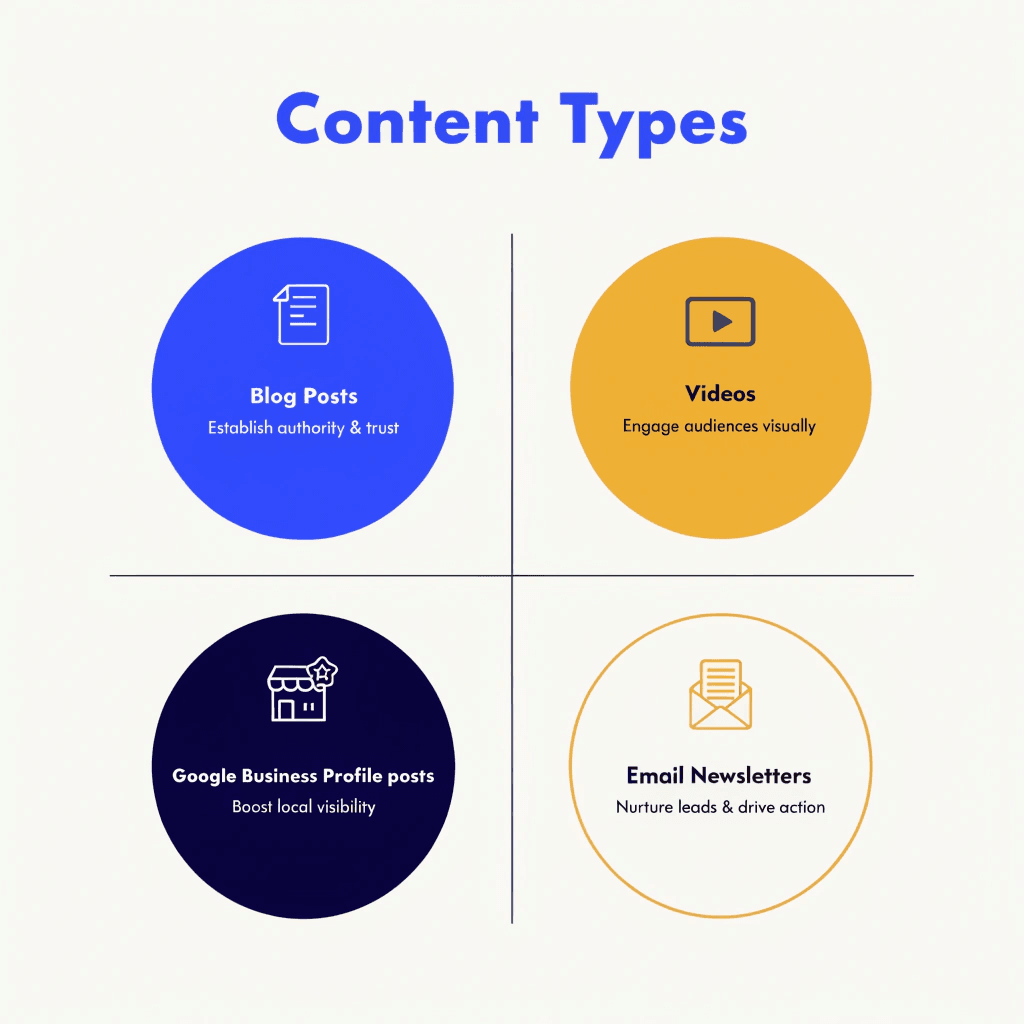
For a plumbing business, this typically means blog posts on your website, a Google Business Profile with regular updates, short videos on Facebook or Instagram, and potentially an email newsletter for past customers.
Why Content Marketing Works So Well for Plumbers
The conventional wisdom is that plumbing is purely reactive — people call you when something breaks. That's partly true, but it misses a bigger opportunity.
Homeowners search for plumbing-related information constantly: how much does a new boiler cost, should I replace my hot water cylinder, how do I fix low water pressure, what causes a dripping tap? Every one of those searches is a moment where your content can appear, introduce your business, and start building trust — weeks or months before they need to book anyone.
Here's why that matters in practice:
You rank for more than just "plumber near me." Most plumbing businesses are competing for the same handful of local keywords. Content marketing lets you rank for dozens of informational queries your competitors aren't targeting, giving you a much larger share of local search traffic.
You build trust before the emergency. A homeowner who has read your guide on boiler maintenance is far more likely to call you than a stranger they've never encountered. Content creates familiarity, and familiarity drives calls.
It compounds over time. A well-written blog post can generate enquiries for years. Unlike a paid ad that stops the moment you stop paying, content you publish today continues working in the background indefinitely.
It's cost-effective. Producing content costs time, not necessarily money. Once it's published, there's no ongoing spend. That makes it one of the most efficient long-term marketing channels available to small plumbing businesses.
The Best Types of Content for Plumbers
Not all content formats are equally suited to a plumbing business. Here's what actually works:
Blog Posts and Articles
A blog on your website is the foundation of any content marketing strategy. It gives you a permanent home for all the questions your customers ask — and search engines reward websites that consistently publish useful, relevant content.
Good blog topics for plumbers include:
- "How much does a boiler replacement cost in [your area]?" (high commercial intent)
- "Signs your boiler needs servicing before winter"
- "How to increase water pressure in a UK home"
- "Combi boiler vs system boiler: which is right for you?"
- "What to do when you have a burst pipe" (emergency intent — capture people in crisis)
Aim for posts of at least 800–1,000 words on each topic. Thin content rarely ranks. The goal is to give readers a genuinely useful answer, not just fill a page.
Use a tool like SE Ranking to research what local homeowners are actually searching for before you decide what to write. It shows you monthly search volumes, keyword difficulty, and what competitors are ranking for — which helps you prioritise topics that will bring in real traffic.
How-To Videos
Video is increasingly powerful for tradespeople, and plumbers are well placed to use it. Short, practical videos — filmed on your phone at a job — work well on Facebook, Instagram, and YouTube.
The fear most plumbers have is giving away work by showing people how to fix things themselves. In practice, the opposite tends to happen. A homeowner who watches your video on how to bleed a radiator learns that it's fiddly, and decides to call a professional. And when they do, they call the person whose video they just watched.
Keep videos concise (60–90 seconds for social, longer for YouTube), film in decent light, and speak directly to the camera. Authenticity matters far more than production quality.
Google Business Profile Posts
Your Google Business Profile (formerly Google My Business) is one of the most powerful and underused content tools available to local tradespeople. You can post updates, tips, photos of recent work, and seasonal reminders directly to your profile — and they appear in local search results and on Google Maps.
Posting once or twice a week keeps your profile active and signals to Google that your business is legitimate and engaged. It takes minutes and costs nothing.
Email Newsletters
If you have a list of past customers, a simple monthly email is a highly effective way to stay in touch. A short seasonal reminder — "time to get your boiler serviced before winter" — sent to 200 past customers will generate bookings. It doesn't need to be elaborate; it just needs to be consistent.
How to Start a Plumbing Blog
Starting a blog sounds daunting if you've never done it. In practice, you can get up and running in an afternoon, and the ongoing time commitment is manageable — even for a sole trader running a busy plumbing business.
Step 1: Set up your blog on your website. If your site runs on WordPress, a blog section is built in. If you're on a different platform, check whether it has a blog or news feature — most do.
Step 2: Choose your first five topics. Use a keyword research tool or simply write down every question your customers have asked you in the past six months. Those are your first articles. Real questions from real customers make the best blog topics.
Step 3: Write for your customer, not for Google. The best-ranking content is content that genuinely answers the question. Write conversationally, cover the topic thoroughly, and don't stuff in keywords unnaturally. Search engines are sophisticated enough to reward helpfulness.
Step 4: Publish consistently. One post per month beats a burst of ten posts followed by six months of silence. Consistency signals to Google that your site is active and worth indexing regularly.
Step 5: Optimise as you go. Add a relevant title tag and meta description to each post, use your target keyword naturally in the headings, and include internal links to your service pages. You don't need to be an SEO expert to do this well — the basics make a significant difference.
If you want to understand how your blog posts are performing, SE Ranking lets you track keyword rankings over time and see which posts are bringing in traffic. Knowing what's working helps you write more of the right content.
Social Media for Plumbers: An Honest Assessment
Social media is worth doing, but it's worth being clear-eyed about its limitations before you invest significant time in it.
Organic reach on Facebook and Instagram business pages has declined sharply over the past few years. A post from your plumbing business page will typically reach a small fraction of the people who follow you — unless it's boosted with paid spend, or it goes genuinely viral (which is unpredictable).
That said, social media still has real value for plumbers:
Facebook remains the most practical platform for local tradespeople. Local community groups and "recommendations" posts are where a lot of genuine referral activity happens. Being active and visible in those spaces — by genuinely helping, not by spamming — builds your reputation locally.
Instagram works well if you're regularly posting photos or short videos of your work. Before-and-after bathroom installations, tidy pipework, new boilers fitted neatly — these resonate with homeowners planning renovations.
TikTok and YouTube are worth exploring if you're comfortable on camera. Short, useful videos ("why your boiler keeps losing pressure") can reach thousands of local viewers organically.
The honest takeaway: social media supports your content marketing, but it shouldn't replace your website and blog. Content on your site is permanent and searchable. A Facebook post has a lifespan of a few hours. Build your owned channels first, then use social to amplify them.
How Content Marketing and Local SEO Work Together
Content marketing and SEO for plumbers are not separate strategies — they're the same strategy, working in tandem.
Every blog post you publish is a new page that Google can index and rank. Every keyword you target in a post is another opportunity to appear in local search results. Good content, published consistently on a well-structured website, is one of the most reliable ways to improve your search visibility over time.
Specifically, content marketing helps your local SEO by:
- Increasing the number of pages on your site that rank for relevant search queries
- Building your site's topical authority in the plumbing space
- Generating backlinks naturally, as other sites reference and link to genuinely useful content
- Keeping your site active and regularly crawled by Google
If you're new to SEO, a free SEO audit is a useful starting point. It'll show you where your site currently stands and where the biggest opportunities for improvement are.
How to Measure Your Content Marketing Results
Content marketing is a long-term investment, so it's important to track progress rather than expecting immediate results. Here's what to monitor:
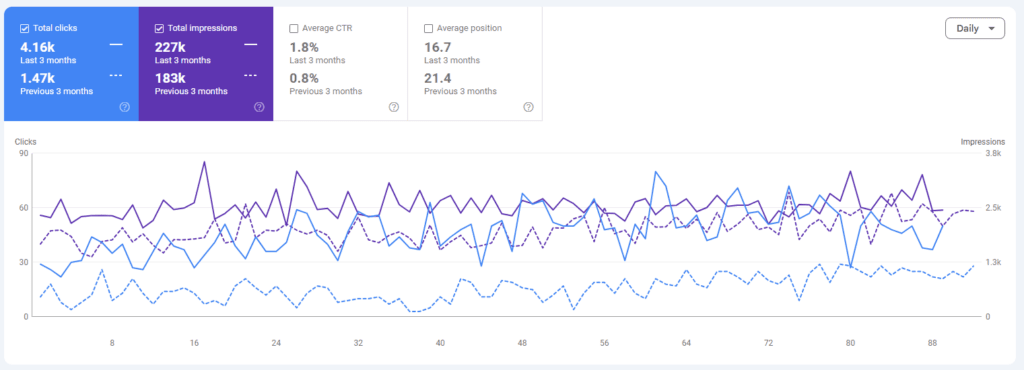
Organic search traffic. How many people are finding your website through Google? This should grow gradually as your content builds up. Google Search Console (free) shows you which pages are receiving impressions and clicks.
Keyword rankings. Are your blog posts appearing in search results for your target keywords? Use a rank tracking tool to monitor this over time.
Enquiries and calls. Ultimately, does your content marketing generate more leads? Track where new customers found you — if "found you online" becomes more common, your content is working.
Time on page. If visitors land on your blog and leave within seconds, the content isn't engaging them. If they're reading for two or three minutes, you've written something genuinely useful.
Frequently Asked Questions
What content should a plumber post?
Practical, helpful content focused on questions your customers actually have. Cost guides, maintenance tips, troubleshooting articles, seasonal reminders ("is your boiler ready for winter?"), and local content about services in your area all perform well. Avoid purely promotional content — people want information, not adverts.
How long does content marketing take to work?
Expect three to six months before you see meaningful organic traffic from a new blog. This is normal. Search engines take time to index, rank, and trust new content. The results compound over time, so the earlier you start, the better.
Do I need to hire someone to do content marketing?
Not necessarily. If you're comfortable writing and can commit to publishing regularly, you can manage a blog yourself. However, if you're too busy or writing isn't your strength, outsourcing to a specialist is a worthwhile investment. The key is consistency — irregular, low-quality content is worse than no content at all.
Is a blog better than social media for a plumbing business?
For long-term SEO and lead generation, yes. Blog content lives on your website indefinitely and can rank in search engines for years. Social media posts disappear from feeds within hours. Use both, but prioritise your own website first.
Conclusion
Content marketing isn't a quick fix, but it's one of the most reliable ways to build a sustainable pipeline of leads for a plumbing business. A well-maintained blog, a consistent Google Business Profile, and the occasional helpful video can combine to put your name in front of local homeowners week after week — without paying for every click.
Start small. Write one blog post per month on a topic your customers actually ask about. Keep your Google Business Profile updated. Share your work on Facebook. Over time, those small consistent actions compound into a meaningful online presence.
If you'd like to see how your website is currently performing, run a free SEO audit — it takes under a minute and shows you exactly where to focus your efforts.