Most plumbers who go it alone are brilliant at their trade. The problem is that running a successful plumbing business requires a completely different set of skills — and nobody teaches you those on the tools.
If you're working flat out but not seeing the growth you want, you're probably spending all your time doing the job rather than building the business. This guide is for plumbers who are ready to change that. Whether you're a sole trader looking to take on your first employee, or an established business wanting to scale, these 12 strategies will give you a practical framework for sustainable growth.
1. Work on the Business, Not Just in It
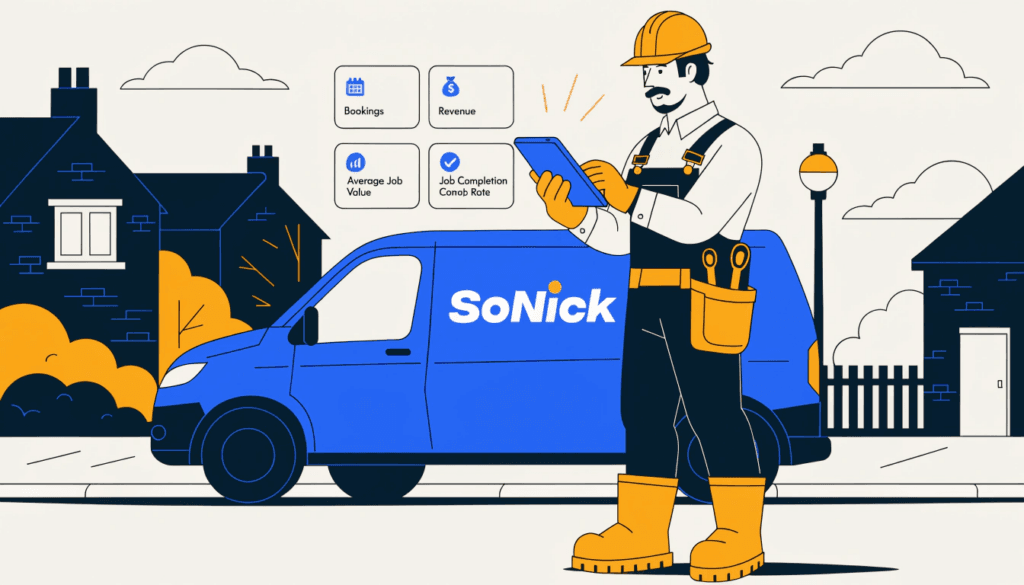
This is the hardest mental shift for any tradesperson. When you're booked solid, it feels productive. But if every job is coming through you, every invoice is raised by you, and every call is answered by you — you don't have a business, you have a very demanding job.
Growing a plumbing business means carving out regular time to focus on the things that create growth: marketing, hiring, pricing, planning, and systems. Even a few hours a week dedicated to business development rather than installations will compound over time.
A useful framework is the 60/20/20 rule: aim to spend roughly 60% of your time on revenue-generating work, 20% on strategic planning, and 20% on relationship building — with clients, suppliers, and prospective hires. It won't happen overnight, but it gives you a direction to move towards.
2. Hire the Right People — and Know When To
Growth requires capacity. If you're turning down jobs or referring work away because you can't fit it in, that's a signal to bring someone on.
Finding the right people
Look for candidates with the relevant certifications (Gas Safe registration if applicable, NVQ Level 2 or 3), strong problem-solving ability, and — critically — good communication skills. Customers remember how a plumber speaks to them almost as much as the quality of the work.
Use trade job boards like Indeed, Checkatrade's job listings, or specialist trade recruiters. Industry networks and word of mouth are often the fastest route to good candidates.
Experience vs cost
Hiring an experienced plumber costs more upfront. But experienced staff tend to complete jobs faster, generate fewer callbacks, and build better customer relationships — all of which protect your margin. Cheaper hires may require more supervision and training, which costs you time even if they cost less on paper.
Where possible, invest in ongoing training for your team. Plumbers who feel developed are far more likely to stay.
Using contractors
If you're not ready to take on a permanent employee, using trusted contractors is a sensible interim step. Build a small pool of reliable contractors you can call on for busy periods. Vet them thoroughly — check their qualifications, insurance, and references before they represent your business on a job.
3. Build Scalable Systems
The businesses that grow are the ones that have processes which don't rely solely on the owner to function. If everything lives in your head, you have a ceiling — and it's low.
Automate your admin
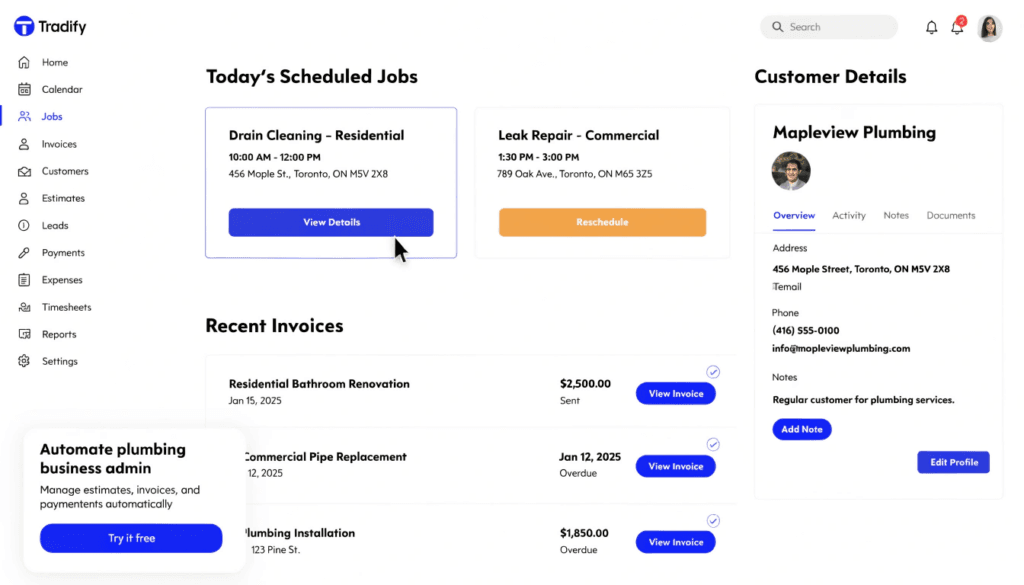
Job management software is the single best investment most plumbing businesses can make. Platforms like Tradify, Jobber, or ServiceTitan handle job scheduling, quoting, invoicing, and customer communication in one place. Many integrate with accounting software like Xero or QuickBooks, removing the need to re-enter data manually.
The time savings are significant. Businesses using field service management software typically recover several hours per week that would otherwise be spent on paperwork — hours that can go back into doing jobs or building the business.
Automate customer reminders
Set up automated reminders for boiler services, annual maintenance, and follow-up calls after jobs are completed. Customers who receive a timely reminder are far more likely to rebook than those who have to remember themselves. This is especially valuable for building repeat business.
4. Create a Website That Generates Leads
Your website is your hardest-working salesperson. It's available 24 hours a day, serves your entire area simultaneously, and either earns your trust or loses it within seconds of a visitor landing on the page.
A good plumbing website should do four things well:
Look credible. Customers judge the quality of your work by the quality of your website. A dated, slow, or hard-to-navigate site suggests a business that doesn't take care of the details.
Load quickly on mobile. The majority of people searching for an emergency plumber are doing it on a phone. If your site takes more than a couple of seconds to load, they've already called the next result.
Make it easy to get in touch. Every key page should have a prominent phone number and a simple contact or quote form. Reduce the number of steps between "found your site" and "made an enquiry."
Show social proof. Testimonials, star ratings, and Google review snippets on the page itself reassure visitors that others have had a good experience.
If you need help building a professional plumbing website that converts visitors into enquiries, that's exactly what we do at SoNick Marketing.
5. Invest in Local SEO
Local SEO is the process of getting your business to appear in search results when people in your area look for plumbing services. It's not the same as general SEO — it focuses specifically on the local pack (the map results that appear above organic listings) and location-based search terms like "plumber in Bristol" or "emergency plumber near me."
Google Business Profile
If you haven't claimed and fully set up your Google Business Profile, do it today. It's free, and it's the single most important factor in whether you appear in local map results. Make sure your address, service area, phone number, and hours are accurate. Add photos of your team, your van, and completed work. Post updates regularly.
Location-based keywords
Your website copy needs to include the towns and areas you serve — not just on a generic "areas we cover" page, but naturally throughout your service pages. A plumber in Leeds who never mentions Leeds on their website is fighting with one hand tied behind their back.
Tools like SE Ranking are excellent for identifying which local keywords have the most search volume in your area and tracking how your rankings improve over time.
Build your citations
A citation is any mention of your business name, address, and phone number on another website — directories like Checkatrade, Rated People, Yell, and TrustATrader. Consistent citations across the web help Google verify that your business is legitimate and located where you say it is.
For a more detailed breakdown of how SEO works for plumbers, take a look at our complete guide to SEO for plumbers.
6. Run Google Ads for Your Most Profitable Services
Organic SEO takes time to build — typically three to six months before you see meaningful results. Google Ads can fill that gap immediately, putting you in front of people who are actively searching for your services right now.
The key is to focus your ad spend on your highest-margin services and specific service areas. Running a broad "plumber" campaign across an entire city without targeting or negative keywords will burn through budget quickly. A well-structured campaign targets specific jobs (boiler repair, emergency callout, bathroom fitting) in specific postcodes.
Google Local Service Ads (LSAs) are worth particular attention for plumbers. You only pay per lead — not per click — and Google verifies your business before showing your ads, which adds immediate trust. We cover Google Ads for trades in detail if you want to explore this further.
Our PPC management service handles Google Ads campaigns for tradespeople across the UK, if you'd rather leave it to someone who does it every day.
7. Get More Reviews — and Use Them
Online reviews are the modern equivalent of word of mouth. Before most customers call a plumber they've never used, they check the reviews. A business with 50 Google reviews averaging 4.8 stars will consistently outperform a competitor with 10 reviews, regardless of how good that competitor actually is.
The most effective way to get more reviews is simply to ask. Send a follow-up text or email after every completed job with a direct link to your Google review page. Make it as easy as possible — people are generally willing to help if you've done a good job and you ask promptly.
Respond to every review, positive or negative. It shows prospective customers that there's a real person behind the business who cares about their reputation.
8. Secure Repeat Business With Maintenance Plans
One-off jobs pay well. But repeat customers are the foundation of a genuinely profitable business.
Boiler servicing is the clearest example. A customer who books their annual boiler service with you is a customer who'll call you for repairs, replacements, and any other plumbing need that comes up during the year. Maintenance plans create the relationship that makes this happen.
Offer annual boiler service contracts at a fixed price. Set up automated reminders — either through your job management software or a simple email sequence — so customers hear from you before they've even thought about booking. The businesses that do this well can build a significant chunk of their annual revenue from repeat maintenance work alone.
9. Set Up a Recurring Revenue Stream
Maintenance plans (covered above) are one form of recurring revenue. But there are others worth considering:
Annual service agreements. A fixed annual fee covering a specified number of callouts or an annual inspection. Gives the customer peace of mind and gives you predictable income.
Subscription-based maintenance. Monthly or quarterly payments in exchange for priority response times and discounted callout rates. Appeals particularly to landlords and property managers who need reliability.
Landlord compliance packages. Gas safety certificates, annual boiler checks, and emergency cover bundled into a single monthly or annual fee. Landlords are legally required to maintain these checks — making them a reliable, repeat source of work.
Recurring revenue smooths out the seasonal peaks and troughs that affect most plumbing businesses and makes the business far easier to plan for.
10. Manage Your Cash Flow Tightly
Profitable and cash-flow-positive are not the same thing. Plenty of plumbing businesses have gone under while technically turning a profit, simply because customers were slow to pay and suppliers needed paying first.
Review your expenses regularly
Go through your outgoings at least quarterly. Fixed costs like insurance, subscriptions, and van finance tend to creep up without feeling significant individually. Collectively they can erode your margin considerably. Identify anything that isn't directly contributing to revenue or capacity and consider whether it's justified.
Get an accountant
A good accountant will save you more than they cost. Beyond filing your returns, a decent accountant will help you understand your true margin per job type, structure your business tax-efficiently, and flag cash flow risks before they become crises. If you're still doing your own accounts, this is probably the easiest high-value change you can make.
Track your key numbers weekly
At minimum, know your: average job value, cost per lead, outstanding invoices, and monthly revenue vs target. You don't need a complex system — a simple spreadsheet checked every Monday will do more for your business than sophisticated software you never look at.
11. Review Your Pricing
Undercharging is one of the most common growth blockers for plumbers. If you haven't reviewed your rates in the last 12 months, you are almost certainly leaving money on the table — especially with materials costs having risen significantly in recent years.
How to raise your prices
Start with a proper cost analysis. Add up your materials, labour, overhead (van, insurance, tools, software), and the profit margin you need to sustain and grow the business. If the total is higher than what you're currently charging, you have your answer.
Raise prices gradually rather than all at once — 5–10% across the board rarely causes the customer exodus that plumbers fear. Communicate changes clearly and frame them around the value and reliability of your service.
Consider flat-rate pricing
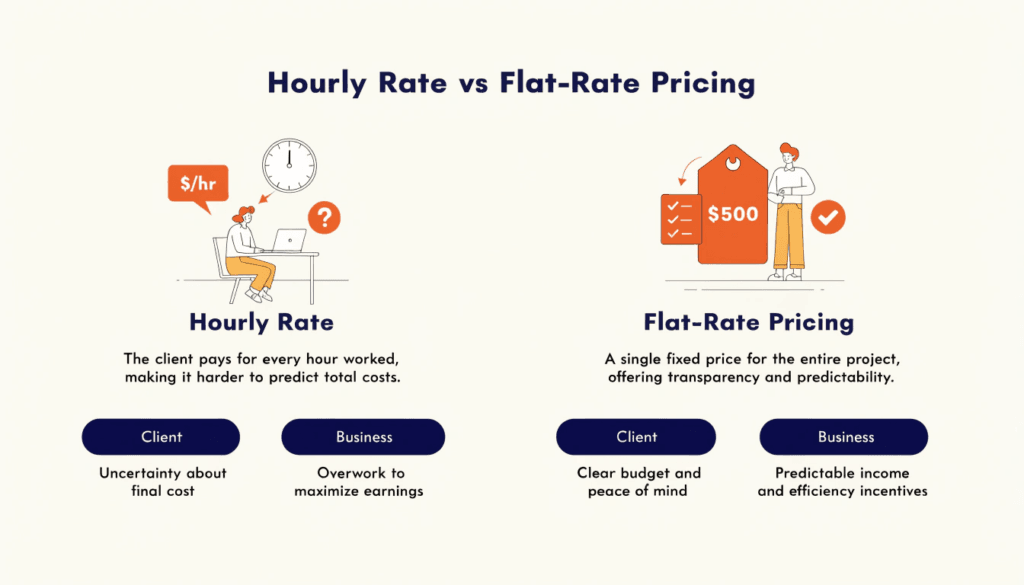
Flat-rate (or fixed-price) pricing — where each job has a set price rather than an hourly rate — tends to increase average job value and removes the friction customers feel when they're worried the clock is running. It also forces you to know your costs precisely, which is no bad thing.
12. Expand Your Service Area or Choose a Niche
There are two broad routes to growth once you've stabilised your current operation: go wider or go deeper.
Expand your service area
Taking on additional engineers and expanding the postcodes you serve is the most straightforward path to revenue growth. Before doing so, make sure your local SEO and paid advertising are in place for each new area — expanding physically without expanding your digital footprint means you'll be relying entirely on word of mouth in areas where nobody knows you yet.
Specialise in a niche
Alternatively, becoming the go-to specialist in a particular area of plumbing can command significantly higher rates and generate strong word-of-mouth. Renewable plumbing (heat pumps, solar thermal), commercial contracts, underfloor heating, or high-end bathroom installations are all areas where specialist expertise is valued — and priced accordingly.
Specialisation also makes your marketing simpler. It's far easier to rank on Google and convert customers when you're the heat pump specialist in your area than when you're competing as a general plumber against dozens of others.
Conclusion
Growing a plumbing business isn't about working harder — it's about working smarter and building the systems, people, and marketing that allow the business to grow beyond you.
Start with the areas that will have the biggest impact on your situation right now. If you're invisible online, fix your website and local SEO first. If you're overwhelmed with admin, get job management software in place. If you're leaving money on the table, review your pricing.
Take it one step at a time, and you'll build a business that gives you real choices — not just a busier schedule.
Ready to take this further? Get in touch and let's talk through what's possible for your business.