Most hair salon owners I speak to are brilliant at what they do. They can read a client's face and know exactly what cut will suit them. They stay up late watching colour technique videos. They genuinely care about every person who sits in their chair.
This article is part of my small business marketing guide.
What they often struggle with is telling the world about it.
Marketing a hair salon isn't complicated, but it does require a consistent, layered approach — not a one-off Instagram post or a single Google Ads campaign. In this guide, I'll walk you through every channel worth your attention in 2026, from your Google Business Profile to paid advertising to building a referral machine. Whether you're launching a new salon or trying to fill an appointment book that's gone quiet, this is where to start.
Claim and Optimise Your Google Business Profile
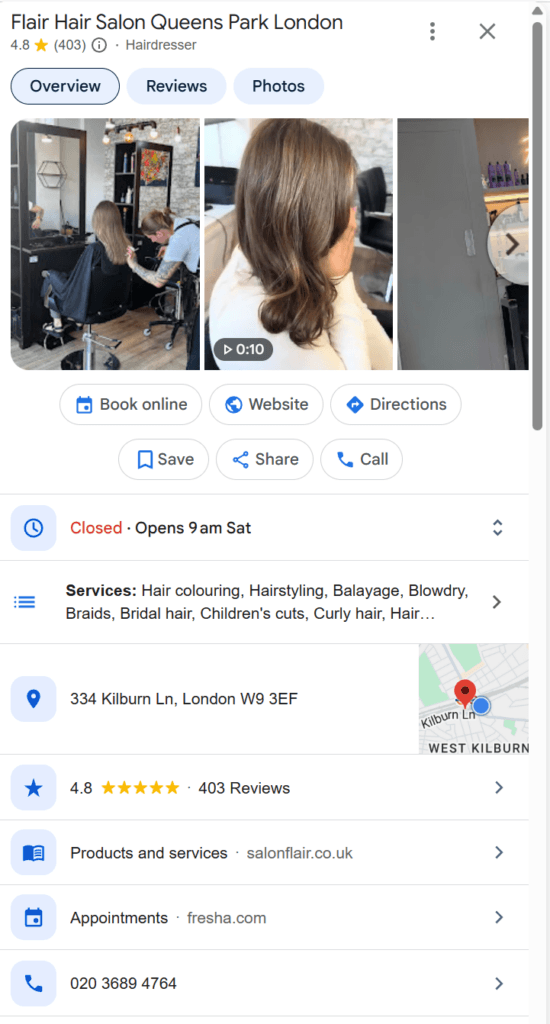
Before you touch Instagram or run a single ad, sort your Google Business Profile (GBP). This is the panel that appears when someone searches "hair salon near me" or "hairdresser in [your town]" — and for most salons, it drives more bookings than anything else.
Getting it right means:
Filling in every section. Category (use "Hair Salon" as your primary), services, hours, address, phone number, website link, and a description that naturally includes your location and the services you're known for.
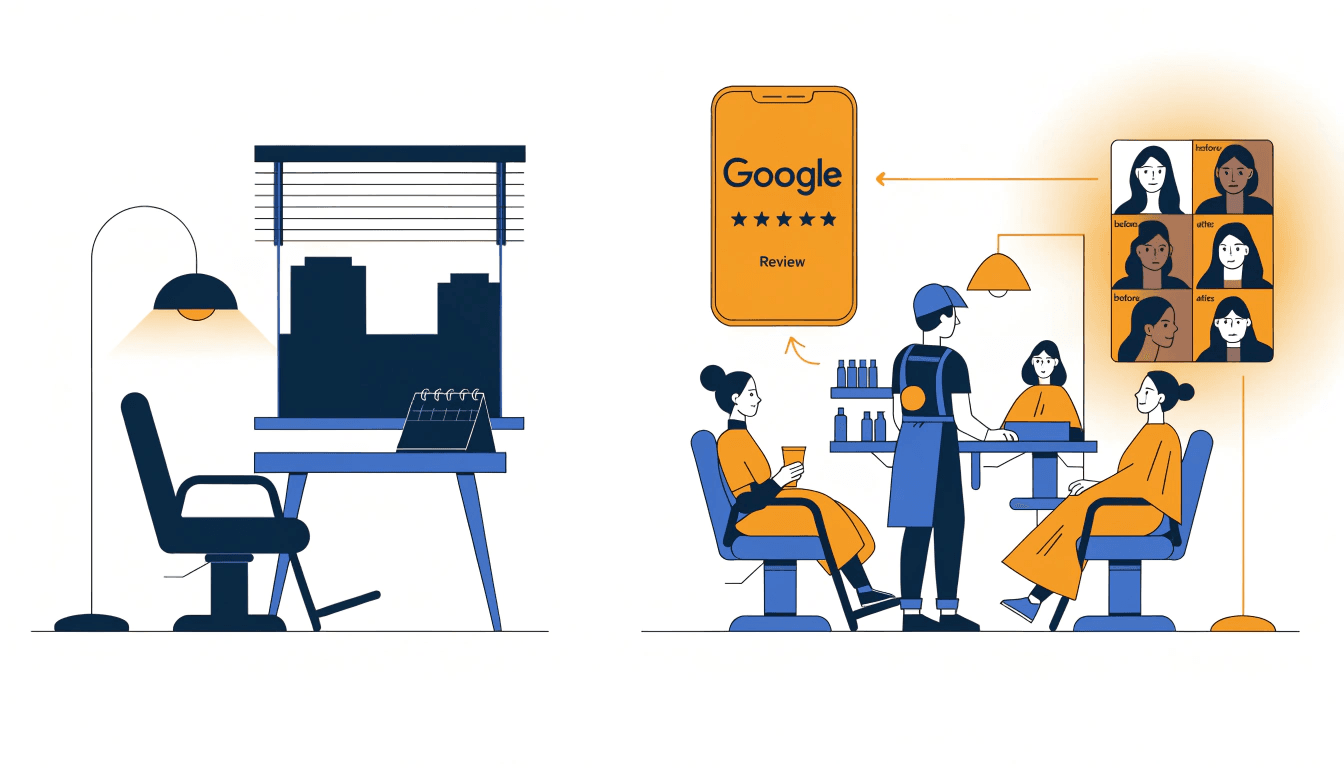
Adding real photos. Not stock images. Actual shots of your salon interior, your team at work, and finished styles. Salons with photos on their GBP receive significantly more clicks and direction requests than those without.
Collecting reviews consistently. After every appointment, make it easy for clients to leave a Google review. A simple follow-up text with a direct link removes the friction. Aim for a steady drip of new reviews rather than a burst all at once — Google rewards recency.
Using GBP posts. These sit on your profile like mini social media posts. Use them to highlight seasonal offers, new services, or team news. They take five minutes and are completely free.
Your GBP is often the first thing a potential client sees before they ever visit your website. Treat it like a shop window.
Build a Website That Converts Visitors Into Bookings
A professional website isn't optional in 2026 — it's the foundation of everything else. But not just any website. A hair salon site needs to do one thing above all: make it easy for someone to book an appointment.
Here's what that actually requires:
Clear services and pricing. Clients hate guessing. List your services with approximate prices (or at least price ranges). Hiding pricing doesn't create mystery — it creates friction, and friction kills bookings.
Online booking. If someone has to pick up the phone to book, a proportion of them won't. Integrate an online booking tool and make it accessible from every page — ideally in the header navigation.
Mobile-first design. The majority of local searches happen on mobile. Your site needs to load quickly, look great on a small screen, and have a click-to-call button above the fold.
Local SEO signals. Your town or city name, the services you offer, and your full address should appear naturally in your page copy and title tags. This helps Google understand who you're relevant to.
Social proof. Pull in your best Google reviews, display before-and-after photos, and if you have press coverage or awards, include them. Trust is everything in this industry.
If your current website was built more than three or four years ago and has never been updated, it may be actively harming you. A proper web design investment pays for itself quickly when it's converting local traffic into bookings.
Get Your Local SEO Right
Local SEO is how you appear in Google search results when someone in your area searches for hair services. For a salon, this is where the bulk of your organic (unpaid) traffic should come from.
The fundamentals:
Target local keywords. Rather than trying to rank for "hair salon" nationally, focus on terms like "hair salon in [your town]", "highlights [your area]", or "balayage specialist [city]". These have lower competition and far higher commercial intent.
Build local citations. A citation is any listing of your salon's name, address, and phone number on a directory site. Yell, Yelp, Treatwell, FreeIndex, Thomson Local — get listed on as many as possible with consistent information. Inconsistencies (different phone number formats, slightly different address spellings) can undermine your rankings.
Create location-relevant content. A blog post on "how to choose the right hair colour for a summer wedding in [your city]" will attract local searchers in a way a generic styling tips post won't. This is where a content strategy pays off over time.
Earn local backlinks. A mention from a local wedding blog, a feature in a regional lifestyle publication, or a listing on a local business directory all signal to Google that you're genuinely embedded in your community.
For a deeper overview of how search rankings work and what actually moves the needle, the SEO services page has more detail on what a professional SEO campaign looks like for local businesses.
Use Instagram and TikTok to Showcase Your Work
Hair is a visual service. Social media — specifically Instagram and TikTok — is where potential clients browse for inspiration, discover salons, and make decisions about where to book. If your social presence is weak or non-existent, you're invisible to a large segment of your market.
What actually works in 2026:
Reels and short video. Static photos still have their place, but short-form video consistently outperforms them on both platforms. Before-and-after transformations, technique videos (showing how a balayage is applied, for example), and day-in-the-life content all perform well. You don't need to be a professional video editor — authentic, well-lit clips filmed on a modern smartphone are enough.
Consistency over volume. Posting three times a week, every week, is worth more than posting daily for a fortnight and then going quiet. Build a schedule you can actually maintain.
Platform-specific content. Instagram tends to attract clients looking for a polished aesthetic; TikTok skews younger and rewards more spontaneous, personality-driven content. Don't just cross-post identically across both — tailor the tone.
Location tags and local hashtags. Always tag your location on Instagram posts and stories. Use hashtags specific to your town as well as service-level hashtags like #balayage or #keratingloss. This helps local searchers find you organically.
User-generated content. Encourage clients to tag you in their photos post-appointment. Resharing authentic client content builds social proof far more effectively than polished promotional posts.
One thing I'd caution against: chasing follower count over engagement. A highly engaged audience of 2,000 local followers is more valuable than 20,000 followers who'll never book an appointment.
Run Google Ads and Meta Ads to Fill Slow Periods
Organic marketing — SEO, social media, GBP — builds over time. Paid advertising works immediately. If you have a slow Tuesday to fill or you're launching a new service, targeted ads are the quickest way to generate bookings.
Google Ads work well for high-intent searches — people already looking for a salon in your area. A campaign targeting "[your town] hair salon" or "balayage near me" puts you at the top of results before your organic rankings have had a chance to build. The key is tight geographic targeting (a 5–10 mile radius around your salon) and sending clicks to a dedicated landing page, not just your homepage.
Meta Ads (Facebook and Instagram) are better for awareness and impulse bookings. You're targeting people by demographics and interests rather than search intent. Visual ads showcasing a specific treatment — a colour transformation, for instance — work well for generating interest. Seasonal promotions ("book a keratin treatment this month") tend to drive strong click-through rates.
Both platforms require testing and refinement. Start with a modest budget, track which ads generate actual bookings (not just clicks), and build from there. If you'd rather not manage this yourself, a PPC management service handles the setup, ongoing optimisation, and reporting.
Build a Client Retention System
Acquiring a new client costs several times more than retaining an existing one. That's been true for years, and it's still true today. The most profitable hair salons I've worked with don't just rely on new bookings — they've built systems that keep clients coming back reliably.
Rebook at checkout. The best time to book a client's next appointment is when they're still sitting in the chair, delighted with their new look. Train staff to mention it naturally: "Your colour will need freshening up in about eight weeks — shall we pencil something in now?"
Follow-up messages. A short, personalised message 48–72 hours after an appointment — thanking the client and checking they're happy with their hair — makes a lasting impression. Most salons don't do this. It takes 30 seconds and it's remembered.
Loyalty programmes. Points, stamps, or a simple "every sixth cut free" offer reward repeat visits and give clients a reason to stay loyal rather than try a competitor. Keep the mechanic simple — if it's complicated, clients won't engage with it.
Personalised client records. Note down each client's preferences, the products used, any allergies, and what they've mentioned about their lifestyle. When they return six weeks later and the stylist references their preference from last time, it's striking. Most salons don't do it consistently.
Lapsed client reactivation. Identify clients who haven't visited in more than four months and send them a personal message — not a generic promotional email, but something that feels individual. A straightforward "we haven't seen you in a while — is everything alright?" often works better than a discount code.
Use Referral Marketing to Grow Word of Mouth
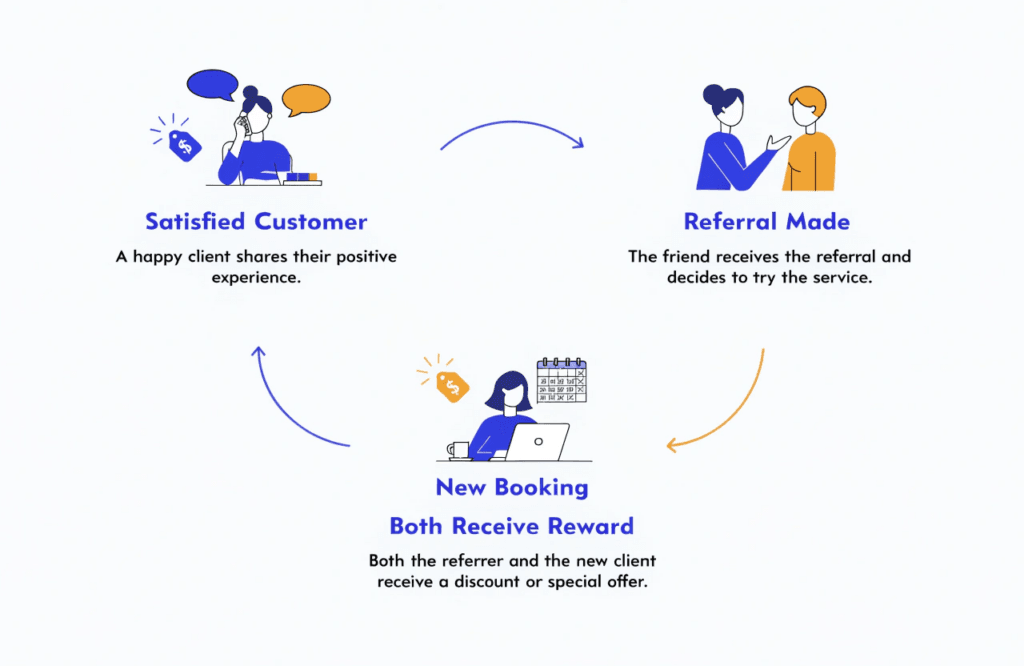
Word of mouth is the lifeblood of a local salon. But most salons leave it entirely to chance. A structured referral programme turns passive goodwill into active promotion.
The mechanics are simple: give existing clients a genuine incentive to recommend you. A discount off their next appointment, a complimentary treatment, or a retail product credit — whatever fits your margin. Crucially, reward both parties. When the person being referred also receives something (a discount on their first appointment, for example), they're far more likely to act on the recommendation.
Promote your referral programme in person, via email, and on your social channels. Make it easy to participate — a printed card, a referral link, or a simple "mention this to the receptionist" mechanism.
The underlying logic is that your best clients know people just like them. If you've built genuine relationships with a loyal core of clients, those relationships are your most efficient marketing channel.
Partner with Local Businesses
Strategic partnerships extend your reach to audiences you'd never otherwise access — without paid advertising.
For a hair salon, the natural partners are businesses serving the same clients at different moments in their lives. Bridal boutiques and wedding photographers are the obvious ones — a client planning a wedding needs hair as much as she needs a dress and a photographer. A mutual referral arrangement (you recommend them, they recommend you) costs nothing and can generate a steady stream of high-value bookings.
Gyms and fitness studios, clothing boutiques, beauty therapists, nail salons, and local spas are all worth exploring. The criteria for a good partnership are: shared target audience, no direct competition, and genuine alignment in quality and values. A luxury salon partnering with a budget gym won't translate.
Beyond referrals, partnerships can take the form of joint events (a "spring refresh" evening combining hair and beauty treatments, for example), co-created content for social media, or cross-promotion via email lists. The most durable partnerships are built on a real relationship between the business owners, not a transactional arrangement.
Collect and Display Reviews Obsessively
Reviews are one of the most significant factors in whether a new client chooses your salon. A strong, recent collection of five-star Google reviews builds trust before you've even spoken to someone. Equally, a few unaddressed one-star reviews can stop bookings dead.
How to ask. The most reliable method is a text message sent within 24 hours of an appointment, containing a direct link to your Google review page. Keep it short and personal. Response rates drop sharply with generic copy.
How to respond. Reply to every review — positive or negative. Thanking people for positive reviews shows you're engaged. Responding professionally and empathetically to negative reviews demonstrates integrity. Potential clients read both.
Where to display them. Your website homepage, your booking page, and your social media are all valuable places to surface positive reviews. Don't hide them in a dedicated testimonials page that nobody visits — put them where they'll be seen by people who are deciding whether to book.
Platform breadth. Google is the priority. But reviews on Treatwell, Facebook, and Yelp also influence decisions. Encourage clients to leave reviews wherever they feel comfortable.
Track What's Actually Working
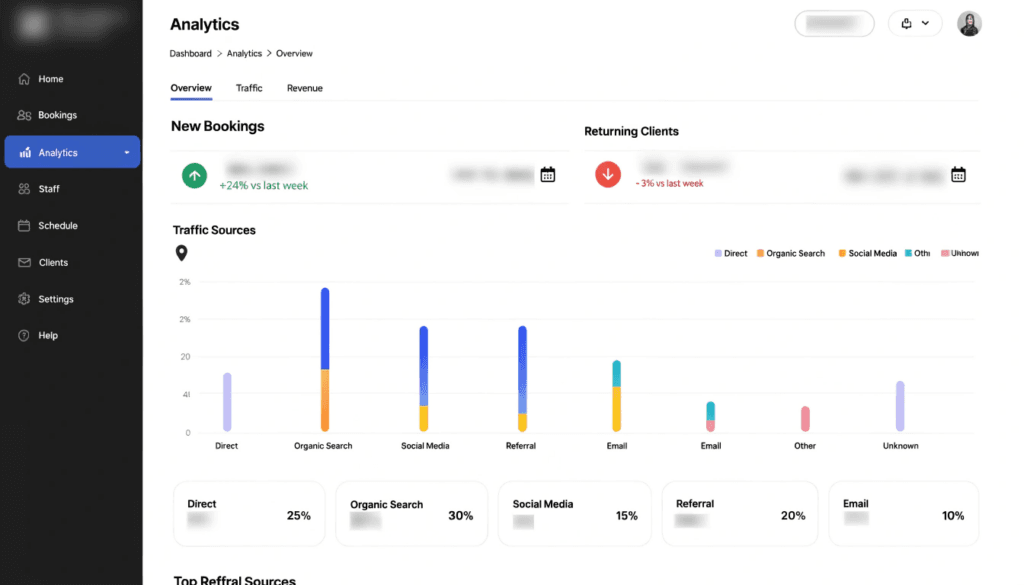
Marketing without measurement is guesswork. You don't need a sophisticated analytics setup to understand what's driving your bookings — but you do need some kind of tracking.
At a minimum, know:
- Where new clients are coming from. Ask during booking or as a standard intake question: "How did you hear about us?" Record the answers. Over time, a clear picture emerges.
- Your rebooking rate. What percentage of first-time clients return? If it's low, your retention strategy needs work before you spend more on acquisition.
- Your busiest and quietest periods. Which days and times are consistently slow? This tells you when to run promotions or ads, and when to rebook existing clients.
- Return on ad spend. If you're running paid ads, track how many bookings each campaign generates relative to what you spent. A campaign generating £800 in bookings from £100 in ad spend is worth scaling. One generating £100 in bookings from £200 in spend isn't.
Google Analytics (free) tracks website behaviour. Your booking software should report on appointment sources. A simple spreadsheet tracking monthly new clients, retention rate, and revenue by channel is often enough to make clear decisions.
Conclusion
Marketing a hair salon successfully isn't about doing everything at once. It's about building the right foundations — a strong local search presence, a website that converts, a social media presence that showcases your work — and then layering on paid advertising, referrals, and partnerships as you grow.
The salons that grow consistently are the ones that treat marketing as an ongoing discipline, not an occasional task. Small improvements compounded over months add up to significantly more clients, higher retention, and stronger revenue.
If you'd like to understand how your salon's current online presence stacks up, run a free SEO audit — it takes under a minute and gives you a clear picture of where you stand.