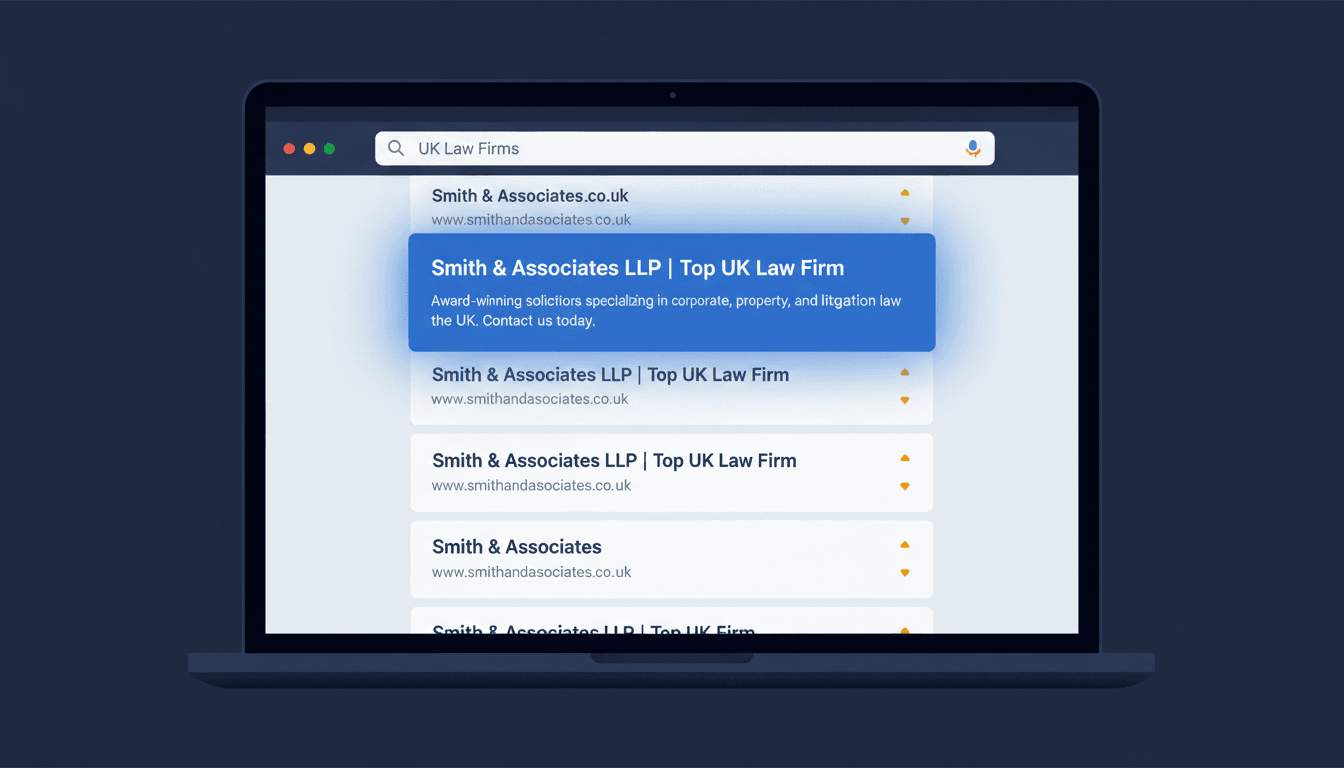
Most law firms get new clients one of two ways: referrals and reputation. Both are valuable, but both have a ceiling. When either slows down, there is no pipeline to fall back on.
This article is part of my small business guide to SEO and my small business marketing guide.
Search engine optimisation changes that. When someone needs a solicitor, they search online first. Research consistently shows that over 96% of people seeking legal services begin with a search engine. The firms appearing at the top of those results get the enquiries. The firms that don't appear don't get considered.
This guide covers everything a UK law firm needs to know about SEO: from keyword research and local search through to content strategy, technical foundations, and link building. If you want a steady flow of inbound enquiries from people actively looking for legal help, this is where to start.
Why SEO Matters for Law Firms
Legal is one of the most competitive verticals in search. There are around 9,800 regulated law firms in England and Wales, and the majority are competing for the same local and practice-area keywords. That competition makes SEO harder, but it also makes the rewards proportionally greater.
A few things make SEO particularly important for law firms specifically:
High search intent. People searching for a solicitor are not browsing. They have a problem: a divorce, a business dispute, a house purchase, an employment issue. They need help now. Ranking for those searches puts your firm in front of people ready to instruct.
Long-term cost efficiency. Paid search (Google Ads) for legal keywords is expensive. Terms like "personal injury solicitor" or "employment lawyer London" can cost tens of pounds per click. SEO is slower to build, but once your pages rank, that traffic costs nothing per visit.
Google treats legal content as YMYL. "Your Money or Your Life" is how Google classifies content that could materially affect someone's finances, health, or legal standing. For YMYL content, Google applies a higher standard of trust and expertise. Law firms that invest in demonstrating genuine authority will be rewarded; those that publish thin or generic content will struggle.
Step 1: Keyword Research for Law Firms
Before writing a single page or optimising a title tag, you need to know what your potential clients are actually searching for. That is what keyword research tells you.
Legal keywords fall into two distinct categories, and your strategy needs to address both.
Transactional keywords come from people who are ready to instruct. They know what they need and they are looking for a firm to hire. Examples include:
- "divorce solicitor Manchester"
- "employment lawyer London free consultation"
- "conveyancing solicitor for first-time buyers"
- "immigration lawyer near me"
These terms typically have lower search volume but very high conversion rates. Your service pages should target these.
Informational keywords come from people researching their situation. They are not yet ready to instruct, but they are building an understanding of their problem. Examples include:
- "how long does a divorce take UK"
- "can I claim unfair dismissal after 2 years"
- "what does a conveyancer do"
- "do I need a solicitor to buy a house"
These have higher search volume and are ideal for blog content and guides. They also build trust. Someone who found your firm's guide helpful is far more likely to instruct you when they are ready.
Resist the temptation to target only broad terms like "solicitor" or "law firm". These are dominated by aggregator sites and major national firms. The practical opportunity for most law firms lies in combining your practice area with a location or specific legal situation. That is where you can compete and win.
I use SE Ranking to research keywords for law firm clients. It shows search volume, keyword difficulty, and related phrases all in one place, and it is priced at a level that makes sense for a small firm rather than an enterprise marketing team.
Step 2: Local SEO and the Fastest Win for Most Firms
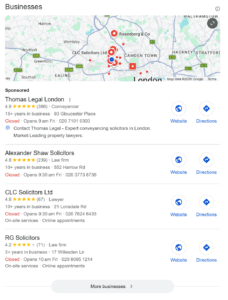
For the majority of UK law firms, local SEO is where the most immediate gains are available. Most legal searches carry local intent: someone searching "solicitor near me" or "family lawyer Bristol" wants a firm they can actually visit or call. Google serves these searches with the Local Pack, the map block showing three businesses at the top of results, and getting into those three spots can transform enquiry volumes.
Google Business Profile
Your Google Business Profile (GBP) is the foundation of local SEO. If you have not already claimed and fully completed it, do that first. A complete profile means:
- Accurate name, address, and phone number
- The correct primary category (e.g. "Law firm" or a specific practice area)
- A full list of your services
- Up-to-date opening hours
- Photos of your office and team
- Regular posts and updates
- A consistent flow of client reviews
Reviews are particularly important for law firms. Google uses review volume and rating as local ranking signals, and potential clients pay close attention to them. Make it a standard practice to ask satisfied clients for a Google review at the end of a matter.
Directory Listings and Citations
A citation is any online mention of your firm's name, address, and phone number. Consistent citations across authoritative directories tell Google your business information is reliable. For law firms, key directories include:
- The Law Society Find a Solicitor directory
- Solicitors.guru
- Yell
- Thomson Local
- Bing Places
Ensure your NAP (name, address, phone number) is identical across every listing. Small inconsistencies, such as an abbreviated street name in one place or a different phone format in another, can dilute your local authority.
Location Pages
If your firm serves multiple towns or areas, consider creating a dedicated page for each. A properly optimised location page that covers your services in a specific area can rank for searches like "conveyancing solicitor [town]" without cannibalising your main pages.
Step 3: On-Page SEO for Law Firms
On-page SEO is how you tell Google what each page on your website is about. For a law firm, this applies to every service page, practice area page, and blog post.
The key elements to get right:
Title tag. This appears as the blue clickable link in search results. Include your target keyword as close to the start as possible, and keep it under 60 characters. "Divorce Solicitors in Leeds | Smith & Partners" works well. "Welcome to Our Law Firm" does not.
Meta description. Does not directly affect rankings, but a well-written description improves click-through rates. Keep it under 155 characters, mention the practice area and location, and include a soft call to action.
H1 heading. One per page, containing your target keyword. It should match or closely mirror your title tag.
URL structure. Keep it clean and descriptive. /family-law/divorce-solicitors-manchester/ is far better than /page-id-4327/.
Body content. Write for the reader, not for the algorithm. Keyword stuffing is counterproductive. Mention your target term and naturally related phrases throughout the content, but prioritise genuine usefulness.
A note on SRA compliance. The Solicitors Regulation Authority sets rules on how law firms can describe their services. Claims you cannot substantiate, such as "we never lose" or "the best solicitors in London", are not permitted and will undermine trust with potential clients even if Google does not penalise them directly. Stick to accurate, factual descriptions of what you offer and who you are.
Step 4: Content Strategy: Building Authority Through Expertise
Service pages will rank for transactional terms, but blog content and guides are how you capture the informational audience and build the topical authority that signals genuine expertise to Google.
For a law firm, a strong content strategy typically looks like this:
Pillar pages cover a broad practice area comprehensively. For example, a detailed guide to family law, covering what it encompasses, what clients can expect, timelines, and costs.
Cluster posts go deep on specific subtopics within that area. How long a contested divorce takes, what happens to a pension in a divorce settlement, how child custody arrangements are agreed.
FAQ content targets the "People Also Ask" questions that appear in Google search results. These are often conversational, specific questions your potential clients are asking right now. Answering them clearly and directly is one of the more reliable ways to win featured snippet positions.
Case study content (where client confidentiality allows) demonstrates real-world experience and builds the E-E-A-T signals that Google looks for in legal content. A detailed case study showing how a complex employment dispute was resolved is far more persuasive than a generic service description.
Aim to publish at least two to three well-researched pieces per month. Consistency matters more than volume. A steady stream of quality content will outperform a burst of posts followed by months of silence.
Step 5: Technical SEO Basics
Technical SEO is the infrastructure that everything else relies on. A technically sound website does not automatically rank well, but a technically poor one will hold back even excellent content.
The main areas to address:
Page speed. Google's Core Web Vitals are a confirmed ranking factor. Slow-loading pages, particularly on mobile, lose both rankings and visitors. Compress images, reduce unnecessary scripts, and use a caching plugin if you are on WordPress.
Mobile-first indexing. Google indexes the mobile version of your site first. If your mobile experience is poor, with small text, cluttered layouts, or contact forms that are difficult to complete on a phone, your rankings will reflect it. Given that around 58% of legal searches happen on mobile devices, this is not a minor issue.
HTTPS. If your site is still running on HTTP, fix this immediately. It is a basic trust signal and a confirmed ranking factor.
XML sitemap. Submit one via Google Search Console so Google knows which pages exist on your site.
Robots.txt. Check that you have not accidentally blocked Google from crawling important pages. This is a surprisingly common error.
Structured data. Schema markup can unlock rich results in search, including FAQ sections, local business information, and star ratings, that increase your visibility beyond just a standard blue link.
If technical SEO feels outside your comfort zone, an annual technical audit by an SEO professional is a worthwhile investment that will surface and prioritise any issues.
Step 6: Link Building for Law Firms
Backlinks are links from other websites pointing to yours, and they remain one of the strongest ranking signals in Google's algorithm. A link from a respected, relevant website tells Google your content is worth trusting.
Relevance matters more than volume. A handful of links from respected legal publications, local news sites, or professional bodies will do far more for your rankings than hundreds of links from low-quality directories.
Practical approaches that work for law firms:
Legal directories. The Law Society Find a Solicitor, the Bar Council directory, and specialist bodies relevant to your practice area all provide authoritative links. Listing your firm here should be one of your first priorities.
Guest content. Writing an article for a local business publication, trade association, or industry website in one of your practice areas earns both a link and visibility with a relevant audience.
Local PR. Sponsoring a local event, contributing comment to a news story, or getting involved in a local business initiative often results in coverage that links back to your site.
Supplier and partner links. If your firm works with accountants, estate agents, or other professional services businesses, ask whether they include referral partners on their websites.
Useful content that earns links naturally. Original research, detailed guides, or tools that answer common client questions attract links over time without any outreach. A well-researched guide to the conveyancing process, for example, is the kind of resource other legal and property websites will reference.
Avoid buying links. Google has become increasingly effective at identifying paid link schemes, and the penalties can be severe and long-lasting.
Step 7: Tracking Results
An SEO strategy without measurement is guesswork. You need to track what is working to know where to invest more effort.
The essential tools:
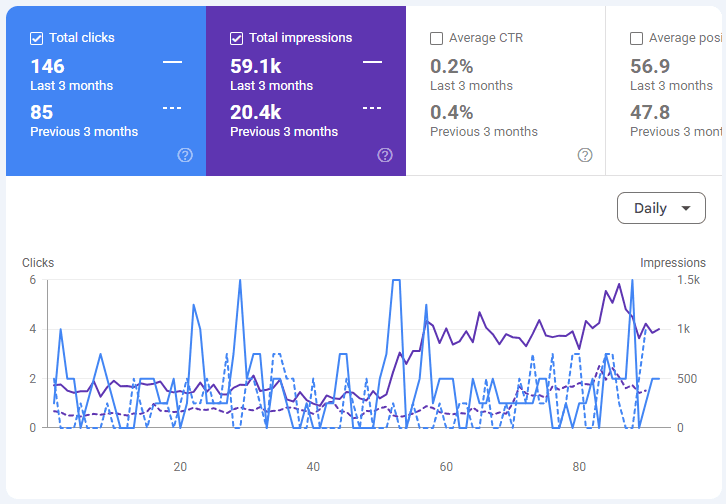
Google Search Console is free and shows which keywords are bringing visitors to your site, which pages are indexed, and any technical errors Google has flagged. This should be the first place you check each month.
Google Analytics 4 tracks what visitors do once they land on your site. Set up conversions for your key actions, such as phone number clicks, form submissions, and contact page views, so you can see which pages and keywords are actually generating enquiries rather than just traffic.
A rank tracking tool lets you monitor your position for target keywords week on week. Seeing movement in rankings gives you a clear signal about whether your efforts are working and which terms need more attention.
Key metrics to review monthly:
- Organic traffic (sessions from search)
- Keyword rankings for your priority terms
- Click-through rate from Google Search Console
- Conversions from organic traffic (enquiries, phone clicks, form submissions)
Most law firms should start to see meaningful movement within three to six months of implementing a consistent strategy. Competitive terms in established markets can take longer. The timeline depends on your domain authority, the quality of your content, and how technically sound your site is.
E-E-A-T and AI Search in 2026
Google's framework for assessing content quality covers Experience, Expertise, Authoritativeness, and Trustworthiness. This has always mattered, but for legal content it carries particular weight. Legal advice can have serious financial and personal consequences for the people reading it, and Google holds it to a higher standard accordingly.
Practical ways to demonstrate E-E-A-T as a law firm:
- Include detailed author bios on every piece of content, with the author's qualifications, SRA number, and areas of practice
- Use structured data to mark up your authors and organisation
- Keep content accurate, current, and signed off by a qualified solicitor rather than published anonymously
- Earn mentions and links from respected legal and professional bodies
AI-generated overviews in Google search results are also an increasingly important consideration. For informational legal queries, Google is now surfacing AI summaries at the top of results, sometimes before any organic listings. Being cited within those summaries requires well-structured, authoritative content that covers a topic clearly and comprehensively. Firms producing genuine expert content are far more likely to be cited than those producing thin or generic pages.
Frequently Asked Questions
How long does SEO take for a law firm? Most law firms start to see meaningful movement between three and six months of consistent effort. Competitive terms in major cities can take twelve months or more. The foundation you build in those early months compounds over time. SEO results are slow to arrive but durable once established.
Is local SEO or national SEO right for my firm? Most law firms benefit most from local SEO. If you serve clients in a specific area, such as a high-street family law firm or a regional commercial practice, local search is where your highest-intent clients are looking. Larger firms with national reach, or those offering specialist services that clients travel for, benefit from a broader keyword strategy alongside local optimisation.
Can I do SEO myself or do I need an agency? Some elements are entirely manageable in-house, including claiming your Google Business Profile, publishing useful content, and asking for client reviews. The more technical aspects, particularly site architecture, structured data, and link building, are more demanding. Many firms handle content themselves and bring in an SEO professional for the technical and strategic layer.
How much does SEO cost for a law firm? Costs vary significantly depending on how competitive your market is and how much work is required. A meaningful SEO programme in a competitive legal market typically starts from around £1,000 to £1,500 per month. You can also see solid results from a focused audit and strategy engagement followed by in-house implementation, particularly for smaller firms in less competitive locations.
Conclusion
SEO is not a quick fix and it is not a one-off project. It is an ongoing investment in your firm's visibility, one that compounds over time and generates a consistent stream of high-intent enquiries without the ongoing cost of paid advertising.
The law firms that benefit most from SEO are those that treat it systematically: clear keyword targets, optimised service pages, a consistent content plan, solid technical foundations, and regular measurement. None of it is complicated, but it does require consistency.
If you'd like a broader view of how all the digital channels fit together for a legal practice, my guide to digital marketing for law firms covers the full picture. For more on the SEO side, take a look at what my SEO services include.
Ready to see how your site is performing right now? Run a free SEO audit. It takes under a minute and gives you a clear picture of where to focus first.