Most business owners have heard of SEO, but local SEO is where things get interesting, particularly if you serve customers in a specific area. Whether you're a plumber in Surrey, a solicitor in London, or a salon owner in Hampshire, local SEO is the reason some businesses dominate Google in their area while others are invisible to the very customers who are looking for them right now.
The numbers make the case pretty bluntly: according to research by BrightLocal, nearly half of all Google searches have local intent. People aren't just searching for "plumber" or "solicitor". They're searching for "plumber near me" or "solicitor in [town]." If your business isn't optimised to show up in those searches, you're handing those leads to your competitors.
In this guide, I'll explain what local SEO actually is, how it works, why it matters for your business, and what you can do to improve your position in local search results.

What Is Local SEO?
Local SEO (local search engine optimisation) is the process of improving your business's visibility in geographically relevant search results. In plain terms: it's how Google decides which businesses to show when someone searches for a service in a specific location.
Standard SEO is about ranking for search terms regardless of location. Think queries like "what is a title tag" or "how to write a meta description." Local SEO is specifically about the searches that include a location, either explicitly ("accountant in Fleet") or implicitly ("accountant near me" typed by someone sitting in Fleet).
There are two types of businesses local SEO applies to:
Businesses with physical premises. Restaurants, salons, dental practices, solicitors' offices, and shops. Anywhere a customer visits in person, local SEO is relevant. For these businesses, showing up when someone nearby searches is often the difference between a full diary and an empty one.
Service-area businesses. Plumbers, electricians, builders, cleaners. These are trades and home service businesses that travel to the customer rather than having a shopfront. Local SEO is equally important here, because your customers are still searching locally before they pick up the phone.
The Local Pack: the most valuable spot on Google
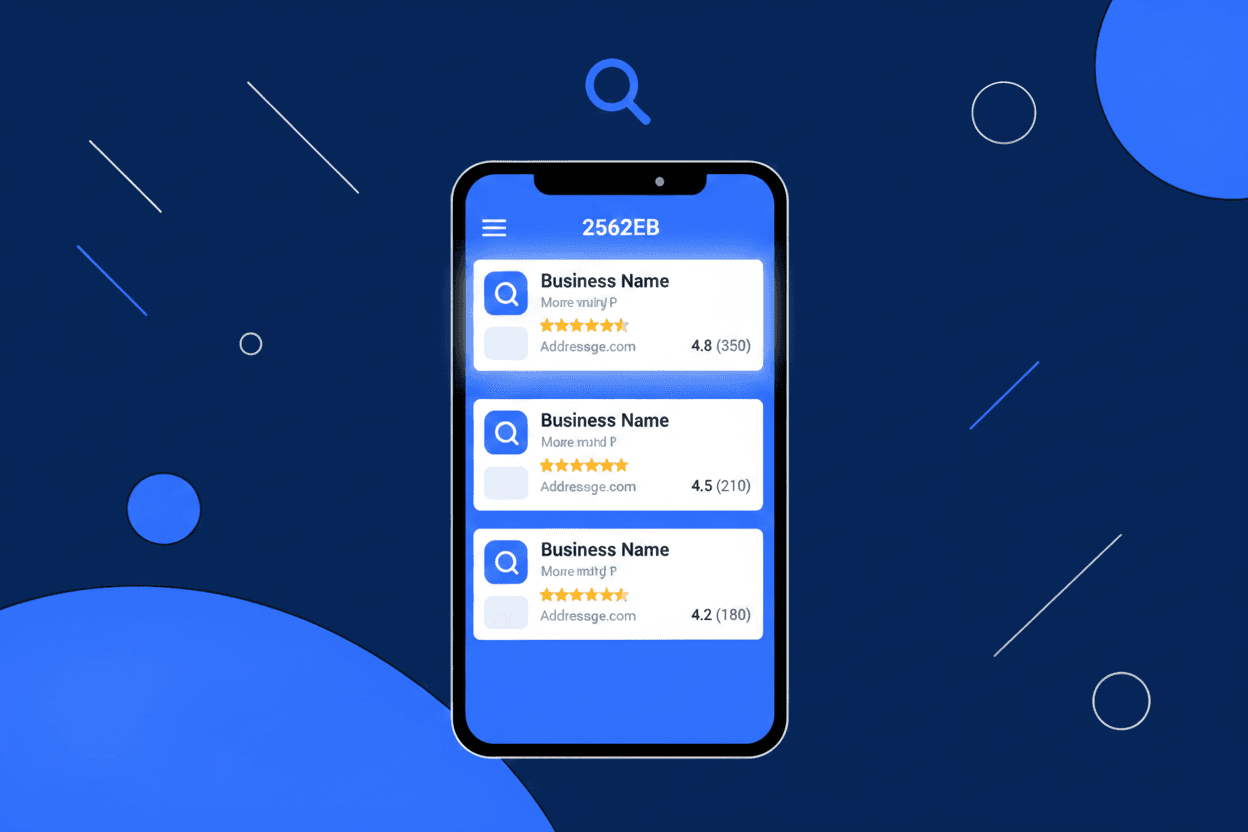
When you search for a local service on Google, you'll usually see a map appear near the top of the results with three business listings underneath it. This is called the Local Pack (sometimes the "3-pack" or "map pack"), and it sits above the standard organic results.
Getting into the Local Pack is one of the highest-value outcomes of local SEO. Those three listings get the majority of clicks for local searches. They come with your phone number, opening hours, reviews, and directions built in. That's a lot of purchase intent captured before a potential customer even visits your website.
How Does Local SEO Work?
Google uses a separate set of ranking signals for local searches, layered on top of its standard algorithm. Understanding these signals helps you understand where to focus your efforts.
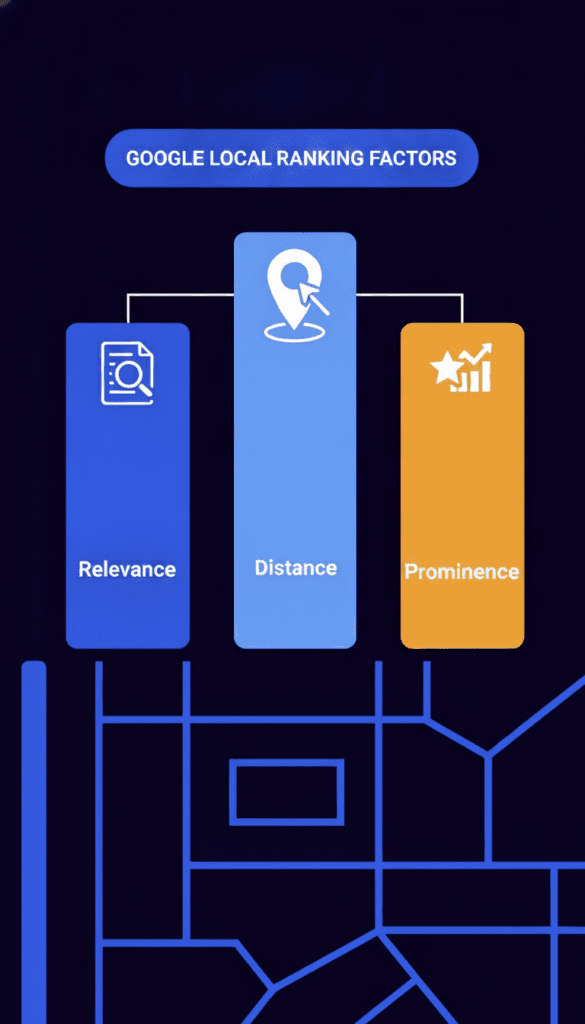
Google evaluates local businesses on three core factors:
Relevance. How closely does your business match what the person is searching for? This is influenced by the information on your Google Business Profile, the keywords on your website, and the categories you've chosen for your listing.
Distance. How far is your business from the searcher (or the location they've specified)? Google estimates proximity based on the user's location and your registered business address or service area.
Prominence. How well-known and trusted is your business, both online and offline? This is determined by the quantity and quality of your reviews, how many other websites mention or link to your business, and your overall online presence.
Beyond these three, the specific ranking signals Google looks at for local searches include:
- Your Google Business Profile (completeness, accuracy, and activity)
- NAP consistency (your Name, Address, and Phone number matching across every online directory and listing)
- The sentiment and volume of your Google reviews
- Local citations. These are mentions of your business on directories, local websites, and industry listings
- Location-based keywords on your website and landing pages
- Local backlinks from other businesses or organisations in your area
Why Is Local SEO Important for Your Business?
The short answer: because your customers are searching locally, and if you're not visible when they do, someone else gets the call.
Here's a clearer picture of what that means in practice.
Visibility when purchase intent is highest
Local searches are not idle browsing. When someone searches "emergency plumber near me" or "hair salon open Saturday," they're ready to act. Research consistently shows that a large proportion of local mobile searches result in a visit or contact within 24 hours. Being visible at that moment is far more valuable than brand awareness advertising, because the customer has already decided they need what you offer.
The Local Pack captures the most clicks
If your business appears in the Local Pack, you get a prominent position above the organic results, your phone number displayed directly, your star rating visible at a glance, and a link to your Google Maps directions. Businesses in the Pack get a disproportionate share of clicks compared to those buried in the standard organic results.
Reviews build trust before the first contact
Local SEO is closely tied to your online reputation. According to BrightLocal's research, over 80% of consumers check Google reviews before visiting or contacting a local business. A strong set of recent, positive reviews isn't just a nice-to-have. It's a ranking factor and a conversion factor rolled into one.
It improves your website too
Many of the technical and on-page improvements you make for local SEO (page speed, mobile optimisation, locally focused landing pages, clear contact information) also improve your website's overall performance. A faster, better-structured site converts more of the visitors you already have, regardless of how they found you.
It's free to get started
Unlike Google Ads, local SEO doesn't require a monthly ad budget. Setting up and optimising your Google Business Profile costs nothing. Getting listed in online directories costs nothing. The investment is time, or the cost of working with someone who knows what they're doing. The organic visibility you build compounds over time in a way that paid advertising doesn't.
What Does Local SEO Involve? The Key Components
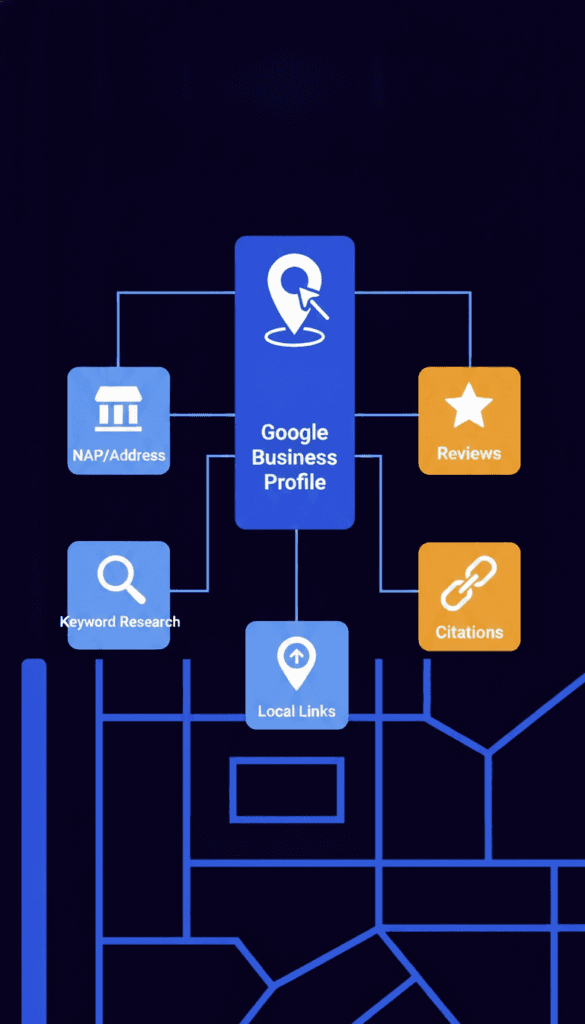
Local SEO isn't one single thing. It's a combination of activities that work together to improve your visibility. Here's a breakdown of the main components.
Google Business Profile
Your Google Business Profile (GBP) is the single most important element of local SEO. It's the listing that appears in the Local Pack and on Google Maps. Getting it set up correctly (accurate business name, address, phone number, opening hours, category, and a good selection of photos) is the foundation everything else is built on.
Keeping it active matters too. Responding to reviews, posting updates, and adding new photos all signal to Google that your business is active and engaged.
NAP consistency
NAP stands for Name, Address, and Phone number. Google cross-references your business information across dozens of online sources (directories, social profiles, local websites) to verify that what you're telling it is accurate. If your address is listed differently on Yell than it is on your website, or your phone number changed two years ago but wasn't updated everywhere, those inconsistencies can hurt your local rankings.
Auditing and correcting your NAP citations is often one of the first things I work through with a new client, because it's a surprisingly common issue and a relatively quick win.
Local keyword targeting
Your website needs to reflect the locations you serve. That means having pages that reference the specific towns or areas your customers are searching in, and using the kind of phrases they actually type into Google ("emergency plumber in Farnham" rather than just "plumbing services").
A tool like SE Ranking is useful here. You can research local keyword volumes, track how your pages rank for location-specific terms, and monitor the progress of your local SEO campaign over time.
Online reviews
Actively managing your reviews is part of local SEO, not a separate activity. That means asking satisfied customers to leave a review and responding to both positive and negative ones professionally. Review signals directly influence your Local Pack ranking and have a significant effect on click-through rates.
Local citations and directory listings
Getting your business listed accurately on the major directories (Google, Bing Places, Apple Maps, Yell, Trustpilot, and industry-specific directories) builds the citation footprint that helps Google verify your business is legitimate and located where you say it is.
Local link building
Links from other local websites (a local newspaper, a business association, a complementary local business) carry particular weight for local SEO because they reinforce your geographic relevance. This is harder to do at scale, but even a handful of genuine local links can make a meaningful difference.
Local SEO vs. Standard SEO: What's the Difference?
People often ask whether local SEO and standard SEO are separate things. They're not. Local SEO builds on the same foundations as standard SEO. The difference is the target and the additional signals involved.
| Standard SEO | Local SEO | |
|---|---|---|
| Goal | Rank for broad, non-location-specific terms | Rank for location-based searches and the Local Pack |
| Key focus | Content, technical SEO, backlinks | Google Business Profile, NAP, reviews, local citations |
| Who needs it | Any website targeting online audiences | Any business serving customers in a specific area |
| Where results appear | Organic search results | Local Pack, Google Maps, organic results |
| Key tool | Your website | Your website + Google Business Profile |
If your business has a local element, you need both. Standard SEO helps you rank for informational content and broader service terms; local SEO helps you capture the customers who are ready to buy right now and are searching with a location in mind.
How Long Does Local SEO Take to Show Results?
This is one of the most common questions I get, and the honest answer is: it depends on where you're starting from and how competitive your local market is.
Some things move quickly. Claiming and fully optimising your Google Business Profile can produce visible results within a few weeks, particularly if you're in a lower-competition area or your profile was previously incomplete. Fixing NAP inconsistencies and getting listed in key directories can also have a relatively quick impact.
Other things take longer. Building a genuinely strong local ranking for competitive terms (say, "plumber in London" rather than "plumber in Fleet") requires consistent work over several months. Google's algorithm rewards sustained effort and signals built up over time, not overnight fixes.
As a rough guide, most businesses I work with see meaningful movement in local rankings within three to six months, with the most competitive positions taking six to twelve months of consistent work to achieve.
The important thing to understand is that local SEO compounds. The work done in month one pays dividends in month six. Unlike paid advertising, where visibility stops the moment you stop spending, organic local SEO builds an asset that keeps working for you.
Is Local SEO Worth It for Small Businesses?
For any business that relies on customers from a specific area, the answer is yes. In my experience it's one of the highest-return marketing investments available to a small business.
The businesses that show up consistently in the Local Pack and in local organic results are capturing the majority of high-intent local searches. They're getting phone calls, enquiries, and walk-ins that their competitors who haven't invested in local SEO simply aren't seeing.
If you're a tradesperson, a local service business, a professional services firm, or a bricks-and-mortar business, local SEO isn't optional. It's the foundation of your online presence.
Conclusion
Local SEO is how Google connects searchers with businesses in their area. It operates through a combination of your Google Business Profile, your website, your reviews, your citations, and your local links. Google governs it all through three key factors: relevance, distance, and prominence.
If your business serves customers in a specific location and you're not actively working on local SEO, you're leaving leads on the table every single day. The good news is that many of the foundations (setting up your GBP, cleaning up your NAP citations, gathering reviews) are accessible to any small business, and the long-term payoff is significant.
If you'd like to understand where your site stands right now, run a free SEO audit. It takes under a minute and gives you a clear picture of what's working and what needs attention.
Or if you're ready to put a proper local SEO strategy in place, get in touch and let's talk through what's possible for your business.