Most salon owners I speak to have the same problem. They are genuinely talented at what they do — great cuts, flawless colour, treatments that clients rave about — but their chairs are not as full as they should be. The problem is rarely the service. It is almost always the marketing.
This article is part of my small business marketing guide.
The good news is that you do not need a big budget or a dedicated marketing team to fix this. What you need is a clear strategy: a connected set of actions that help the right people find you, trust you, and book with you — and then keep coming back.
This guide covers the core pillars of an effective salon marketing strategy, from getting your local visibility right to retaining clients through email and loyalty programmes. Work through them one at a time and you will start to see the difference.
Start With Your Foundations
Before you run a single ad or post on Instagram, make sure your foundations are solid. These are the non-negotiables that every other marketing activity builds on.
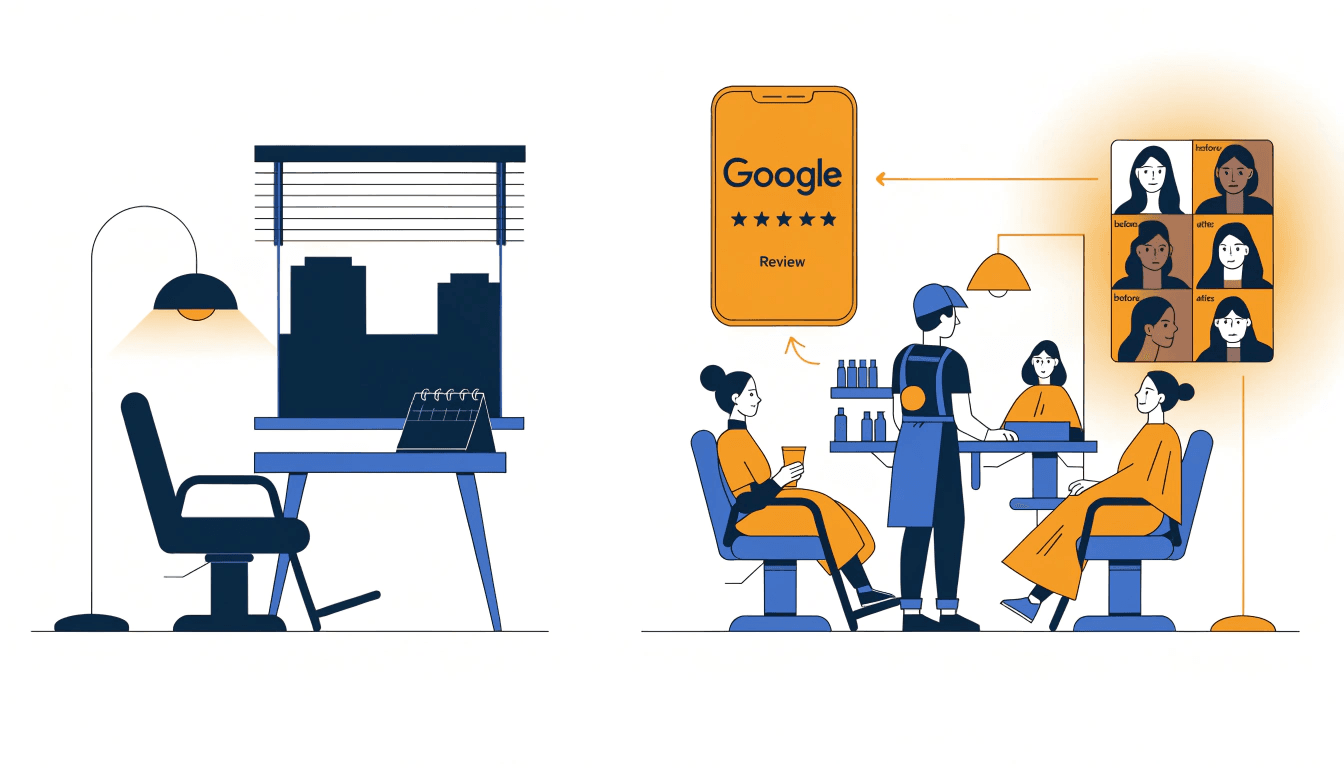
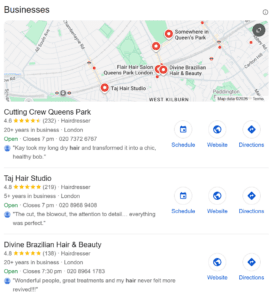
Google Business Profile. If someone searches "hair salon near me" and you do not appear, you do not exist to that person. Setting up and fully optimising your Google Business Profile is free, takes an afternoon, and will drive bookings for years. Add your services, opening hours, photos, and a booking link. Encourage every happy client to leave a review.
A professional website. Your website is your 24-hour receptionist. It needs to load quickly on mobile, clearly show your services and prices, and make it dead simple to book an appointment. If your site looks dated or takes more than three seconds to load, potential clients will click away before they ever read a word.
Consistent NAP details. NAP stands for name, address, and phone number. These must be identical across your website, Google Business Profile, and every directory listing you appear on. Inconsistencies confuse Google and undermine your local search visibility.
Get these three things right before anything else. They are the difference between marketing that compounds and effort that disappears into the void.
Get Found Locally With SEO
Local SEO is the process of making your salon appear in search results when people in your area look for services you offer. It is one of the highest-return marketing activities available to a salon owner because the people searching are already ready to book.
When someone types "balayage in Manchester" or "nail salon near me" into Google, they are not browsing for inspiration — they have their card in hand. Your job is to be visible at that moment.
The core elements of local SEO for salons are:
- Google Maps ranking. This comes from a well-optimised Google Business Profile, consistent citations across the web, and a steady flow of genuine reviews.
- On-page SEO. Each service page on your website should be built around the terms your ideal clients actually search for. A page titled "Balayage" is fine; a page optimised for "balayage salon in [your city]" is far more likely to rank.
- Reviews. Google treats reviews as a ranking signal. A salon with 80 reviews and a 4.8-star rating will almost always outrank one with 10 reviews and a 5-star rating. Build a simple system for asking happy clients to leave a review — a follow-up text message with a direct link works well.
If you want a deeper dive into this topic, my full guide to SEO for salons covers everything from keyword research to technical optimisation.
Build a Social Media Presence That Actually Works
Social media is not a magic wand, but for salons it is one of the most powerful tools available — because your work is inherently visual. Before-and-after transformations, colour reveals, and styling videos are exactly the type of content that stops people mid-scroll.
The key is choosing the right platforms and being consistent rather than spreading yourself too thin.
Instagram remains the primary platform for hair and beauty businesses in the UK. It is where clients go to research their next treatment and decide whether they trust a stylist. Post your best work consistently, use Reels to reach new audiences, and make sure your booking link is in your bio.
TikTok is growing rapidly in the beauty space, particularly for tutorials, transformations, and behind-the-scenes content. If you are comfortable on camera, even short, informal videos can generate significant reach.
Facebook is less visually-led but remains useful for running local paid ads and engaging a slightly older demographic.
A few practical tips that make a real difference:
- Post consistently rather than in bursts. Three times a week beats three times a day for two weeks and then nothing.
- Use location tags and relevant hashtags on every post to help local clients discover you.
- Ask happy clients for permission to share their results. User-generated content is more trusted than anything you produce yourself.
- Reply to every comment and DM promptly. Social media rewards engagement, and so do prospective clients.
Use Email and SMS to Retain the Clients You Already Have
Winning a new client costs significantly more than keeping an existing one. Yet most salons put almost all their marketing energy into acquisition and very little into retention. Email and SMS flip that equation.
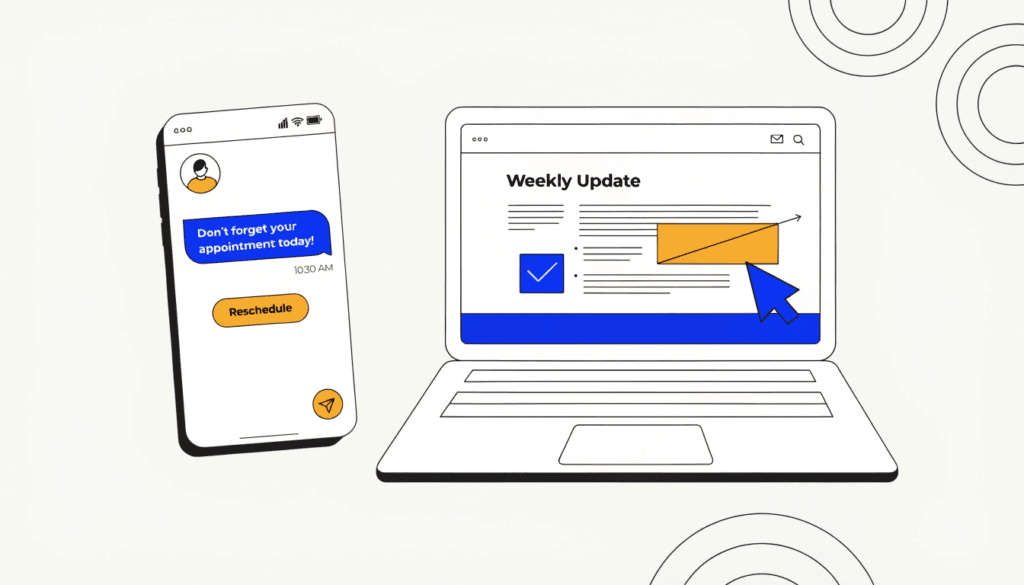
Email marketing works best when it is segmented and personal. A bulk email blast to every address on your list is likely to be ignored or marked as spam. Instead, send targeted messages: a rebooking reminder to clients who have not visited in eight weeks; a seasonal offer to clients who regularly book colour treatments; a birthday discount to clients whose birthday is coming up.
Most salon booking systems will hold this data. The question is whether you are using it.
SMS marketing has exceptionally high open rates — well above email. A simple text message a few days before a client's next likely appointment, or a short reminder when a seasonal promotion is running, can be remarkably effective. Keep messages brief, personal, and always include an easy way to book.
The goal of both channels is not to sell — it is to stay top of mind so that when a client is ready to book, you are the obvious choice.
Run Targeted Paid Advertising
Organic marketing — SEO, social media, email — takes time to build. Paid advertising gives you a way to accelerate growth, particularly when you are launching a new service, targeting a specific area, or trying to fill your diary in a quiet period.
Google Ads are ideal for capturing high-intent searches. Someone typing "hair extensions salon London" is ready to book. A well-structured Google search campaign puts your salon in front of that person at exactly the right moment. You control your budget, your target area, and which services you promote.
Meta Ads (Facebook and Instagram) work differently. They are better for awareness, retargeting, and promoting visually-led offers. A before-and-after transformation video, served to women aged 25–45 within five miles of your salon, can be remarkably cost-effective. Meta Ads are particularly good for retargeting people who have visited your website but not yet booked.
The most important thing with paid advertising is tracking. If you do not know which campaigns are driving bookings, you cannot improve them. Make sure your booking system or website is set up to capture where new clients are coming from.
If you would like help setting up a paid campaign that drives real bookings, our Google Ads management service is built specifically for small service businesses.
Set Up a Referral Programme
Word of mouth has always been the most powerful form of marketing for salons. A referral programme turns that natural behaviour into a system.
The mechanics do not need to be complicated. A simple offer — "refer a friend and you both receive 15% off your next appointment" — is enough to motivate action. The important things are:
- Make it easy to share. A referral card, a unique code, or a simple message clients can forward does the job.
- Promote it at the point of highest satisfaction — at the end of a great appointment, when the client is looking in the mirror and feeling good.
- Track it. Know which clients are sending referrals so you can reward your most loyal advocates.
A referral programme costs very little to run and delivers clients who arrive with a pre-existing level of trust, because someone they know has already vouched for you.
Build a Loyalty Scheme That Encourages Repeat Visits
Loyalty programmes work best when they are simple and the reward feels genuinely worthwhile. A stamp card — "get your 10th treatment free" — is easy to understand and gives clients a reason to keep coming back rather than trying a competitor.
Digital loyalty schemes, often built into salon booking software, allow you to go further. You can track client spend, reward upgrades, offer exclusive early access to new services, and send personalised reward notifications. The more a client feels valued, the less likely they are to shop around.
Leverage Influencer Partnerships and Local Collaborations
You do not need to work with celebrities. Local micro-influencers — people with between 1,000 and 20,000 engaged followers in your area — can be highly effective for salons. Their audiences are local, their recommendations feel authentic, and the cost is usually a complimentary treatment rather than a fee.
The key is relevance. A lifestyle blogger based in your town, a fitness influencer who talks about self-care, or a local wedding planner whose audience is full of brides-to-be — these are the people whose recommendations will actually translate into bookings.
Local business partnerships are equally valuable. A bridal boutique, a photographer, a spa — businesses whose clients overlap with yours but who are not direct competitors. Cross-promotions, joint events, and simple referral arrangements can send a steady flow of new clients your way at minimal cost.

Track What Is Working
Marketing without measurement is guesswork. You do not need to track every metric — just the ones that connect directly to revenue and growth.
The most useful metrics for a salon are:
- New client bookings by source. Where are your new clients coming from? Google, Instagram, referrals, ads? Knowing this tells you where to invest more.
- Repeat visit rate. What percentage of first-time clients come back for a second appointment? This is one of the most telling indicators of client satisfaction and retention marketing effectiveness.
- Cost per new client. If you are running paid ads, divide your monthly ad spend by the number of new clients those ads generated. This tells you whether your campaigns are profitable.
- Average transaction value. Are clients booking add-on treatments or just the minimum? This can often be improved through better staff training and upsell prompts at the point of booking.
Review these numbers monthly. Even a basic spreadsheet is enough to start making more informed decisions.
Frequently Asked Questions
How much should a salon spend on marketing? A healthy starting point is 3–7% of gross revenue. If you are in a growth phase or have recently opened, you may need to invest closer to 10% temporarily to build your client base.
What is the most effective marketing channel for salons? It depends on your goals. Local SEO and Google Business Profile deliver the highest-intent clients. Social media builds brand awareness and trust. Email and SMS retain existing clients. The best strategy uses all three in combination.
How long does it take for SEO to work for a salon? For local SEO, you can often see meaningful improvement in Google Maps rankings within two to three months. Organic website rankings typically take three to six months to show results, depending on competition in your area.
Do salons need a website if they have Instagram? Yes. Instagram is great for discovery and inspiration, but it is a platform you do not own. Algorithms change, accounts get restricted, and there is no built-in booking flow. A website gives you a professional home base, captures organic search traffic, and allows clients to book directly without leaving Google.
Should I use Google Ads or Meta Ads for my salon? Both have a role. Google Ads are better for capturing people who are actively searching for a salon right now. Meta Ads are better for visual storytelling, awareness, and retargeting people who have already visited your website. If budget is limited, start with Google.
Conclusion
A great salon marketing strategy is not about doing everything at once. It is about building a connected system where each piece supports the others: local SEO brings in new clients, social media builds trust, email keeps existing clients coming back, and paid advertising accelerates growth when you need it.
Start with your foundations — your Google Business Profile, your website, and your local citations. Then build outward from there. Consistency beats intensity every time.
Ready to take this further? Get in touch and let's talk through what's possible for your salon.