If you've been trying to get your business found online, you've probably heard the term PPC thrown around. Maybe someone suggested it as a way to get more leads, or you've noticed the "Sponsored" labels at the top of Google and wondered how those businesses got there.
This article is part of my small business guide to Google Ads.
PPC — or pay-per-click advertising — is one of the most direct and measurable ways to put your business in front of potential customers at the exact moment they're searching for what you offer. But it can also feel complicated and expensive if you don't understand how it works.
This guide cuts through the jargon. By the end, you'll know what PPC is, how it works, what types are available, and whether it makes sense for your business right now.
What Is PPC Advertising?
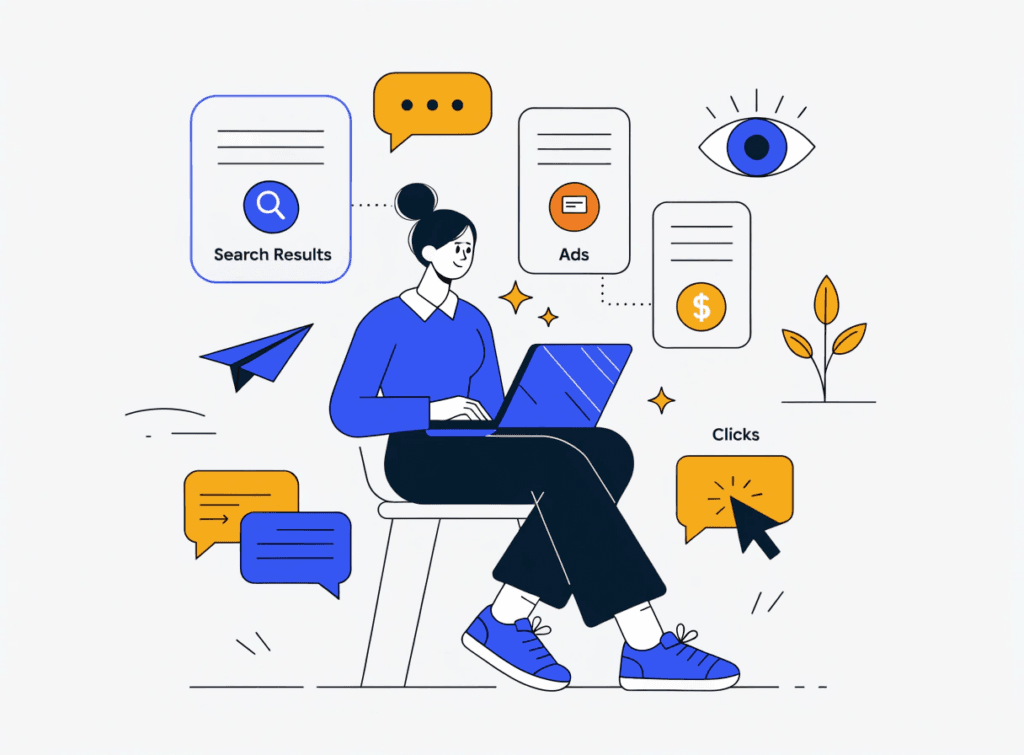
PPC stands for pay-per-click. It's a model of online advertising where you pay a fee each time someone clicks on your ad — rather than paying a flat rate just to have the ad displayed.
The most well-known form of PPC is Google Ads, where your adverts can appear at the top of search results when someone types in a relevant keyword. But PPC extends well beyond Google. You'll find it on Microsoft (Bing), Facebook, Instagram, LinkedIn, YouTube, and more.
The core idea is simple: you're essentially buying visits to your website rather than waiting to earn them organically through SEO. Done well, PPC delivers fast, measurable results. Done poorly, it can eat through your budget with very little to show for it.
How Does PPC Advertising Work?
Understanding the mechanics helps you make smarter decisions about how to use it.
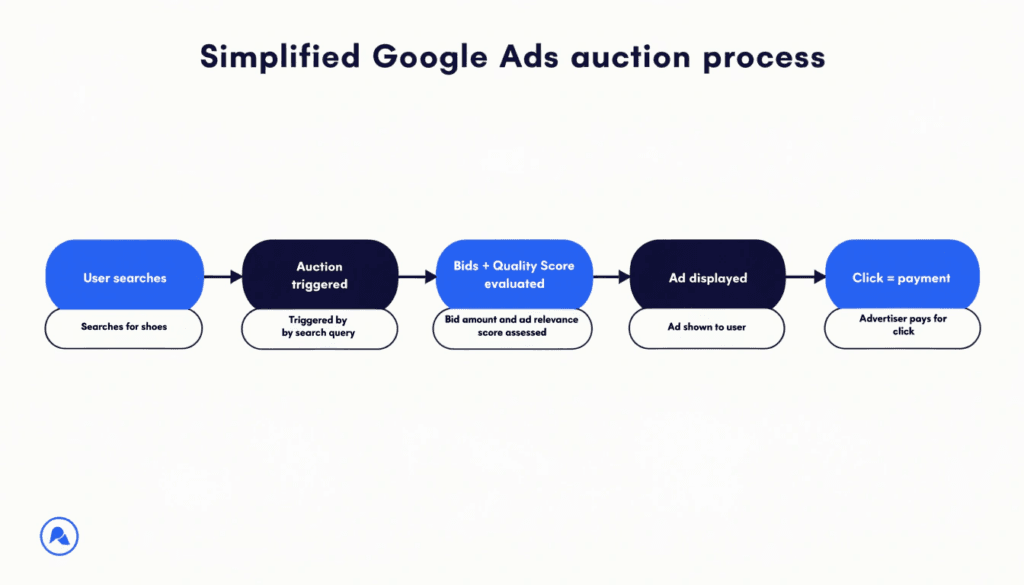
When you set up a PPC campaign, you select keywords — the search terms you want your ads to appear for. When someone searches for one of those terms, an automated auction takes place in milliseconds to decide which ads appear and in what order.
The auction doesn't simply reward the highest bidder. Platforms like Google use a combination of:
- Your bid — the maximum you're willing to pay per click
- Ad quality — how relevant and useful your ad is to the searcher
- Landing page experience — how well your destination page matches what the searcher is looking for
This is actually good news for smaller businesses. A well-crafted ad with a strong, relevant landing page can outperform a big-budget competitor with a generic, poorly structured campaign.
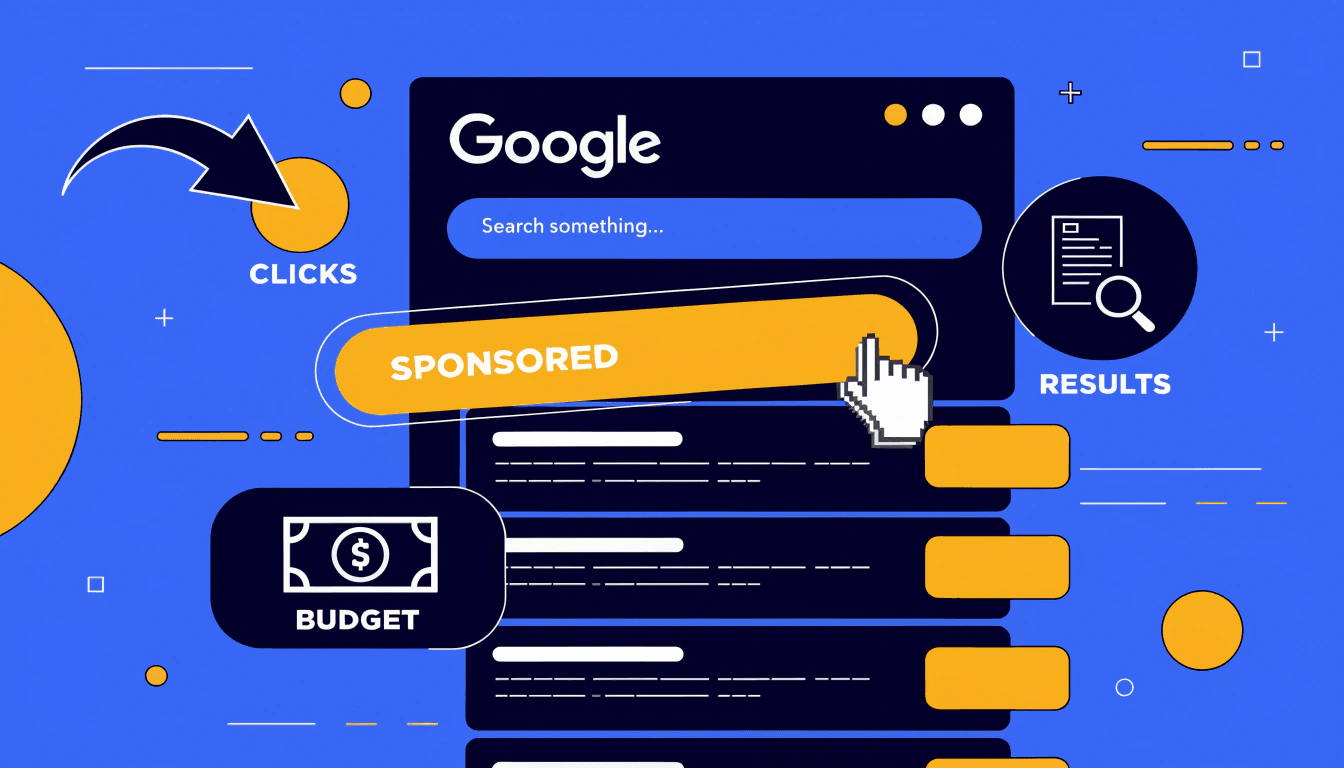
If your ad wins the auction, it appears in the results — typically at the top of the page, marked with a small "Sponsored" label. You don't pay anything for the display. You only pay when someone clicks. Once your daily budget is exhausted, your ads stop showing until it resets the following day (or you increase it).
The Main Types of PPC Advertising
PPC isn't one-size-fits-all. There are several distinct formats, each suited to different goals.
Search Ads
The most common type. These are the text-based ads you see at the top (and sometimes bottom) of Google search results. They appear when someone actively searches for a keyword you're targeting, making them high-intent — the person is already looking for what you offer. For most small businesses, search ads offer the clearest return on investment.
Local Search Ads
A subset of search ads, focused on geographic targeting. These are particularly useful if your business serves a specific area. They can pull your business into Google Maps results and local pack listings, making them highly effective for tradespeople, service businesses, and anyone whose work is location-dependent.
Display Ads
Display ads appear across Google's partner network — over two million websites and apps. They're visual (images, banners, or rich media) rather than text-based, and reach people who aren't necessarily searching for your product at that moment. They're better for brand awareness than direct lead generation, and tend to have lower click-through rates than search ads.
YouTube / Video Ads (Pre-Roll)
These are the ads you see before (or during) videos on YouTube. They can be targeted by location, interests, demographics, and more. Video ads require more production effort but can be very powerful for building trust and brand recognition.
Remarketing Ads
Ever visited a website and then noticed their ads following you around the internet? That's remarketing. These ads target people who have already visited your site, nudging them to come back. They tend to have strong click-through rates because you're reaching a warm audience — people who already know your business exists.
Social PPC Ads
Paid ads on Facebook, Instagram, LinkedIn, and other social platforms. Unlike Google Ads, where you're targeting intent (people actively searching), social ads target people based on who they are — their interests, demographics, job titles, and behaviours. This makes them especially useful for reaching new audiences who don't yet know they need your product or service.
Is PPC Right for Your Business?
PPC isn't automatically the right choice for every business at every stage, but it's worth serious consideration if any of the following apply to you.
You need results quickly. SEO is the foundation of long-term online visibility, but it takes time — often months — before you see meaningful traction. PPC can drive traffic and enquiries within hours of launching a campaign. If you've got capacity to take on new work now, PPC can fill the gap while your organic presence builds.
Your competitors are already running ads. If your rivals are appearing at the top of Google for the keywords that matter to your business, they're likely winning customers who would otherwise have found you. PPC allows you to compete for those top positions even while you're still climbing the organic rankings.
You want predictable lead flow. One of PPC's biggest advantages is its controllability. You decide your budget, your targeting, and your messaging. You can turn campaigns on and off. And you can see exactly what you're spending and what it's generating.
You have a clear offer and a conversion-ready website. PPC amplifies what's already there. If your website is unclear, slow, or doesn't give visitors a strong reason to get in touch, paid traffic won't fix that — it'll just burn your budget faster. Before investing in PPC, make sure your web design is doing its job.
What Budget Do You Need for PPC?
This is one of the most common questions, and the honest answer is: it depends on your market.
The cost-per-click for your keywords is largely dictated by competition. In highly competitive industries — legal services, financial advice, emergency trades — clicks can cost several pounds each. In less saturated markets, you might pay well under £1 per click.
A sensible starting point for most small businesses is £500–£1,000 per month in ad spend. This gives you enough data to understand what's working and begin optimising. Going in with a very small budget (£100–£200 per month) often means the campaigns don't generate enough data to improve meaningfully.
On top of your ad spend, if you work with a PPC agency — like our Google Ads management service — there'll be a management fee to account for. The benefit is that a well-managed campaign should generate a return that more than covers both costs.
Use the calculator below to estimate what PPC could generate for your business based on your own numbers:
Industry
Your inputs
Estimated results
Break-even analysis
Estimates only \u2013 actual results vary by campaign quality, targeting, and market competition. Management fees not included in spend figure.
UK industry benchmarks sourced from PPC Chief Google Ads Benchmarks 2026.
PPC and SEO: Better Together
A common misconception is that PPC and SEO are competing strategies — that you have to choose one or the other. In reality, they work best when used together.
SEO builds your long-term organic visibility. PPC gives you immediate presence in the meantime, and can also be used to test which keywords and messages resonate before you invest heavily in content and links. Data from your Google Ads campaigns — search terms, click-through rates, conversion rates — can directly inform your SEO strategy.
If you're interested in running both, it's worth exploring our combined SEO and PPC packages — they're designed to make the two channels work in sync rather than in isolation.
For more context on how paid advertising fits into the bigger picture, our guide on what is digital advertising and why you need it is a good next read. And if you're already running Google Ads and want to know more about the specifics, take a look at our post on Google Ads for trades — much of the advice applies to any service-based business.
Common PPC Mistakes to Avoid
Even a modest budget can deliver strong results if your campaigns are set up correctly. The most common mistakes I see when auditing new clients' accounts are:
Targeting too broadly. Casting the net wide sounds logical, but it wastes budget on people who aren't actually looking for your specific service. Tight, well-defined keyword targeting almost always outperforms broad match.
Sending traffic to the homepage. Your homepage isn't a landing page. If someone clicks an ad for "emergency plumber in Bristol" and lands on a generic homepage, they'll bounce. Each ad should point to a dedicated, highly relevant page.
Not tracking conversions properly. If you can't see which clicks are turning into enquiries, you're flying blind. Proper conversion tracking is non-negotiable — it's what allows you to optimise rather than guess.
Ignoring negative keywords. Negative keywords tell Google which searches you don't want to appear for. Without them, you can end up paying for irrelevant clicks from people who were never going to become customers.
Setting it and forgetting it. PPC requires ongoing attention. Bids, keywords, and ad copy all need regular review and refinement. A campaign left untouched rarely improves on its own.
Conclusion
PPC advertising is one of the most powerful tools available to small businesses looking to grow their online presence and generate leads. It's fast, measurable, and — when managed well — highly cost-effective. But it works best as part of a joined-up digital marketing strategy, not as a standalone fix.
If you're ready to explore what PPC could do for your business, I'd love to help. Get in touch and let's talk through what's possible — no jargon, no pressure, just a straight conversation about what would actually work for you.