If you built a website and traffic never came, you are not alone. Most small business websites sit quietly in the background, pulling in a handful of visitors a month, with owners unsure why nobody is finding them. The honest answer is that getting a website live is only step one. Getting people to actually visit it is a separate job entirely.
This article is part of my small business marketing guide.
The good news is that there are proven ways to drive more traffic to your site, and you do not need an enormous budget to make progress. Some of the most effective methods cost nothing but time. Others, like paid advertising, can produce results within days. The key is understanding which channels work for your business and building a consistent approach across them.
In this guide, I am going to walk you through 12 strategies to increase website traffic, covering both free and paid methods, short-term wins and longer-term plays. I have used all of these for clients and in my own marketing, so this is practical advice rather than a list of generic tips.
1. Search Engine Optimisation (SEO)
SEO is the process of making your website easier for Google to understand and rank. When someone searches for a service you offer, you want your site to appear on the first page. That takes deliberate effort, but it is one of the most valuable long-term investments you can make.
For small businesses, the basics matter most:
- Target the right keywords. Think about the specific phrases your customers are typing in. "Plumber in Fleet" will serve you better than just "plumbing". Long-tail, location-specific keywords are often easier to rank for and attract people who are ready to buy.
- Optimise your page titles and meta descriptions. Every page on your site should have a unique title tag that includes your target keyword. This is one of the clearest signals you can send to Google about what a page is about.
- Sort your technical basics. Make sure your site loads quickly, uses HTTPS, is mobile-friendly, and has no broken links. These are not optional extras, and they directly affect whether Google will rank you at all.
- Build internal links. Linking between your own pages helps Google understand your site structure and keeps visitors exploring.
If you want to track where your site currently ranks, monitor your keyword positions, and find technical issues to fix, a tool like SE Ranking is worth looking at. I have found it to be the best value SEO platform for small businesses who want proper data without paying agency-level prices.
For a deeper look at this topic, read my guide on how to rank higher on Google.
2. Publish Useful Content Consistently
Blogging is one of the most reliable free methods for increasing organic traffic, but only when done properly. Thin, generic posts written to fill a content calendar will not move the needle. What works is publishing genuinely useful content that answers specific questions your target customers are searching for.
Think about the questions you get asked regularly. What do people want to know before they hire someone like you? What are the common misconceptions in your industry? Those questions are the basis of blog posts that attract the right kind of traffic.
A few principles that make a real difference:
- Focus on search intent. Before writing a post, ask what the reader actually wants. Are they looking for an answer, trying to compare options, or ready to buy? Match your content to that intent.
- Go deep, not wide. One thorough, well-structured post on a specific topic will outperform ten shallow ones every time.
- Update old content. If you have existing posts that are getting some traction but feel outdated, refreshing them is often faster than writing from scratch and can produce quick ranking improvements.
Consistency matters too. Publishing sporadically makes it hard to build momentum. Even one quality post per month is better than nothing, and far better than a flurry of activity followed by months of silence.

3. Optimise for Local Search
If your business serves a specific area, whether that is a town, a county, or a region, local SEO should be a priority. Most local service businesses are leaving significant traffic on the table by neglecting this.
Start with your Google Business Profile. This is the listing that appears when someone searches for your business by name, or when Google shows a map pack of local results. A fully completed, regularly updated profile makes a significant difference to how often you appear in those results. Make sure your business name, address, and phone number are correct and consistent with what appears on your website.
Beyond Google Business Profile:
- Add your town or service area to key pages on your website. A page titled "Plumber in Guildford" will rank for local searches far more effectively than a generic "Services" page.
- Get listed in reputable local directories. Consistency of your name, address, and phone number across the web is a local SEO ranking factor.
- Encourage reviews. Google reviews improve both your local rankings and your click-through rate when you do appear in results.
Local SEO is particularly powerful for trades, health and wellness businesses, and professional services because the competition is often lower than for national keywords, and the customers searching are typically ready to act.
4. Use Social Media to Drive Traffic (Not Just Followers)
Social media can absolutely drive traffic to your website, but it requires a shift in how most businesses approach it. The goal is not just to accumulate followers. It is to use your social presence as a channel for directing people to useful content, offers, and pages on your site.
A few things that work in practice:
- Share your blog posts. Every time you publish a new article, share it across your social channels with a brief explanation of what the reader will learn.
- Add links to your profile and posts. On platforms like Instagram and TikTok, use the link in your bio intelligently. Rotate it to point to your most relevant page or post at any given time.
- Focus on one or two platforms. Trying to maintain a presence everywhere leads to mediocre output everywhere. Pick the platforms where your customers actually spend time. For most local service businesses, Facebook and Instagram are the sensible starting points.
- Use video. Short video content tends to get more organic reach than static posts on most platforms right now. Even simple, phone-recorded videos explaining a tip or showing your work can pull in new viewers.
The key is treating social media as a signpost that points people to your website, not as an end destination in itself.
5. Build an Email List and Use It
Email marketing has one of the highest returns of any digital channel, and it is often overlooked by small businesses. Unlike social media, where your reach depends on an algorithm, your email list is an audience you own. You can reach them directly, any time you want.
To make email marketing work for traffic generation:
- Give people a reason to subscribe. A discount, a free guide, or a useful resource works well. On a service business site, a simple "Get tips and advice straight to your inbox" is enough if your content is genuinely useful.
- Send regularly but not excessively. A monthly or fortnightly email is manageable for most small businesses and keeps you front of mind without becoming annoying.
- Include links back to your site. Every email should have at least one clear reason to click through. Link to a new blog post, a service page, a case study, or a current promotion.
- Segment where possible. Even basic segmentation by service interest or location means you can send more relevant content, which leads to better click-through rates.
Your email list becomes more valuable over time. Start building it now, even if you only send a handful of emails a year to begin with.
6. Run Pay-Per-Click (PPC) Advertising
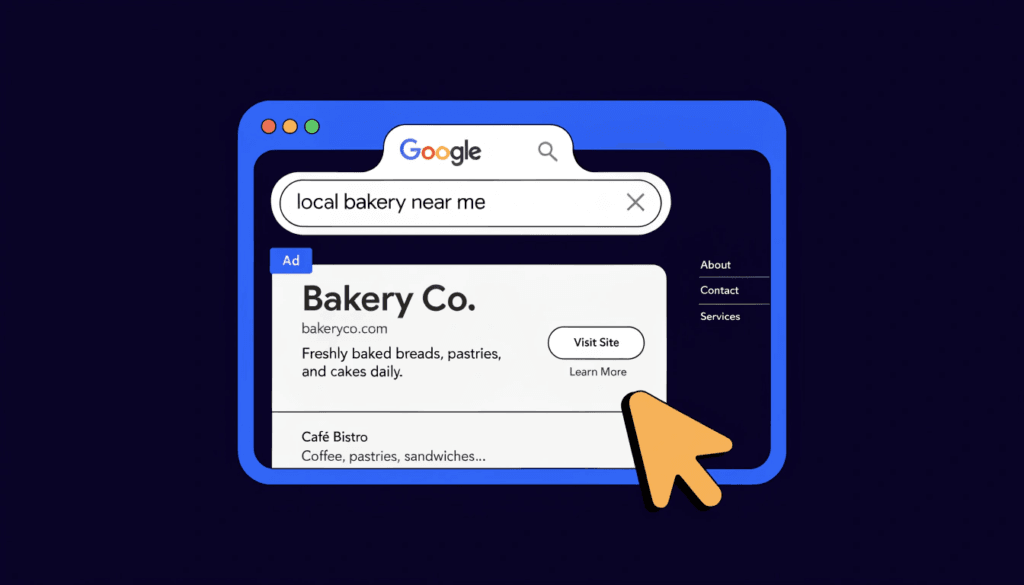
If you need traffic quickly, PPC is the most reliable way to get it. With Google Ads, your website can appear at the top of search results for your target keywords almost immediately. You pay only when someone clicks your ad, and you can set a daily budget that suits your business.
PPC works particularly well when:
- You are in a competitive market where organic SEO will take time to build
- You are launching a new service or promotion
- You have a proven page that converts visitors into enquiries or sales
The important thing is to send paid traffic to the right page. Your ad should link to a focused landing page that matches exactly what the searcher was looking for, not your homepage. That alignment between ad and landing page is what makes the difference between a campaign that pays for itself and one that burns budget.
Google Ads can be complex to manage well. Bidding strategies, match types, negative keywords, Quality Scores: there is a lot to get right. If you want professional help without paying large agency fees, take a look at my Google Ads management service.
7. Write Guest Posts for Other Websites
Guest blogging means writing content for another website in exchange for a link back to yours. Done well, it serves two purposes: it sends referral traffic directly from the host site, and it builds backlinks that improve your SEO authority over time.
To make guest blogging worthwhile:
- Target relevant, credible sites. A guest post on a well-regarded industry publication or a complementary local business's blog is worth far more than a post on a low-quality directory.
- Write genuinely useful content. The host site's audience needs to get value from your post. Do not treat it as an advertisement for your business.
- Include a contextual link. Where appropriate, link back to a relevant page on your site within the body of the article, not just your bio.
If writing for other sites feels like a stretch, look at local angles. A plumber could write a seasonal maintenance guide for a local property management blog. A salon could contribute a skincare tips article to a local lifestyle site. The opportunities are often closer than you think.
8. Create Video Content
YouTube is the second largest search engine in the world. If you are not using it, you are missing a channel that delivers both traffic and trust. People who watch a helpful video from a business are far more likely to get in touch than someone who just reads a paragraph of text.
You do not need professional production values to start. A smartphone, decent lighting, and something useful to say are enough.
Video content ideas that work well for small businesses:
- How-to and explainer videos. Think "How to bleed a radiator", "What to expect from your first salon visit", or "How Google Ads works for small businesses".
- Before and after. Showing the result of your work is compelling for trades, health and beauty, and design businesses.
- FAQs. Answer the most common questions you get from clients. This positions you as an expert and attracts people asking those same questions on YouTube.
Once you have a YouTube video, embed it in a related blog post on your website. This increases time-on-page, which is a positive signal for Google, and gives the video an additional audience beyond YouTube search.
9. List Your Business in Online Directories
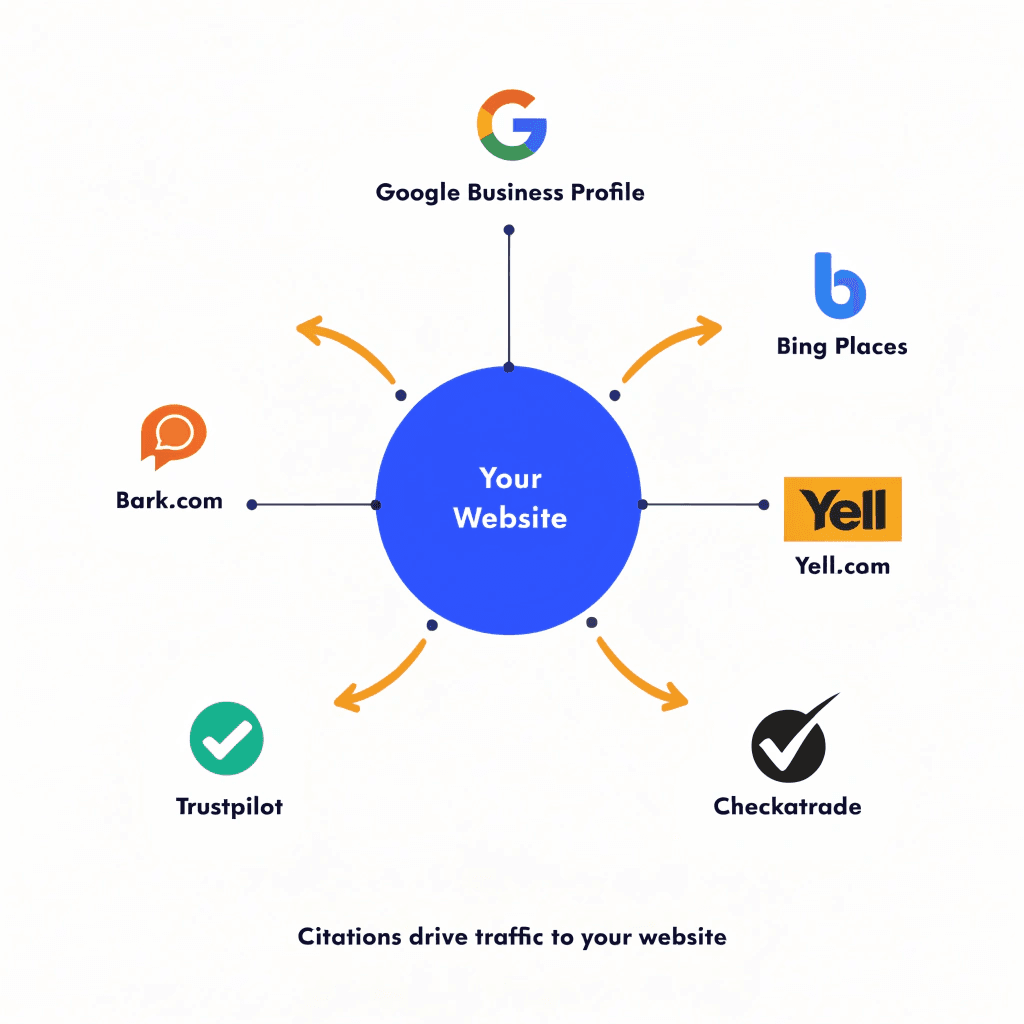
Getting listed in reputable online directories serves two purposes. First, it can drive direct referral traffic from people using those directories to find businesses like yours. Second, it creates backlinks and citation signals that support your local SEO rankings.
For UK small businesses, the directories worth prioritising include:
- Google Business Profile (non-negotiable)
- Bing Places
- Yell.com
- Checkatrade (for trades)
- Trustpilot
- FreeIndex
- Bark.com
The key is consistency. Your business name, address, and phone number should be identical across every listing. Inconsistencies confuse Google and can undermine your local rankings.
10. Fix Your Website Speed and Technical Health
Attracting traffic is pointless if visitors leave the moment your site loads. Page speed is a confirmed Google ranking factor, and users are notoriously impatient. Research consistently shows that a significant proportion of visitors will abandon a page that takes more than three seconds to load.
Beyond speed, technical issues can actively prevent Google from finding and indexing your pages. A site that is hard to crawl does not rank.
Key things to check:
- Page load speed. Use Google PageSpeed Insights to get a score and a list of specific improvements. Common fixes include compressing images, enabling browser caching, and removing unnecessary plugins.
- Mobile usability. More than half of all web traffic now comes from mobile devices. Your site must work well on a small screen.
- Crawlability. Make sure you have a sitemap submitted to Google Search Console and that no important pages are accidentally blocked from being indexed.
- Broken links. Regularly audit for 404 errors, which frustrate visitors and waste crawl budget.
A technically healthy website gives every other traffic strategy a better chance of working. Think of it as the foundation everything else sits on.
11. Get Press and PR Coverage
Organic press coverage can send a burst of referral traffic and, more importantly, earn you a high-quality backlink from a reputable publication. Both have long-term SEO value.
You do not need a PR agency to get mentioned in local or industry press. Some approaches that work for small businesses:
- Send a press release for significant business milestones: a new service launch, an anniversary, a charitable initiative, or a notable project completion.
- Comment on industry news. Journalists often look for quotes from practitioners. Register with a service like ResponseSource or Quoted Experts (formerly HARO's UK equivalent) and respond to relevant queries.
- Write opinion pieces for local business publications or trade magazines. Many actively look for contributors with hands-on experience.
- Enter industry awards. Even being shortlisted often generates coverage and a link from the awards body's website.
Each piece of coverage adds up. A handful of mentions from credible sites can meaningfully improve your domain authority over time.
12. Analyse Your Traffic and Act on What You Find
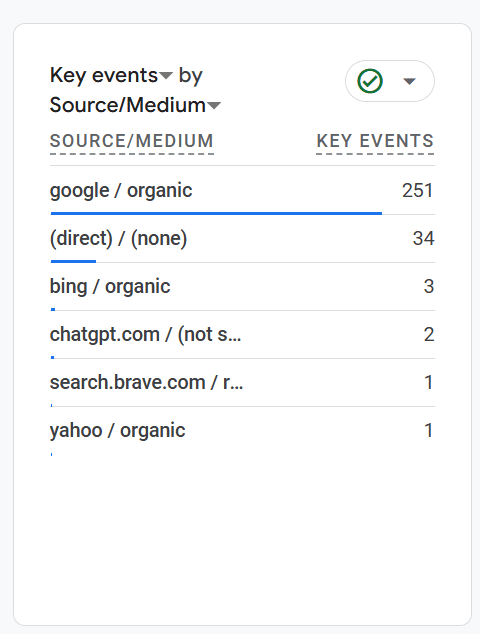
The last strategy is the one that makes all the others more effective. If you are not looking at your website data, you are flying blind. Understanding where your traffic comes from, which pages perform best, and where visitors drop off gives you the information you need to improve.
The tools to use:
- Google Analytics 4. This tracks visitor numbers, traffic sources, page performance, and user behaviour. It is free and indispensable.
- Google Search Console. This shows which search queries are bringing people to your site, which pages are ranking, and any technical issues Google has flagged.
What to look at regularly:
- Which pages get the most traffic? Can you create more content like them?
- Which traffic sources send the most visitors? Double down on those channels.
- Which pages have a high bounce rate? That signals a mismatch between what the visitor expected and what they found.
- Which keywords are ranking on page two? A targeted update or an additional internal link might push them onto page one.
Set aside time once a month to review your data. You do not need to spend hours on it. Even 30 minutes of focused analysis will surface insights that help you prioritise your efforts.
Frequently Asked Questions
What is the fastest way to increase website traffic?
Pay-per-click advertising, particularly Google Ads, is the fastest way to drive targeted traffic to your website. You can be appearing in search results within hours of setting up a campaign. The trade-off is that you pay for every click and the traffic stops the moment you stop spending. For sustainable, long-term growth, SEO and content marketing are the better investments, though they take time to build.
How long does SEO take to increase traffic?
Most businesses start to see meaningful SEO results within three to six months of consistent effort, though this depends on how competitive your market is and how much work has already been done on the site. Newer sites in competitive niches can take longer. The earlier you start, the sooner you benefit.
Can I increase website traffic for free?
Yes. SEO, blogging, social media, email marketing, guest posting, directory listings, and PR can all drive traffic without a paid advertising budget. They require time and consistency rather than money. Free methods tend to produce compounding returns over time, which is why they are worth starting even when budgets are tight.
Conclusion
There is no single switch you can flip to generate more website traffic overnight. What works is a combination of strategies applied consistently over time: some focused on the short term, others building long-term momentum.
Start with the foundations: make sure your site is technically healthy, your most important pages are optimised for the right keywords, and you are tracking what is actually happening in Google Analytics. From there, layer in content, social, email, and where it makes sense, paid advertising.
If you would like to see how your site is currently performing before you invest more effort into driving traffic, run a free SEO audit. It takes under a minute and gives you a clear picture of where to focus first.
