
Most small business owners I speak to fall into one of two camps when it comes to SEO tools. Either they're paying for something expensive they barely use, or they're piecing together a handful of free tools and hoping for the best. Neither approach tends to get great results.
This article is part of my small business guide to SEO.
The good news is that doing your own SEO has never been more accessible. There's now a solid set of tools, some free and some affordable, that give you everything you need to research keywords, track your rankings, audit your site, and keep an eye on what your competitors are up to. You don't need an agency budget. You just need to know which tools are worth your time.
In this guide, I'll walk you through the best DIY SEO software available in 2026, starting with the free essentials and moving on to the paid tools that offer the best value for a small business. I'll also cover which one I'd recommend if you want a single platform to handle everything.
If you'd like to see how your site is performing right now before you invest in any tools, run a free SEO audit. It takes under a minute.
What Makes Good DIY SEO Software?
Before diving into specific tools, it's worth being clear about what you actually need from SEO software as a small business owner. The requirements are quite different from what an agency managing dozens of clients would look for.
Here's what matters:
Ease of use. You don't want to spend hours learning a tool before it becomes useful. The best DIY SEO software gives you clear, actionable data without burying you in complexity.
Breadth of features. Ideally, one tool covers keyword research, rank tracking, site auditing, and basic competitor analysis. Paying for four separate tools to do four separate jobs adds up quickly.
Affordable pricing. Enterprise-grade tools like Ahrefs and Semrush are excellent, but their pricing reflects the fact that they're built for teams managing large volumes of work. For a small business doing its own SEO, the cost isn't always justified.
Reliable data. Accurate search volume estimates, real ranking data, and trustworthy site audit reports. Some budget tools cut corners here.
With those criteria in mind, here's how the main options stack up.
The Best Free DIY SEO Tools
You can get a long way with free tools, particularly if you're just starting out or working with a tight budget. These four are non-negotiable for anyone doing their own SEO.
Google Search Console
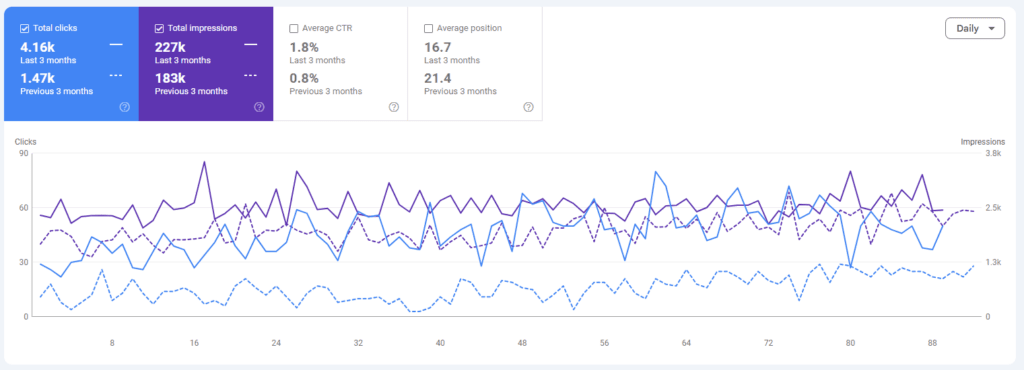
Google Search Console is the single most important free SEO tool available, and it's the first thing I'd set up on any new website. It shows you exactly which search queries are bringing people to your site, which pages are indexed, whether Google has flagged any technical issues, and how your click-through rates look across different keywords.
The data comes directly from Google, which makes it more reliable than any third-party rank tracker for understanding how your site actually performs in search. It won't do keyword research or competitor analysis, but for monitoring your own site's health and search performance, nothing beats it.
Google Analytics 4
GA4 works alongside Search Console to show you what happens after someone arrives on your site. Which pages are they visiting? How long are they staying? Are they filling in your contact form or bouncing immediately? Understanding this helps you prioritise where your SEO efforts will have the most impact.
Setting up GA4 properly, including tracking form submissions and phone clicks, is worth doing early. Once it's running, the data becomes more valuable over time.
Google Keyword Planner
Keyword Planner lives inside Google Ads, but you don't need to be running ads to use it. It gives you search volume estimates and keyword ideas drawn directly from Google's data, making it a useful starting point for understanding what your potential customers are actually searching for.
The volume ranges it shows can be a bit broad (it'll say "1k-10k" rather than giving you a precise number), but for initial keyword research it's more than adequate. I'd pair it with a tool like SE Ranking for more precise data once you're ready to dig deeper.
Screaming Frog SEO Spider (Free Version)
Screaming Frog is a desktop tool that crawls your website the same way Google does. The free version lets you crawl up to 500 URLs, which is sufficient for most small business sites. It's particularly good for identifying technical issues: missing title tags, broken links, duplicate content, redirect chains, and pages that shouldn't be indexed.
It has a steeper learning curve than the other free tools on this list, but for a technical site audit it's hard to beat at the price.
The Best Paid DIY SEO Software
Free tools will take you a certain distance, but there are real gaps they don't cover: historical ranking data, competitor keyword research, backlink analysis, and ongoing site monitoring. That's where a paid platform earns its place.
SE Ranking: Best All-in-One Option for Small Businesses
SE Ranking is the tool I'd recommend to most small business owners doing their own SEO, and it's the one I use at SoNick Marketing. It covers every core SEO function in a single platform, including rank tracking, keyword research, site audits, backlink monitoring, competitor analysis, and on-page optimisation, without the complexity or the price tag of the enterprise alternatives.
Here's what you get with SE Ranking:
Rank tracking. Track your keyword positions across Google and other search engines daily, for any location and device type. You can see how individual pages are performing, monitor changes over time, and get alerts when rankings shift. For a local business, the ability to track rankings in specific towns or cities is particularly useful.
Keyword research. SE Ranking's keyword tool gives you accurate search volume data, keyword difficulty scores, related keyword suggestions, and SERP analysis. It's a meaningful step up from Google Keyword Planner in terms of data quality and depth.
Site audit. Automated crawls of your site that flag technical issues, including broken links, slow pages, missing meta tags, and crawlability problems, with clear guidance on how to fix each one. Scheduling regular audits means you catch problems before they affect your rankings.
Competitor research. Enter any competitor's domain and see which keywords they're ranking for, what their organic traffic looks like, and where their backlinks are coming from. This is one of the most useful features for a small business trying to understand what's working in their market.
Backlink monitoring. See who's linking to your site, assess the quality of those links, and monitor for new or lost links over time.
The pricing is genuinely competitive. SE Ranking's Core plan starts at around $103/month billed monthly, or closer to $65/month on an annual plan. That's significantly less than Semrush or Ahrefs at equivalent feature depth. A free trial is available if you want to test it before committing.
| Feature | SE Ranking | Semrush | Ahrefs | Ubersuggest |
|---|---|---|---|---|
| Rank tracking | ✓ | ✓ | ✓ | ✓ |
| Keyword research | ✓ | ✓ | ✓ | ✓ |
| Site audit | ✓ | ✓ | ✓ | Limited |
| Competitor research | ✓ | ✓ | ✓ | Limited |
| Backlink analysis | ✓ | ✓ | ✓ | Basic |
| Starting price (annual) | ~$65/mo | ~$140/mo | ~$129/mo | ~$12/mo |
| Best for | Small businesses and freelancers | Agencies and large teams | Backlink-heavy work | Budget beginners |
Semrush: Powerful, But Built for Bigger Teams
Semrush is one of the most comprehensive SEO platforms available. Its keyword database is enormous, its competitive research tools are genuinely excellent, and it covers PPC data alongside organic SEO. If you're managing multiple websites or running a serious content operation, it's worth the investment.
For most small business owners, though, the pricing is difficult to justify. The Pro plan starts at around $140/month and limits you to five projects. That sounds like enough until you realise each location page or campaign might need its own tracking setup. It's a great tool, but it's aimed at agencies and in-house teams with the volume to make it worthwhile.
Ahrefs: The Best for Backlink Research
Ahrefs has the most respected backlink database in the industry, and its Site Explorer tool is excellent for understanding a competitor's link profile or investigating why a particular page ranks well. If link building is a core part of your SEO strategy, Ahrefs is worth looking at.
The downside is cost. Ahrefs starts at around $129/month, and like Semrush, its pricing structure is designed with agencies in mind. For a small business primarily focused on on-page SEO, keyword targeting, and technical fixes, you're paying for a lot of capability you won't use.
Ubersuggest: A Budget Starting Point
Neil Patel's Ubersuggest is the most affordable paid option on this list, with individual plans starting under $30/month. It covers the basics, including keyword research, rank tracking, and site audits, and the interface is genuinely beginner-friendly.
The trade-off is data quality and depth. Search volume estimates can be less reliable than SE Ranking or Semrush, and the competitor research tools are fairly limited. As a starting point for someone who wants to dip their toes in without spending much, it's reasonable. For anyone serious about building organic traffic over the medium term, you'll probably outgrow it fairly quickly.
Which DIY SEO Tool is Best for Small Businesses?
For the vast majority of small business owners, my recommendation is SE Ranking. Here's why it wins against the alternatives:
It does everything you actually need. Rank tracking, keyword research, site audits, competitor analysis, and backlink monitoring are all covered in a single dashboard. You're not stitching together four different tools to get a complete picture.
The pricing makes sense at small business scale. At roughly $65/month on an annual plan, it's meaningfully cheaper than Semrush or Ahrefs. Those savings add up considerably over a year.
The interface is accessible without being simplistic. You don't need technical SEO knowledge to get started, but there's plenty of depth if you want to go further.
If budget is the primary concern and you're just starting out, begin with the free tools (Google Search Console, GA4, and Keyword Planner) and add SE Ranking once you're ready to take things further. That combination will serve you well.
If you're running a content-heavy site with a serious link building strategy and have the budget, Ahrefs becomes a more compelling option. But for most local service businesses, trades, and small ecommerce sites, SE Ranking hits the right balance. You can read my full SE Ranking review if you want to go deeper on its features before deciding.
Can You Do SEO on Your Own?
Yes, and plenty of small business owners do it effectively. It requires a willingness to learn and consistent effort over time, but the fundamentals of SEO aren't as complicated as they're sometimes made out to be.
The key areas to focus on are:
Technical health. Your site needs to be fast, mobile-friendly, and crawlable. A tool like SE Ranking's site audit or Screaming Frog will surface most technical issues for you.
Keyword targeting. Understanding what your customers are searching for and making sure the right pages on your site are targeting those terms. I cover this in more detail in my guide on why keyword research is so important.
Content. Pages and posts that genuinely answer the questions your customers are asking, written clearly and structured well. If you want to understand how to build your rankings over time, my guide on how to rank higher on Google is a good place to start.
Local SEO. If you're a local business, your Google Business Profile and local citations matter considerably. You don't need expensive tools for this part. Consistency and accuracy are what count.
The honest caveat is that SEO takes time. Results typically come over months rather than weeks, and Google's algorithm changes regularly. If you find the learning curve too steep or simply don't have the time to do it consistently, it's worth exploring what professional SEO support looks like for your budget.
Conclusion
Doing your own SEO is entirely achievable with the right tools. Start with Google Search Console and GA4, both of which are free and give you solid visibility into how your site is performing. Add Keyword Planner for initial research. Then, when you're ready to track rankings properly, research competitors, and run regular site audits, SE Ranking gives you the most complete platform at a price that makes sense for a small business.
You don't need to spend a fortune on SEO tools. You just need the right ones, used consistently.
If you'd like to see how your site is currently performing before you start, run a free SEO audit. It takes under a minute and gives you a clear picture of where to focus first.