Most salon owners I speak to have the same problem: they know they need to be more visible online, but they're not sure where to start — or they've tried a few things and seen little return. A Facebook page that gets a handful of likes. A website that barely ranks. A Google listing with two reviews from 2021.
This article is part of my small business marketing guide.
The good news is that growing your salon's online presence doesn't require a huge budget or a marketing degree. It requires a clear strategy, a bit of consistency, and knowing which channels actually move the needle for local service businesses.
This guide covers the most effective ways to build your salon's online presence from the ground up — whether you're starting from scratch or trying to get more from what you already have.
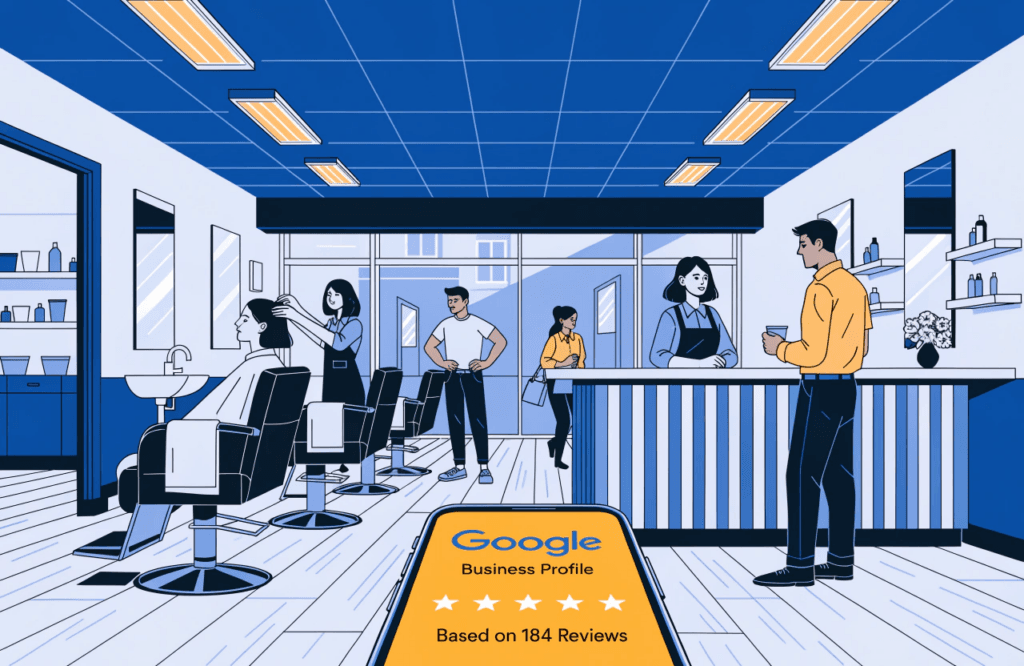
Start With Your Google Business Profile
If you only do one thing to improve your salon's online presence, make it this. Your Google Business Profile (formerly Google My Business) is what appears when someone searches for "hair salon near me" or "[your town] nail salon." It controls whether you appear in the local map pack — those three highlighted results that sit above the organic search results.
Setting it up properly makes a significant difference:
Choose the right categories. Your primary category should be as specific as possible — "Hair Salon", "Beauty Salon", "Nail Salon", or "Day Spa" depending on your main service. Add secondary categories to cover your full offering.
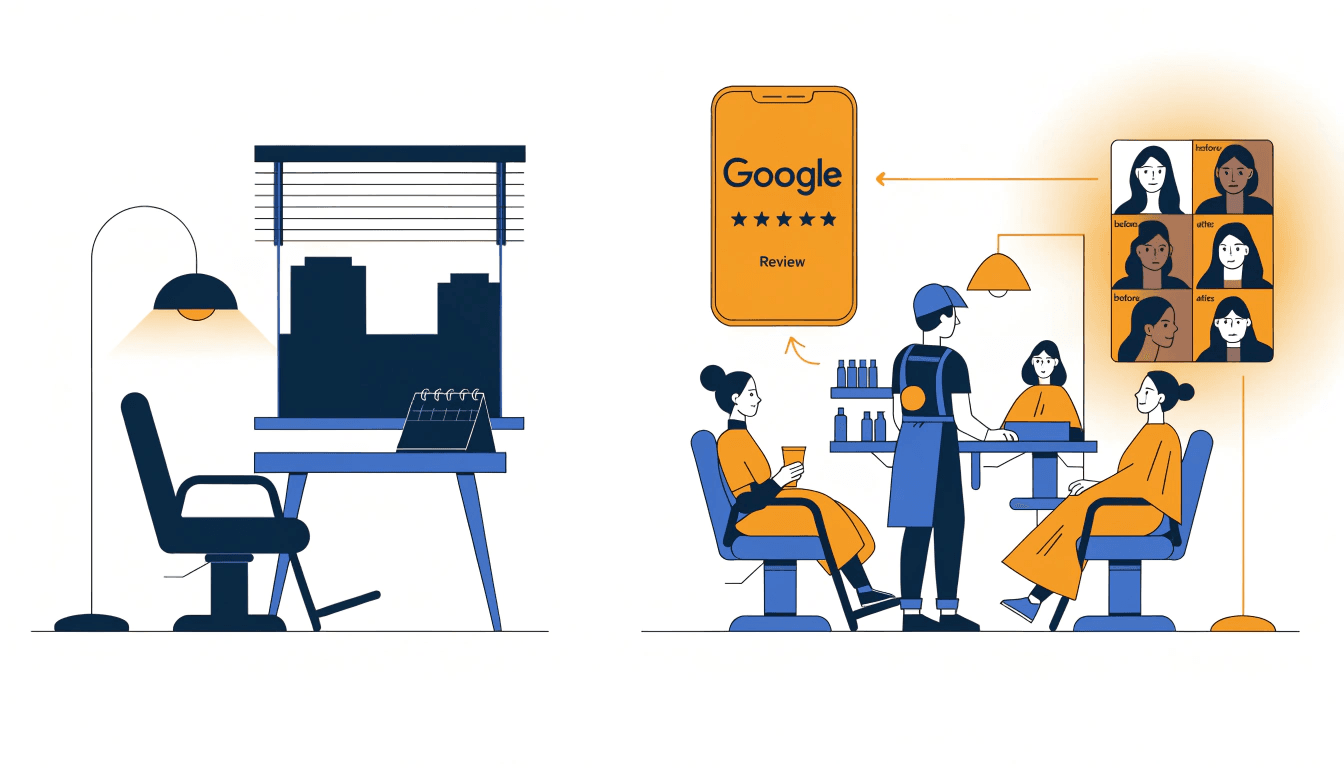
Add photos consistently. Salons with recent, high-quality photos get far more profile views than those without. Add interior shots, before-and-after service photos, and images of your team. Aim to add new photos at least monthly.
Use the Q&A section. You can add your own questions and answers. Think about what clients commonly ask — parking, whether you take walk-ins, what products you use — and answer them proactively.
Post regular updates. The Posts feature lets you share offers, seasonal promotions, and new services directly on your profile. These appear in your listing and signal to Google that your business is active.
Build a Salon Website That Actually Converts
Your website is your digital shopfront. It's where potential clients go to decide whether to book — so "having a website" isn't enough. It needs to do a specific job: convince a visitor to take action.
Here's what a well-built salon website needs to include:
A clear services and pricing page. Clients want to know what you offer and roughly what it costs before they pick up the phone. If your pricing isn't on your site, you're losing bookings to salons that do show it.
An online booking system. The ability to book at 10pm on a Sunday is a genuine competitive advantage. If clients have to call during business hours, some of them won't bother.
Mobile optimisation. Most local searches happen on mobile devices. A site that's hard to use on a phone will lose those visitors immediately.
Fast loading speed. A slow site frustrates users and ranks lower in Google. Compress your images and choose a reliable host.
Professional photography. Stock photos don't build trust. Real images of your salon, your team, and your work make a significant difference to how credible your site feels.
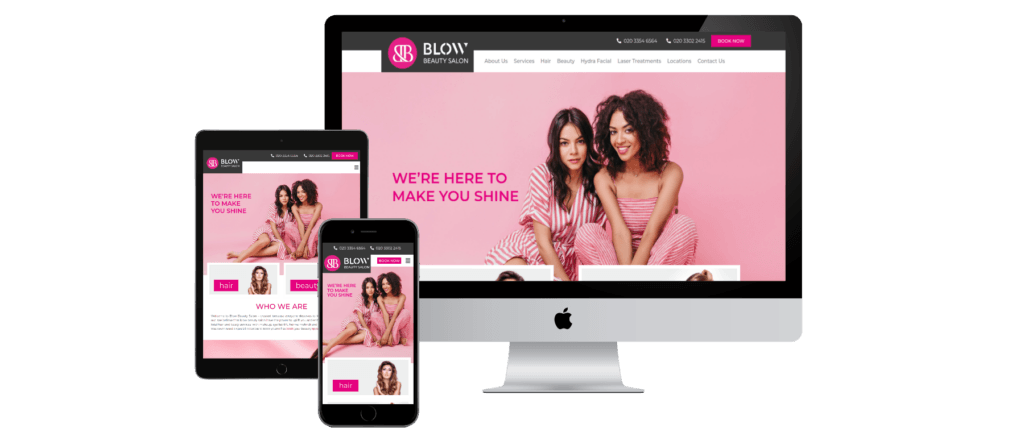
Should you build it yourself or hire a professional?
Building your own salon website using a platform like Wix or Squarespace costs around £200–£300 a year and gives you a reasonable result if you put the time in. The limitation is that you'll likely struggle to rank well in search engines without knowing what you're doing from an SEO perspective.
Hiring a web designer typically costs between £895 and £3,995 depending on the complexity and the agency you use. A professionally built site, properly optimised from the start, will generate far more enquiries over time — making it a worthwhile investment for most salons. You can find out more about what's involved on our web design page.
Get Your SEO Foundations Right
Search engine optimisation (SEO) is how you get your salon to appear in Google when potential clients search for your services. It's one of the highest-value long-term investments you can make in your online presence — but it does take time to build momentum.
For a local salon, the basics look like this:
Target the right keywords. Think about how your clients search — "hair salon in [town]", "balayage near me", "mobile beauty therapist [area]". Your website pages should be built around these terms, appearing naturally in your headings and page copy.
Optimise your title tags and meta descriptions. These are the text that appears in Google search results. Each page should have a unique, descriptive title that includes your main keyword and location.
Create location-specific pages. If you serve multiple towns or areas, a dedicated page for each location helps you rank for searches in those areas.
Build your local citations. Make sure your salon's name, address, and phone number are listed consistently across directories like Yell, Thomson Local, and Free Index. Inconsistencies confuse Google and suppress your rankings.
If you want to track how your salon is ranking for local search terms — and monitor whether your efforts are working — a tool like SE Ranking makes it easy to keep an eye on your positions without needing a technical background.
Our SEO services for salons are a good starting point if you'd prefer an expert to handle this for you.
Use Social Media Strategically
Instagram and Facebook are the natural home for salon marketing — they're visual platforms, and your work speaks for itself. But the mistake most salon owners make is treating social media as a chore rather than a channel, posting sporadically when they remember and burning out quickly.
A more sustainable approach:
Choose one or two platforms and be consistent. Instagram is generally the strongest for salons — it's visual, discovery-driven, and has a large audience actively looking for beauty inspiration. Facebook tends to work better for retaining existing clients and running ads.
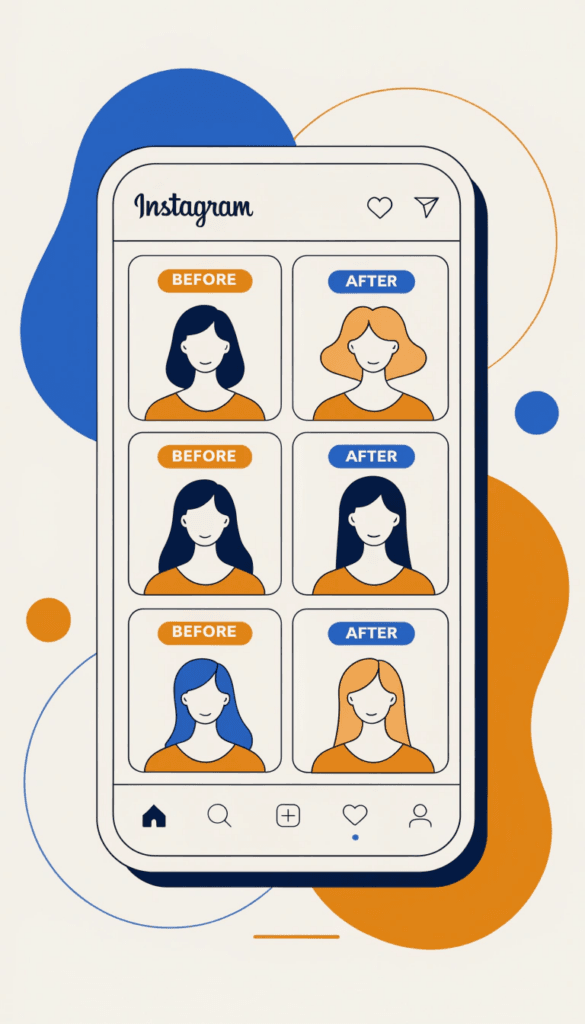
Post before-and-afters regularly. These perform consistently well and directly showcase your skills. Always get client permission and, if possible, ask them to tag your salon when they share.
Use Reels and short-form video. Short videos of styling processes, product recommendations, or behind-the-scenes content get strong organic reach on Instagram. You don't need professional equipment — a steady smartphone and good natural light is enough.
Put your booking link in your bio. Make it as easy as possible for someone who discovers you on social to actually book. A link in bio tool like Linktree lets you add multiple links — your booking page, your website, and any current promotions.
Online Reviews Are Your Word-of-Mouth
According to most research on local consumer behaviour, the majority of people read online reviews before booking a local service. For salons — where trust and skill are the whole product — reviews are particularly powerful.
Google reviews matter most. They feed directly into your Google Business Profile and influence both your local rankings and how much trust potential clients place in you. Aim to collect as many recent, genuine Google reviews as possible.
Ask at the right moment. The best time to ask for a review is immediately after a client has expressed satisfaction — while they're still in your chair or just as they're leaving. A simple "It would mean a lot if you left us a Google review — I can send you the link now if you like?" works well.
Respond to every review. Thank positive reviewers by name. Address negative reviews calmly and professionally — how you handle criticism often impresses potential clients more than a wall of five-star ratings.
Email Marketing: Your Rebooking Engine
Email marketing is one of the most underused tools in salon marketing. Your existing client list is your most valuable asset — these are people who already trust you and have spent money with you. Keeping them engaged and encouraging repeat bookings costs very little.
A basic email marketing setup for a salon might include:
- A post-appointment follow-up email sent 48 hours after a visit, thanking the client and including a direct rebooking link
- A seasonal promotions email sent monthly or every six weeks, highlighting offers or new services
- A lapsed client re-engagement email triggered when someone hasn't booked in three or four months
Tools like Mailchimp and Klaviyo are affordable and easy to use for a single-location salon. Many booking software platforms also include basic email marketing features built in.
Paid Advertising When You're Ready to Scale
Once your foundations are solid — a good website, an active Google Business Profile, and a steady flow of reviews — paid advertising can accelerate your growth significantly.
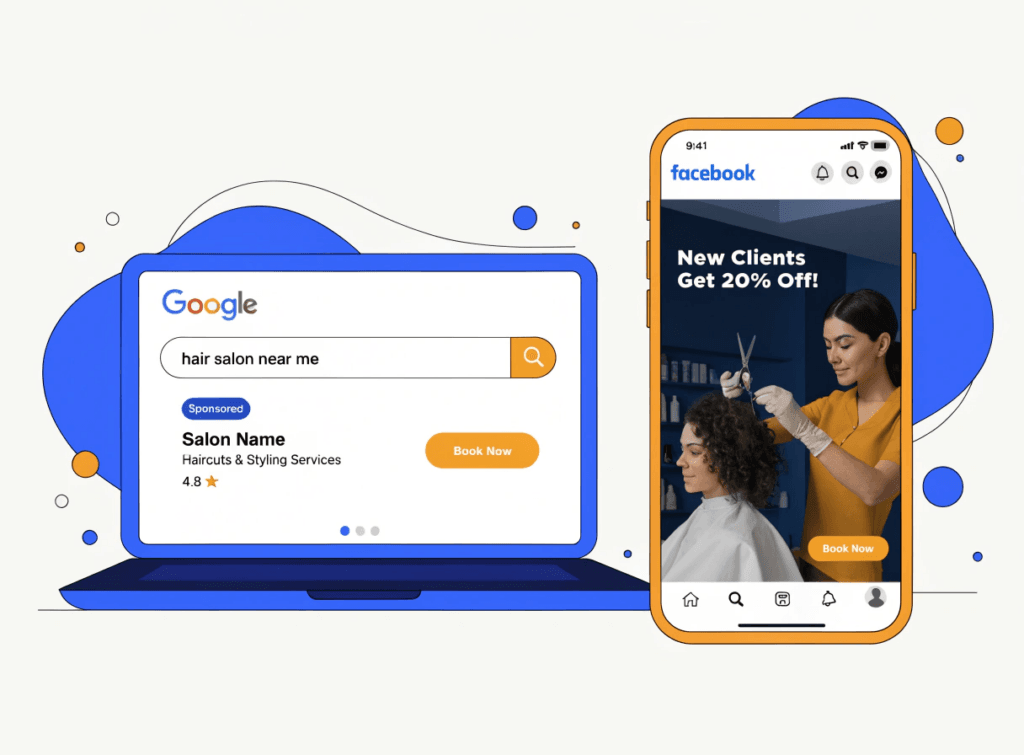
Google Ads lets you appear at the top of search results for terms like "hair salon [town]" or "balayage specialist near me" the moment someone searches. For salons with a clear service offering and a decent website, Google Ads can produce a strong, measurable return.
Facebook and Instagram Ads work differently — they interrupt people who aren't actively searching, which means they're better suited for awareness, promotions, and retargeting visitors who've already been to your website. A well-targeted campaign promoting a seasonal offer or a new service can generate bookings quickly.
Neither channel requires a huge budget to get started. If you're thinking about running ads for your salon, our PPC and Google Ads service includes full campaign setup, management, and reporting.
Where to Start If You're Overwhelmed
If all of this feels like a lot, the most important thing is to prioritise. You don't need to do everything at once.
Here's a sensible order of priority for most salons:
- Claim and optimise your Google Business Profile — free, high-impact, and often neglected
- Get a professional website with online booking — your single biggest long-term asset
- Start collecting Google reviews — ask every happy client
- Pick one social media platform and post consistently — quality over quantity
- Build an email list — even a basic post-visit follow-up makes a difference
- Add SEO — once your foundations are in place, start ranking for local searches
- Test paid ads — when you're ready to scale and have budget to allocate
The businesses that win online are rarely the ones doing the most. They're the ones doing the basics consistently well.
Frequently Asked Questions
How long does it take to see results from SEO for a salon? Most salons start to see meaningful movement in their local rankings within three to six months of consistent SEO work. Google Business Profile improvements can show results faster — sometimes within a few weeks.
Do I need to be on every social media platform? No. It's far better to be active and consistent on one or two platforms than scattered across five. For most salons, Instagram is the priority, with Facebook as a secondary channel.
How much should a salon spend on digital marketing? There's no fixed answer, but as a rough guide, investing 5–10% of your monthly revenue into marketing is a reasonable starting point. This can be split across website maintenance, SEO, social media content, and paid advertising depending on your priorities.
Can I do all of this myself? Some of it, yes. Setting up your Google Business Profile, posting on social media, and collecting reviews are all things you can manage without any specialist knowledge. SEO and paid advertising have steeper learning curves — and mistakes in those areas can cost you time and money. Many salon owners find it more efficient to handle social themselves and outsource SEO and ads to a specialist.
Take the Next Step
Growing your salon's online presence is a process, not a project. The businesses that do it well build consistent habits over time — and they see the bookings follow.
If you'd like to know how your salon's website is currently performing in search, run a free SEO audit — it takes under a minute and gives you a clear picture of where to focus first.
Or if you'd like to talk through a strategy tailored to your salon, get in touch and let's have a conversation about what's possible.