Yes, Google Ads are worth it for most small businesses that sell a service people actively search for, as long as three things are true: a job is worth enough to cover what a lead costs, your website turns visitors into calls, and you can handle the extra work. If any one of those is missing, ads will lose you money however well they're managed. That's the honest answer, and it's the same one I give people who ask me directly.
I spent 16 years running a plumbers' merchants before moving into digital marketing in 2019, and now I manage Google Ads for small businesses and tradespeople as a Google Ads certified specialist. I've seen ads transform a quiet diary, and I've seen them burn through thousands with nothing to show. This article sets out how to tell which one you're likely to get, including when I'd tell you not to bother. It's part of my small business guide to Google Ads.
The short answer: when ads are worth it, and when they aren't
| Google Ads usually ARE worth it when | Google Ads usually AREN'T worth it when |
|---|---|
| People search for your service with urgency, such as "emergency plumber" or "boiler repair" | Hardly anyone searches for what you do in your area |
| One job is worth several times the cost of a lead | The job value is small compared with what a click costs |
| Your website loads fast, shows your number and builds trust | Your website is slow, generic or hard to use on a phone |
| You can answer the phone and take on more work | Your diary is already full, or nobody picks up |
| You can commit a sensible budget for at least a month | You can only spend a few pounds a day, or need results this week |
| You're new, or not yet ranking on Google organically | You already rank at the top for your main searches and win work from it |
If you're mostly in the left-hand column, ads are very likely worth testing. If you're mostly on the right, fix those things first or put your money somewhere else for now.
Why Google Ads can be so effective for a small business
The case for Google Ads is simple. Someone types "electrician near me" because they need an electrician. You're not interrupting them while they scroll through holiday photos. They've told Google exactly what they want, and your ad appears at that moment.
- You pay for clicks, not for being seen. Your ad can show hundreds of times, and you only pay when someone clicks through.
- It's fast. A new Search campaign can be live within a couple of days once the ads have passed Google's review. SEO usually takes months.
- You control the spend. You set a daily budget and can pause at any time. There's no long-term contract with Google.
- You can target tightly. By location, by time of day and by the exact searches you want to appear for.
- It's measurable. With proper tracking, you can see what each lead cost you and which searches produced them.
Those are real advantages. The problem is that they only help if the account is set up properly and the maths works for your business. Most of the disappointing results I see come from one or both of those going wrong.
The honest bit: the results page is crowded
Most guides on this topic skip this, so here it is. On a busy local search, the page is packed with things that aren't normal websites, and your business has to fight for attention whether you pay or not.
On 25 September 2026 I checked a set of London trade searches, including "emergency plumber london". On that search, the first ordinary website result sat at around position five or six on the page. Above it were a row of directory results, the map pack showing three local businesses, and a "People also ask" box. That's before counting paid ads. Google's own definition of top ads says they are "generally above the top organic results", although on some searches they can appear below them.
What does that mean for you? Three things:
- Ranking "number one" organically isn't what it used to be. Even the top organic website on a search like this can be a long scroll down on a phone. That's one of the strongest arguments for ads on urgent trade searches: they're one of the few ways to appear near the top of the page.
- The map pack matters as much as the ads. Your Google Business Profile, reviews and proximity decide whether you appear there, and it costs nothing per click. Any business serious about local search should work on it alongside ads.
- You're competing with directories as well as other firms. Directory listings often take up prime space. Ads let you appear above them with your own name and number, rather than as one of many on someone else's platform.
I'm not going to quote a figure for what share of the page is ads, because it changes by search, device and location, and I haven't found a reliable current study I'd stand behind. The practical point is simple: on busy local searches, the free listings are pushed down, and that makes paid visibility more valuable, not less.
Do the maths before you spend a penny
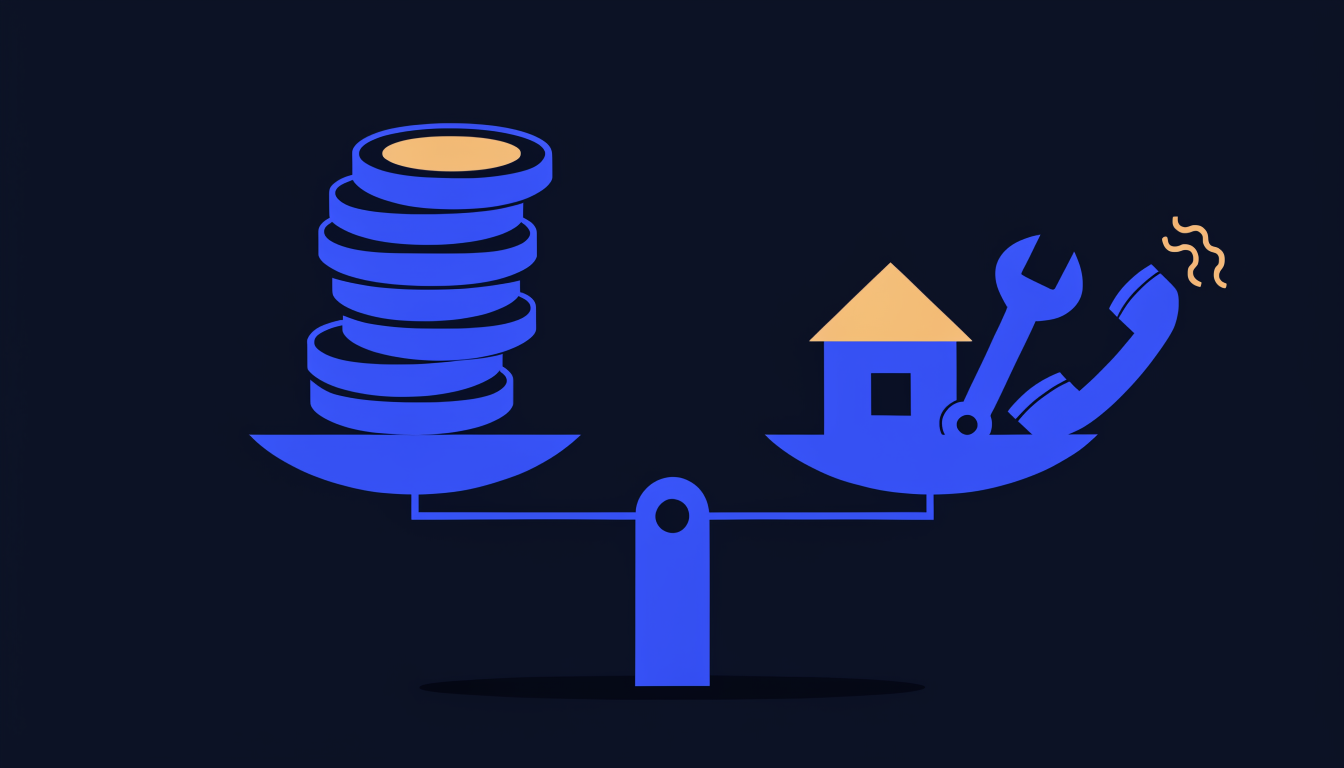
Whether Google Ads are worth it for you comes down to one sum: what does a customer cost you, and what is a customer worth? You can estimate both before you start.
Here's a worked example. The figures are illustrative, not a quote, so swap in your own:
| Step | Example figure |
|---|---|
| Average cost per click | £6 |
| Clicks that become an enquiry (call or form) | 1 in 10 |
| Cost per enquiry | £60 |
| Enquiries you win as jobs | 1 in 3 |
| Ad cost per job won | £180 |
| Gross profit on an average job | £400 |
| Profit after ad cost | £220 per job |
In that example, ads are clearly worth it. Now change one number. If the average job only makes £120 profit, every job won through ads loses you £60. Same account, same clicks, same management. The difference is the value of the work.
That's why I always ask about average job value and how many enquiries a client typically converts before I talk about budgets. Click costs vary a lot by trade and location. For real UK figures, see my guide to how much Google Ads cost in the UK, and if you want to run your own numbers, try my PPC ROI calculator.
Don't forget repeat and referral value. A boiler service customer who comes back every year and recommends you to neighbours is worth far more than the first invoice suggests.
When Google Ads are NOT worth it
This is the section most guides leave out. In my experience, these are the situations where I'd tell you to hold off:
- Not enough people search for what you do. A specialist service in a rural area might only get a handful of searches a month. You can't buy demand that isn't there. Check search volumes before you spend.
- The job is too small for the click cost. If a click costs several pounds and a job is worth £50, the numbers rarely work. That's common for low-ticket services in competitive areas.
- Your website lets you down. Paying to send people to a slow, confusing or untrustworthy page wastes the budget. Fix the page first.
- You can't take the work. If your diary is full for six weeks or nobody answers the phone during the day, extra enquiries become lost enquiries and a bad reputation.
- The budget is too small to learn anything. My view is that £10 a day is the realistic minimum ad spend, especially for Search and for wider areas. Below that, you often don't get enough clicks to tell what's working.
- You need results this week. In my experience it typically takes three to four weeks for a new campaign to reach the point where Google has learned how best to convert. You can get calls in the first few days, but judging the whole thing after a week is usually a mistake.
- You already dominate the free results. If you're in the map pack and at the top of the organic results for your main searches, and you're winning enough work from that, ads may add less than you'd think. Test carefully before committing.
- Nobody is watching the account. Ads left on Google's defaults tend to drift towards broad searches and wider audiences. If neither you nor anyone else will check the search terms regularly, expect waste. I cover the common causes in why Google Ads get clicks but no calls.
When Google Ads are usually worth it
On the other hand, I'd encourage most businesses in these situations to give ads a proper test:
- Urgent services. Emergency plumbing, locksmiths, drainage, boiler breakdowns and electrical faults. People searching for these want someone now and rarely scroll far.
- High-value jobs. Kitchens, bathrooms, roofing, extensions, heat pumps and legal work. One won job can pay for months of advertising.
- New businesses. If you haven't built up rankings or reviews yet, ads are one of the quickest ways to get in front of people searching now.
- Seasonal peaks. Boiler repairs in the first cold snap, air conditioning in a heatwave, roofing after storms. Ads let you turn visibility up and down with demand.
- Testing a new service or area. Ads tell you within weeks whether people will pay for something, before you invest in SEO for it.
Google Ads compared with the alternatives
Google Ads isn't the only way to get found. Here's how I'd compare the main options for a local service business:
| Option | How you pay | Speed | Best for |
|---|---|---|---|
| Google Ads (Search) | Per click | Days | Urgent and high-value searches, fast visibility |
| Local Services Ads | Per lead | Once Google has approved your profile | Eligible trades wanting pay per lead with a Google badge |
| SEO and your Google Business Profile | Time or agency fees, no cost per click | Months | Long-term, lower cost per lead once established |
| Trade directories | Membership or per lead | Fast | Extra visibility, though you're listed alongside competitors |
Local Services Ads deserve a special mention for trades. They appear in their own format in search results, and in the UK Google's Local Services help pages say you pay for leads related to your business, rather than per click. They're available in the UK for a range of home service categories including plumbers, electricians and roofers. I set up and manage these for clients, and my guide to Local Services Ads in the UK explains how they work.
For most businesses, the answer isn't "ads or SEO" but "which first, and in what balance". I've written a separate guide on Google Ads vs SEO for that decision.
What separates ads that pay from ads that don't
In my experience, the difference between an account that makes money and one that doesn't is rarely the budget. It's the setup and the attention:
- Only transactional searches. I exclude anything that isn't clearly someone wanting the job done. There's enough qualified search volume without paying to work out what an ambiguous searcher meant.
- Proper negative keywords. I use shared lists across the accounts I manage, split into a trade list, a places list and a generic list.
- Tight location targeting around where the business is actually based, rather than every town it could possibly cover, as long as the budget is comfortably spent in the smaller area.
- Start small, then scale. I start new Search campaigns on a low budget with Maximise clicks until there's conversion data, then scale up.
- Daily checks at the start. I review the search terms report daily in the early weeks, with the aim of pushing unwanted paid clicks towards zero.
- Measure leads, not clicks. I report who got in touch, by source and type, alongside spend and cost per lead.
Should you run Google Ads yourself?
You can. Google Ads isn't magic, and plenty of business owners run their own accounts well. The question is whether you have the time to check it properly every week while doing your actual job.
If you're spending a few hundred pounds a month and have a few hours to spare, doing it yourself can work, especially if you avoid Google's broad defaults. As spend grows, the cost of mistakes grows with it, and that's usually when people get help. If you're weighing that up, my guide to how much a Google Ads agency costs in the UK sets out what you should expect to pay.
FAQ
Are Google Ads worth it for a small business?
Usually, if people search for your service, a job is worth several times what a lead costs, and your website converts. They're not worth it if there's little search demand, job values are low relative to click costs, or you can't handle more work.
Is £10 a day enough for Google Ads?
In my view, £10 a day is the realistic minimum, especially for Search campaigns and wider areas. It can work for a tightly targeted local campaign focused on one or two services. Spread across lots of services and towns, it usually isn't enough to learn what's working.
Are Google Ads worth it for tradespeople?
For urgent and high-value trades, often yes. Searches like "emergency plumber" or "roofer near me" come from people who need someone now, and one job can cover a lot of clicks. Trades should also look at Local Services Ads, which charge per lead.
How long does it take to know if Google Ads are working?
You can get enquiries within days, but in my experience a new campaign typically takes three to four weeks to reach the point where Google has learned how best to convert. Google itself says bid strategies can take up to around 50 conversions or three conversion cycles to calibrate. Watch search terms from day one, but judge overall results over a month.
Are Google Ads better than SEO?
Neither is better in general. Ads are faster and easier to switch on and off. SEO takes longer but can bring enquiries without a cost per click once it's working. Many small businesses start with ads for immediate enquiries while building SEO for the long term.
Want an honest view on whether ads would work for you?
If you're thinking about Google Ads, or you're already running them and not sure they're paying, I'm happy to take a look. I'll give you a straight answer on whether the numbers are likely to work for your business, even if that answer is "not yet".
You can read more about my Google Ads management service, see how ads fit alongside SEO in my SEO and PPC packages, or get in touch and tell me about your business.