Most people don't decide to hire a solicitor on a whim. They search. They read. They compare. And they make a judgement about who seems credible before they ever pick up the phone. That journey — from problem to paying client — is where content marketing either wins or loses the business for your firm.
This article is part of my small business marketing guide.
If your website amounts to a homepage, a contact form, and a few static service pages, you're invisible for most of the questions your ideal clients are already typing into Google. This guide explains what content marketing for law firms actually involves, why it works, and how to build a strategy that drives consistent, qualified enquiries — without a huge marketing budget or a team of writers.

What Is Content Marketing for Law Firms?
Content marketing is the practice of creating useful, relevant information that your target audience is already looking for — and publishing it in a way that builds your visibility, credibility, and trust over time.
For law firms, that means producing content that helps prospective clients understand their legal situation, their options, and why your firm is the right choice to help them. That content might take the form of blog articles, practice area guides, case studies, FAQs, or video explainers. The format matters less than the intent: every piece should serve the reader first, and your business goals second.
Done well, content marketing does the work of a highly competent business development professional — attracting the right people, answering their questions, and warming them up to your firm — at a fraction of the cost of paid advertising, and with results that compound over time.
Why Law Firms Can't Afford to Ignore It
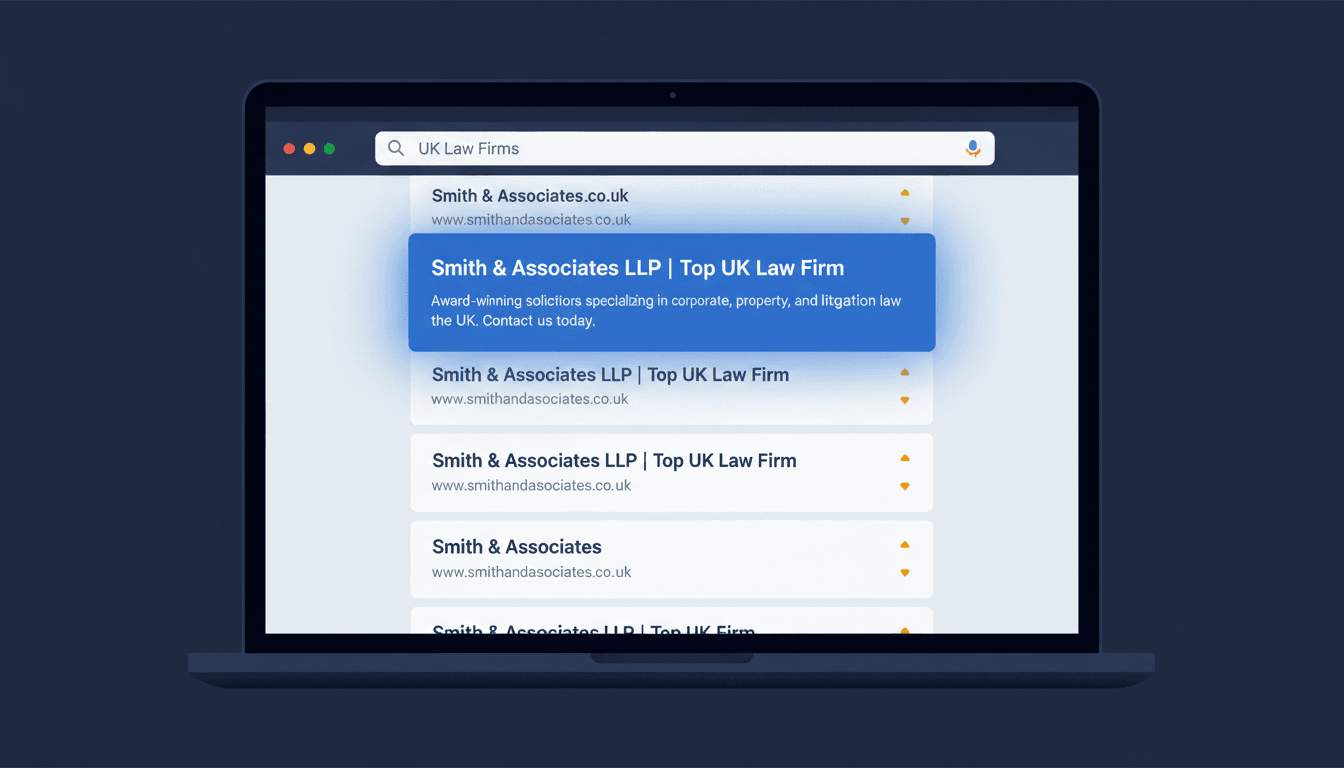
The legal sector is more competitive online than ever. Potential clients — whether individuals dealing with an employment dispute or business owners needing commercial contracts reviewed — increasingly start their search on Google before they think about asking for a personal recommendation.
Research consistently shows that a significant proportion of B2B buyers consume multiple pieces of content before making contact with a service provider. The same behaviour applies to legal consumers: they want to feel informed before they commit. A firm whose website answers those questions earns trust before the first conversation even happens. A firm whose website doesn't answer them sends those prospects straight to a competitor.
There's also a longer-term competitive argument. SEO-driven content builds compounding returns. A well-optimised article published today can attract organic traffic for years. Paid adverts stop the moment the budget does. For a firm looking to grow sustainably, content marketing is one of the highest-return investments available.
Building Your Content Strategy: Where to Start
Define Your Niche and Audience
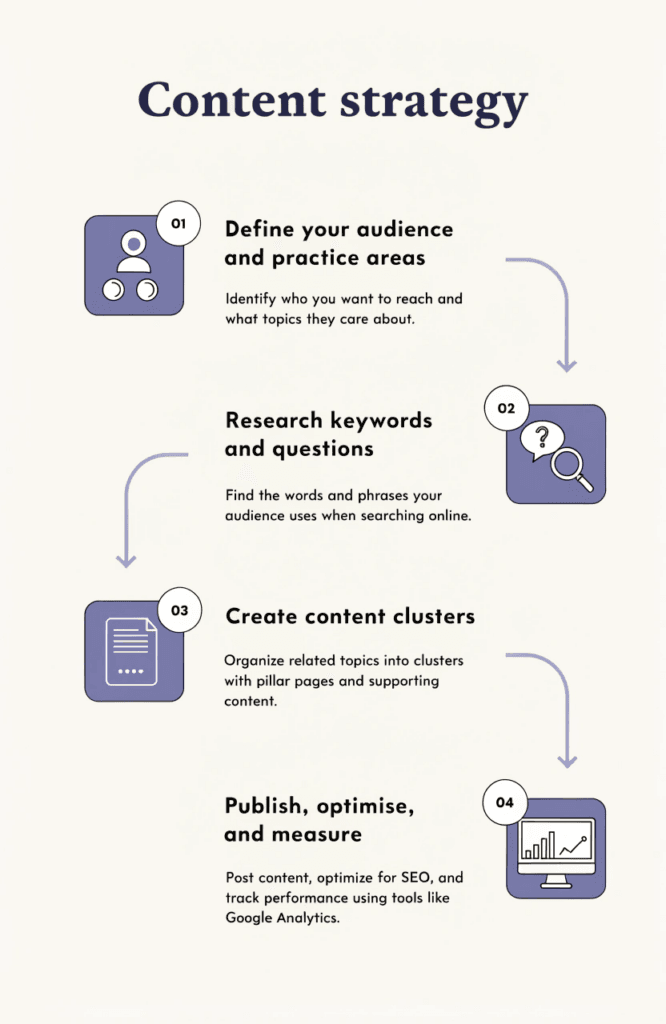
The most effective law firm content is specific. A commercial property solicitor writing for business owners dealing with lease negotiations will outperform a generic "we do everything" firm every time — both in search rankings and in the quality of enquiries generated.
Before you write a single word, get clear on:
- Which practice areas you want to be known for
- Who your ideal client is (their situation, their concerns, their level of legal knowledge)
- What questions they're likely to be asking at each stage — from "do I even need a solicitor?" to "how much does X cost?"
The narrower and more specific your focus, the more your content will resonate — and the easier it becomes to rank for the keywords that matter.
Understand Your Client's Journey
Prospective clients move through different stages before they make an enquiry. At the awareness stage, they're researching a problem. At the consideration stage, they're weighing their options. At the decision stage, they're choosing who to trust with their matter.
Your content should serve all three stages. Educational articles that explain legal concepts attract awareness-stage traffic. Comparison content (such as explaining the difference between mediation and litigation) guides consideration. Case studies, testimonials, and clear service pages convert at the decision stage.
The Best Types of Content for Law Firms
Blog Posts and Legal Guides
Blog posts are the workhorse of law firm content marketing. Informational articles — "What happens if a tenant stops paying rent?", "Do I need a shareholders' agreement?", "How long does an employment tribunal take?" — directly match what potential clients are searching for.
These posts serve two purposes simultaneously: they attract organic traffic from people in the early stages of their research, and they position your firm as a knowledgeable, accessible authority on the topic.
Aim for depth over frequency. One genuinely comprehensive, well-researched article will outperform ten thin pieces every time.
Practice Area Pages
Your service pages aren't just descriptions of what you do — they're landing pages that need to convert visitors into enquiries. Each practice area should have its own dedicated page that explains the service clearly, addresses common client concerns, and includes a compelling call to action.
These pages also represent a significant SEO opportunity. A well-optimised page for "commercial lease solicitor London" or "employment law advice for small businesses" can attract consistent, high-intent traffic from people who are actively looking for exactly what you offer.
For a stronger web presence, make sure each practice area page is structured for both users and search engines — clear headings, concise descriptions, and an obvious next step.
Case Studies
Case studies are one of the most underused tools in law firm marketing. They do something no amount of general content can: they show, in concrete terms, how you've helped a real client achieve a real outcome.
A well-written case study covers the situation the client was in, the complexity involved, how you approached it, and the result. You don't need to identify the client — anonymised case studies work perfectly well, particularly where confidentiality is a concern. Even a short, two-paragraph case study on a relevant page can meaningfully improve conversion rates.
FAQs and Plain-English Explainers
Legal language is a barrier for most people. Plain-English content that demystifies common legal concepts — explained in the way a good solicitor would in a first consultation — is both genuinely useful to readers and highly effective for SEO.
FAQ-style content also tends to perform well in Google's featured snippets and AI-generated answers, which increasingly dominate search results. Structuring your content around specific questions ("What is the difference between a fixed-fee and hourly rate solicitor?") gives it the best chance of appearing at the top.
Video
Video is increasingly important for law firm marketing, particularly for building the personal connection that legal services require. Short explainer videos, "meet the team" introductions, and brief commentary on recent legal developments can all help humanise your firm and build trust before a potential client ever speaks to you.
Video content also has excellent distribution potential — it can be embedded in blog posts, shared on LinkedIn, and repurposed across platforms with relatively little additional effort.

Keyword Research and Content Clusters
Effective content marketing for law firms isn't about publishing articles at random. It works best when built around a deliberate keyword and topic structure — often called a content cluster model.
The idea is straightforward: choose a core pillar topic (for example, "employment law for small businesses") and build a central, comprehensive guide around it. Then create a series of supporting articles that cover specific sub-topics in more depth ("redundancy process UK", "settlement agreement advice", "unfair dismissal claims"). Each supporting article links back to the pillar, and the pillar links out to the supporting pieces. This structure signals topical authority to Google and helps the entire cluster rank more effectively.
Keyword research is the foundation of this approach. Tools like SE Ranking make it straightforward to identify what your potential clients are searching for, how competitive those terms are, and where the gaps are in your current content. The goal isn't to chase high-volume terms at the expense of relevance — it's to find the specific phrases your ideal clients use, and answer them better than anyone else currently is.
Making Your Content Build Trust and Authority
In the legal sector, trust isn't optional — it's the entire purchase decision. Your content needs to work harder than content in most other industries to establish that trust. Here's how to do it.
Demonstrate real expertise. Write from genuine knowledge, not from a template. Readers can tell the difference between content that was dashed off and content that reflects real experience. If your firm has handled complex matters in a particular area, that depth of knowledge should come through in what you publish.
Be accurate and current. Legal information that's out of date can actively harm potential clients. If legislation changes or a significant case affects an area of law you've written about, update the article. Outdated content damages credibility precisely because accuracy matters so much in legal services.
Use a tone that's approachable, not impenetrable. The best law firm content reads the way a good solicitor talks to a client: clearly, without jargon, with genuine empathy for the situation the person is in. Formal language and dense paragraphs are barriers, not signs of authority.
Comply with SRA guidelines. Law firm marketing in England and Wales is subject to Solicitors Regulation Authority rules. Avoid making claims that could be construed as misleading, be careful with testimonials (which must be verifiable), and never publish content that could constitute legal advice to an unnamed reader rather than information of a general nature.
Measuring What's Working
Publishing content without measuring its impact is guesswork. The metrics that matter most for law firm content marketing are:
Organic traffic. How many visitors are arriving at your content from search? This is the primary indicator of whether your SEO strategy is gaining traction.
Rankings. Which positions are your key articles and service pages holding for their target keywords? Improvements in ranking directly precede improvements in traffic.
Time on page and engagement. If visitors are leaving within seconds, the content isn't meeting their expectations. Strong engagement signals — time on page, scroll depth, internal link clicks — indicate content that's doing its job.
Enquiries and conversions. Ultimately, the metric that matters most is whether your content is generating leads. Track which pages are driving contact form submissions or phone calls — Google Analytics 4 makes this possible with goal tracking set up correctly.
Review your content performance quarterly. Double down on what's working. Update or improve pieces that are attracting traffic but not converting. Retire content that's serving no purpose.
Frequently Asked Questions
How often should a law firm publish new content? Consistency matters more than frequency. One well-researched, genuinely useful article per month is more effective than four thin posts per week. As your strategy matures, you can increase output — but quality should never be sacrificed for volume.
Does content marketing work for small law firms? It works particularly well for smaller and specialist firms. A boutique family law practice or a niche commercial firm can build real authority in its specific area with a modest but focused content programme — often outranking much larger firms that publish generic content.
How long before content marketing produces results? SEO-driven content typically takes three to six months to gain meaningful traction, and results continue to improve over time. Unlike paid advertising, where results stop when spend stops, organic content compounds — older articles continue to attract traffic and improve in ranking as your site builds authority.
What content should law firms avoid? Avoid anything that could mislead prospective clients, exaggerate outcomes, or constitute advice (as opposed to information) to unnamed individuals. Steer clear of content that's too broad to rank or too technical to be useful to a lay reader. And don't publish content that's clearly designed for search engines rather than for people — thin, keyword-stuffed articles actively harm your rankings and your reputation.
Conclusion
Content marketing is one of the most powerful and cost-effective tools available to law firms that want to grow their client base sustainably. It builds visibility in search, establishes genuine authority in your practice areas, and creates the kind of trust that makes a potential client feel comfortable picking up the phone.
The firms that invest in it consistently — with a clear strategy, strong writing, and real depth of expertise — are the ones that end up owning the first page of Google for the terms that matter most to their business.
If you'd like help building a content strategy for your firm — or want to understand where your current website is falling short — get in touch and let's talk through what's possible. Alternatively, you can run a free SEO audit to see where you stand right now.