Most small business owners I speak to know they "should be doing SEO" but aren't quite sure what they're actually getting for their money. Others have heard it takes months to see results and wonder if it's worth it at all when they could just run Google Ads instead.
This article is part of my small business guide to SEO.
Here's the honest answer: SEO is the single most cost-effective way to grow your online presence over time, and the businesses that invest in it early consistently outperform the ones that don't. I've seen this first-hand working with tradespeople, local service businesses, and small retailers across the UK.
In this guide, I'll walk through the ten most important benefits of SEO for small business owners — not the generic stuff you'll find on any marketing blog, but the practical reasons it matters for a business like yours.
What Is SEO?
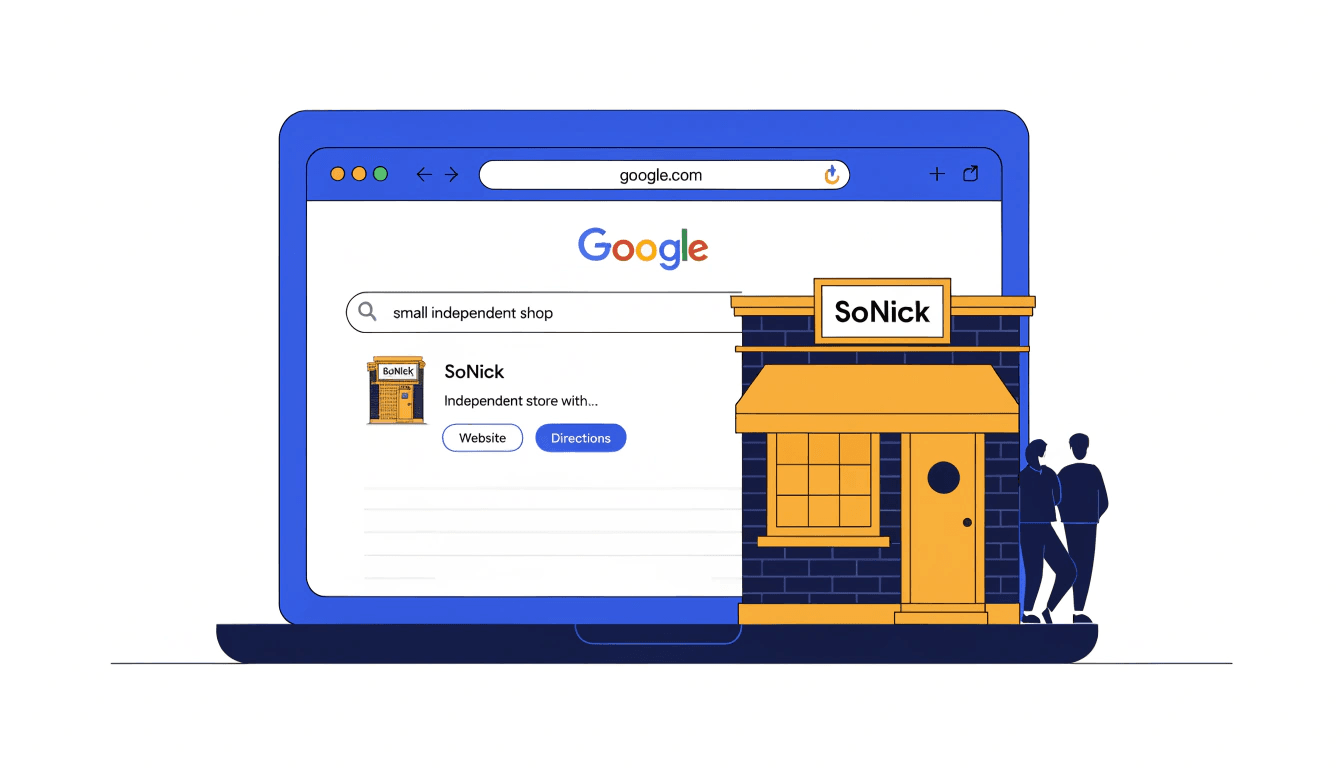
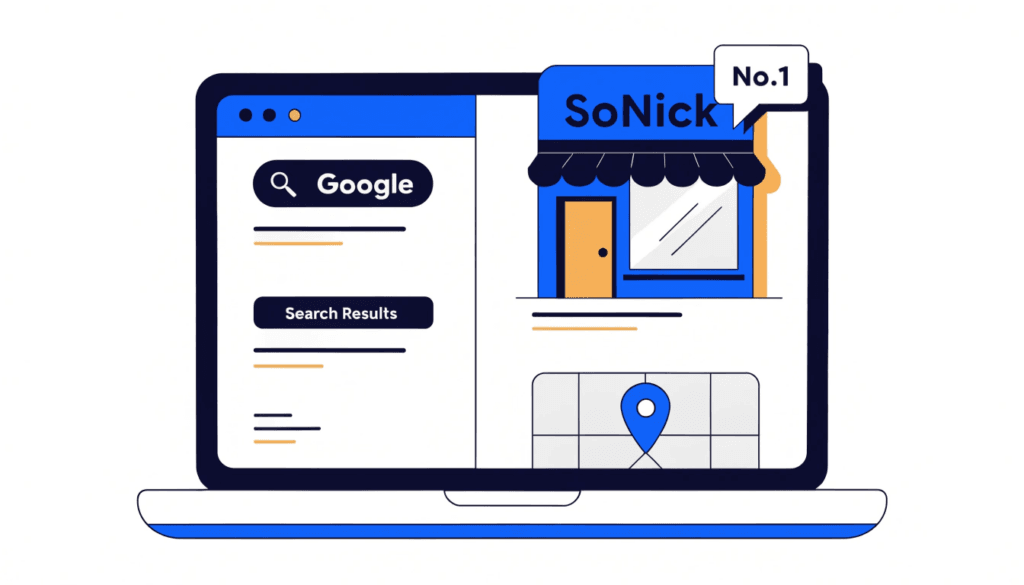
SEO (Search Engine Optimisation) is the process of making your website easier for search engines like Google to understand, so it ranks higher when people search for things related to your business.
That could be someone in your town searching for "emergency plumber near me", or a homeowner looking for "kitchen extension builders Hampshire". If your website is properly optimised, you appear. If it isn't, your competitors do.
SEO covers three core areas:
- Technical SEO. How your website is built — page speed, mobile-friendliness, crawlability, and site structure.
- On-page SEO. The content on your pages — the words, headings, images, and metadata that tell Google what each page is about.
- Off-page SEO. Your reputation across the web — backlinks from other sites, Google Business Profile, and online citations.
Done well, SEO doesn't just bring more traffic. It brings the right traffic: people actively looking for what you offer.
Why SEO Matters for Small Businesses in 2026
The way people find businesses has changed. According to BrightLocal, the vast majority of consumers use Google to research local businesses before making a decision. Whether someone needs a boiler serviced, a solicitor for a commercial lease, or a florist for a wedding, Google is the first stop.
If your business isn't visible there, you're invisible to a significant chunk of your potential customer base — regardless of how good your service actually is.
SEO gives small businesses a legitimate way to compete. You don't need a huge marketing budget to appear on page one of Google. You need a well-optimised website, the right content, and a consistent approach. That's exactly what professional SEO services are designed to deliver.
10 Benefits of SEO for Small Businesses
10 benefits of SEO for small businesses
10 benefits of SEO for small businesses
More organic website traffic
Ranks you in Google so visitors find you without paid ads
Improved brand visibility
Repeated search appearances build familiarity and trust
Better quality leads
Search intent means visitors are already looking for what you offer
Cost-effective over time
Unlike PPC, organic rankings don't charge per click
Targeted local traffic
Local SEO puts you in front of customers in your area
Long-term, compounding results
Each improvement stacks — authority and rankings grow over time
Increased credibility and trust
Page one rankings signal authority to prospective customers
Competitive advantage
Outrank local competitors who aren't investing in SEO
Mobile optimisation
60%+ of searches are mobile — SEO forces your site to keep up
Measurable, trackable results
Track traffic, rankings, and conversions with real data
1. More Organic Website Traffic
The most direct benefit of SEO is straightforward: more people find your website through search engines without you paying for each click.
Organic search traffic is particularly valuable because it compounds. Once a page ranks well, it continues to bring in visitors month after month. Unlike Google Ads — where traffic stops the moment your budget runs out — SEO builds an asset.
The key is targeting the right keywords. For most small businesses, that means focusing on long-tail keywords — longer, more specific phrases that have clearer buying intent. "Emergency electrician south London" converts better than "electrician", even though it has lower search volume.
A good keyword strategy focuses on phrases your ideal customers are actually typing, not just the terms with the highest search volume. A tool like SE Ranking makes this genuinely accessible, even if you're doing your own SEO research — it shows search volume, keyword difficulty, and what your competitors are ranking for.
2. Improved Brand Visibility
Every time your website appears in search results, someone becomes a little more aware of your business — even if they don't click.
For local and regional businesses, this repeated exposure matters. If your business consistently appears when someone searches for services in your area, you become the familiar name. That familiarity builds trust before a potential customer has even visited your site.
This is one of the more underrated benefits of SEO. It isn't just about getting traffic to your website. It's about becoming the known quantity in your local market.
3. Better Quality Leads
Paid advertising can drive volume, but SEO tends to drive quality. Someone who finds your business by searching "oak kitchen fitters Surrey" is much further along in their decision-making than someone who saw a banner ad.
Search intent is the reason. When someone types a specific query into Google, they're telling you what they want. SEO aligns your website with those moments of intent, so the people arriving on your site are already looking for exactly what you offer.
Higher quality leads mean fewer wasted enquiries, better conversion rates, and more efficient use of your time.
4. Cost-Effectiveness Over Time
This is one of the most compelling arguments for SEO, particularly when compared to pay-per-click advertising.
With Google Ads, you pay for every click, and costs in competitive industries can be significant — often £5 to £30+ per click depending on your sector. Stop spending and the traffic disappears overnight.
SEO requires upfront investment in time and expertise, but once your site is ranking, organic traffic doesn't cost you per click. A well-ranked page can bring in leads for years. Over a 12 to 36-month period, the cost per lead from SEO typically becomes far lower than from paid channels alone.
That said, SEO and PPC work well together. Many of my clients see the best results from combining both — PPC for immediate visibility whilst SEO builds long-term authority. Have a look at our SEO and PPC packages if you want to explore that approach.
5. Targeted Local Traffic
For most small businesses, geography matters enormously. A plumber in Guildford doesn't need visitors from Edinburgh. A florist in Bristol wants customers within 20 miles.
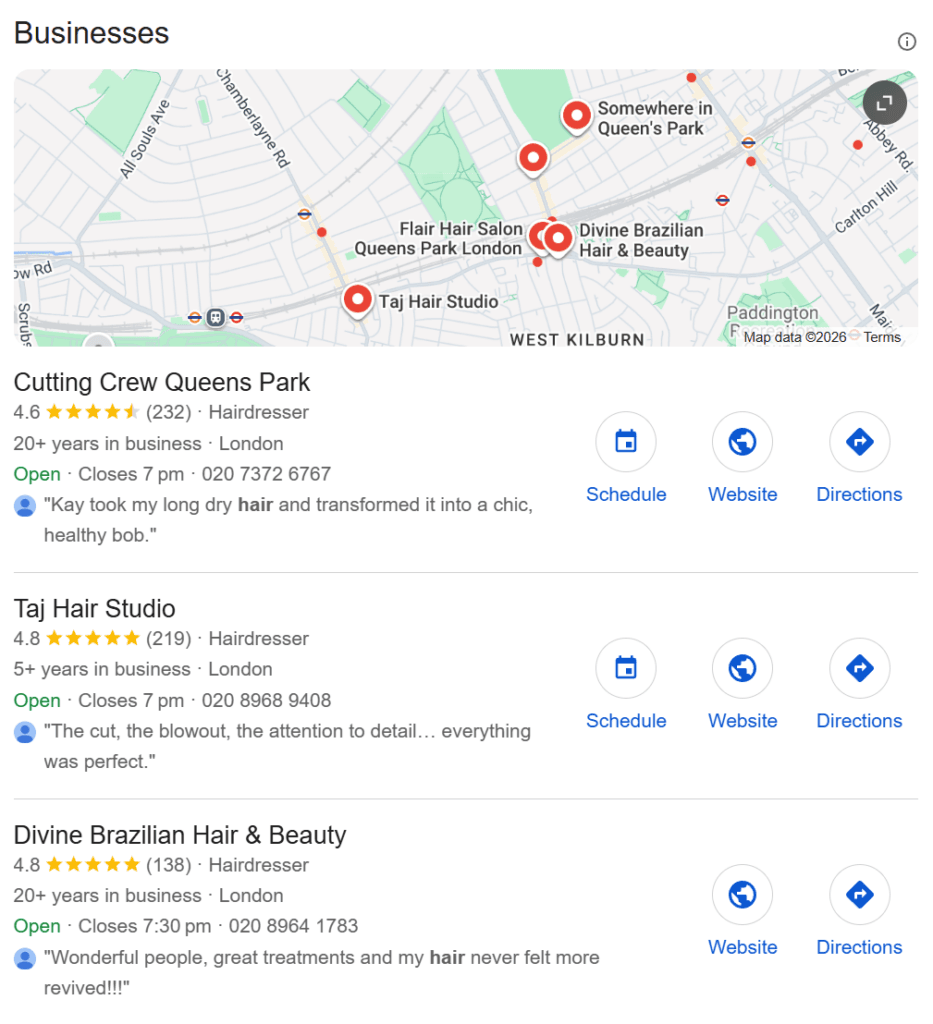
Local SEO is the branch of SEO that targets searches with location intent — "near me" queries, searches that include a town or city name, and Google Maps results. It involves optimising your Google Business Profile, building local citations (your business name and address listed consistently across the web), and creating location-specific content.
When done properly, local SEO means your business appears in the "map pack" — the three local results that appear above the organic listings on Google. That's valuable real estate, and it's accessible to small businesses regardless of how large or well-funded their competitors are.
6. Long-Term, Compounding Results
One of the frustrations small business owners have with SEO is that it takes time. They're right — it does. Most new or unoptimised sites take three to six months to see meaningful ranking improvements, sometimes longer in competitive niches.
But the flip side is that those results compound. Each piece of good content you publish, each technical issue you fix, each backlink you earn, adds to the overall authority of your site. Pages that rank continue to rank. Content that answers questions continues to bring in traffic.
SEO is a long-term investment, not a quick fix. But the return on that investment grows the longer you commit to it.
7. Increased Credibility and Trust
Here's something worth knowing about how people perceive search results: most users trust organic listings more than paid ads.
When your business appears organically on page one of Google, there's an implicit endorsement attached to it. Google has decided your site is relevant and authoritative. For prospective customers who don't know you yet, that matters. Being visible at the top of search results signals that you're an established, trustworthy business.
This credibility effect is even stronger when your site loads quickly, is easy to navigate, and contains genuinely helpful content. Good SEO and good user experience go hand in hand.
8. Competitive Advantage
In most local markets, SEO is still not done well by the majority of small businesses. Many rely on word of mouth and directory listings alone. That creates a genuine opportunity.
If you invest in SEO while your local competitors don't, you claim the top positions — and once you're there, you're very hard to displace. A well-established organic presence is one of the most durable competitive advantages a small business can build.
The flip side: if your competitors do invest in SEO and you don't, they will steadily take market share from you. The businesses that appear on page one get the enquiries. The businesses on page three generally don't.
9. Mobile Optimisation
More than 60% of Google searches now happen on mobile devices. Google has used mobile-first indexing since 2019 — meaning it primarily uses the mobile version of your site to determine rankings.
If your website isn't optimised for mobile, it's likely costing you rankings and customers. This means responsive design (the site adapts to different screen sizes), fast loading times on mobile connections, and tappable buttons and menus.
The good news is that optimising your site for mobile is both a technical SEO task and a genuine improvement to the experience for every visitor. It benefits your rankings and your conversion rate at the same time.
A fast, mobile-friendly website is table stakes in 2026. If you're not sure how your site performs, run a free SEO audit to find out where you stand.
10. Measurable, Trackable Results
One of the advantages SEO has over traditional marketing (local newspaper ads, flyers, sponsorships) is that everything is measurable.
With Google Search Console and Google Analytics 4, you can see exactly which keywords are driving traffic, which pages are performing well, which locations your visitors are coming from, and which pages are converting visitors into enquiries.
That data lets you make informed decisions. You can see what's working and do more of it. You can identify pages that are almost ranking and give them a small push. You can spot technical issues that are holding the whole site back.
Good SEO isn't just about getting traffic. It's about understanding your audience well enough to continuously improve your online presence.
FAQs
How quickly does SEO work? Most small business SEO campaigns take three to six months to produce meaningful results, and the strongest results typically come at the 12-month mark and beyond. Competitive niches and new websites take longer. The important thing is to start and stay consistent.
How much does SEO cost for a small business? It varies considerably depending on whether you do it yourself, use freelancers, or work with an agency. At SoNick Marketing, our SEO Foundation service starts from £449+VAT per month, which covers a full foundation audit, on-page optimisation, content, and monthly reporting.
Can I do SEO myself? Yes, to a degree. For very local or niche businesses with low competition, a well-structured website and some consistent content can go a long way. Tools like SE Ranking make keyword research and rank tracking accessible without specialist knowledge. That said, most business owners find their time is better spent running their business, and the technical and strategic side of SEO rewards experience.
Is SEO worth it for a small business? In my experience, yes — but only with realistic expectations. SEO is not an overnight fix. It's a medium-to-long-term strategy that, done consistently, typically delivers a better return on investment than any other marketing channel over a three-year horizon.
Conclusion
SEO isn't a luxury reserved for big companies with large marketing budgets. It's one of the most practical tools available to small business owners who want to grow their online presence, generate more leads, and build something that lasts.
The businesses I see thriving online are the ones that started their SEO foundations early, kept at it consistently, and treated it as a long-term asset rather than a short-term campaign.
If you'd like to see how your site is performing right now, run a free SEO audit — it takes under a minute and gives you a clear starting point.
Or, if you're ready to talk through what an SEO strategy could look like for your business, get in touch and let's work it out together.