In July 2026, Google updated its official guidance on how to appear in its AI search features. The key line is hard to misread: "optimizing for generative AI search is optimizing for the search experience, and thus still SEO."
This article is part of my small business guide to SEO.
That has not stopped a wave of agencies selling "GEO" (generative engine optimisation), "AEO" (answer engine optimisation) and "AI SEO" as brand new services, often at the same monthly price as SEO and on top of it. If you run a small business, you have probably had the emails.
So is GEO different from SEO? I have looked at what Google says, what the independent research shows, and what happened when I tested ChatGPT's local recommendations myself. The honest answer is that a small number of things have shifted in emphasis, but they are all things good SEO already covers. Here is the full picture.
What GEO, AEO and AI SEO mean
These terms all describe roughly the same idea:
- GEO (generative engine optimisation). Getting your business mentioned or cited in answers written by AI tools such as ChatGPT, Gemini, Perplexity and Google's AI Overviews.
- AEO (answer engine optimisation). An older term for appearing in direct answers, originally featured snippets and voice assistants, now used for AI answers too.
- AI SEO or LLM SEO. The same thing again, named after large language models (LLMs).
Google's own Danny Sullivan summed up the naming problem at WordCamp US in 2025: "Good SEO is good GEO, or AEO, AIO, LLM SEO, or LMNOPO."
The names are new. The question is whether the work is.
How AI search tools actually find your business
To judge whether GEO is a separate discipline, it helps to know what AI tools do when someone asks them a question about a product or service.
- They usually run a search. When a question needs current or local information, tools like ChatGPT and Google's AI Mode search the web first. They typically break the question into several smaller searches (often called "fan-out" queries) rather than searching for the exact words the person typed.
- They read the results and pick sources. The tool selects pages, listings and reviews it considers relevant and trustworthy, then writes an answer based on them.
- Sometimes they answer from memory. If no search is triggered, the tool answers from what it learnt during training, which reflects how widely and consistently your business is mentioned across the web.
In other words, AI search is mostly search results rewritten into an answer. The inputs are the same things SEO has always worked on: your website, your listings, your reviews and your reputation across the web.
What Google says
Google's guide to optimising for its generative AI features (last updated 10 July 2026) directly addresses the things GEO services often sell:
- On special files and markup: "You don't need to create new machine readable files, AI text files, markup, or Markdown to appear in Google Search."
- On splitting content up: "There's no requirement to break your content into tiny pieces for AI to better understand it."
- On writing style: "You don't need to write in a specific way just for generative AI search."
Google is one company and has its own interests, so its word should not be the end of the argument. But when the company that runs AI Overviews, AI Mode and the largest source of web traffic there is says its AI features run on SEO fundamentals, anyone selling a separate discipline needs strong evidence. I cover the specific claims in more detail in llms.txt and the other AI SEO myths.
What I found when I tested ChatGPT
Because most of my clients are local businesses, I wanted to see what ChatGPT does for local searches specifically. I ran 10 searches across Surrey and Hampshire (plumbers, electricians, roofers, builders, locksmiths, accountants and more) through ChatGPT three times each and compared the results with Google.
The headline results from my ChatGPT local business study:
- 85% of the businesses in Google's map results were also recommended by ChatGPT.
- 66 of 67 star ratings and review counts shown in ChatGPT matched Google's exactly.
- 9 of 10 searches had a directory, trade body or review site cited as a source, with Checkatrade cited for 8.
- Only 40% of recommended businesses appeared in all three runs of the same search.
For a local business, the route into ChatGPT's recommendations looked exactly like the route into Google's map results: a strong Google Business Profile, good reviews and accurate directory listings.
Where AI search really is different
I do not think "nothing has changed" is an honest position, and small business owners deserve better than a sales pitch in either direction. These are the areas where the evidence shows a real shift in emphasis.
Ranking first on Google is not a guarantee
For broad, non-local questions, AI tools cite plenty of pages that do not rank in Google's top 10. Ahrefs' March 2026 analysis found that 38% of Google AI Overview citations came from pages in Google's top 10 results, down from an earlier figure of 76% once every citation was counted rather than just the most visible ones. A March 2026 study by Grow and Convert found only around 40% of ChatGPT's cited sources appeared anywhere in the first 10 pages of Google or Bing for the searches ChatGPT ran.
Part of that gap is because AI tools search for different phrasings than the person typed, so the "right" ranking to measure is harder to pin down. Part of it is because some cited pages come from caching or training data. And the same Grow and Convert study found 10 to 14% of citations pointed at pages that did not exist at all.
Mentions of your brand matter more
Ahrefs studied 75,000 brands and found that the number of times a brand was mentioned across the web correlated far more strongly with appearing in AI Overviews (0.664) than the number of backlinks it had (0.218).
That does not mean links are dead. It means being talked about in the right places (directories, trade bodies, local press, review sites, supplier pages) counts, whether or not those mentions include a link. Local SEO has always included this work under the name "citations".
Bing matters a little more than it used to
ChatGPT has historically drawn heavily on Bing's index, so a site that Bing cannot crawl properly is at a disadvantage. In my local test, ChatGPT's business data matched Google rather than Bing, but it is still worth making sure Bing has indexed your site. That is a 15-minute job in Bing Webmaster Tools, not a monthly retainer, and I set it up for my SEO clients as standard.
Some sites accidentally block AI tools
Some security and hosting settings block AI crawlers by default. There are two types: crawlers that collect content to train AI models, and crawlers that fetch pages to answer a user's question. Blocking training crawlers is a reasonable choice. Blocking the answer crawlers (such as OpenAI's OAI-SearchBot) means ChatGPT cannot read your pages when someone asks about you. Checking this belongs in any proper technical SEO audit.
AI search factors and the SEO work behind them
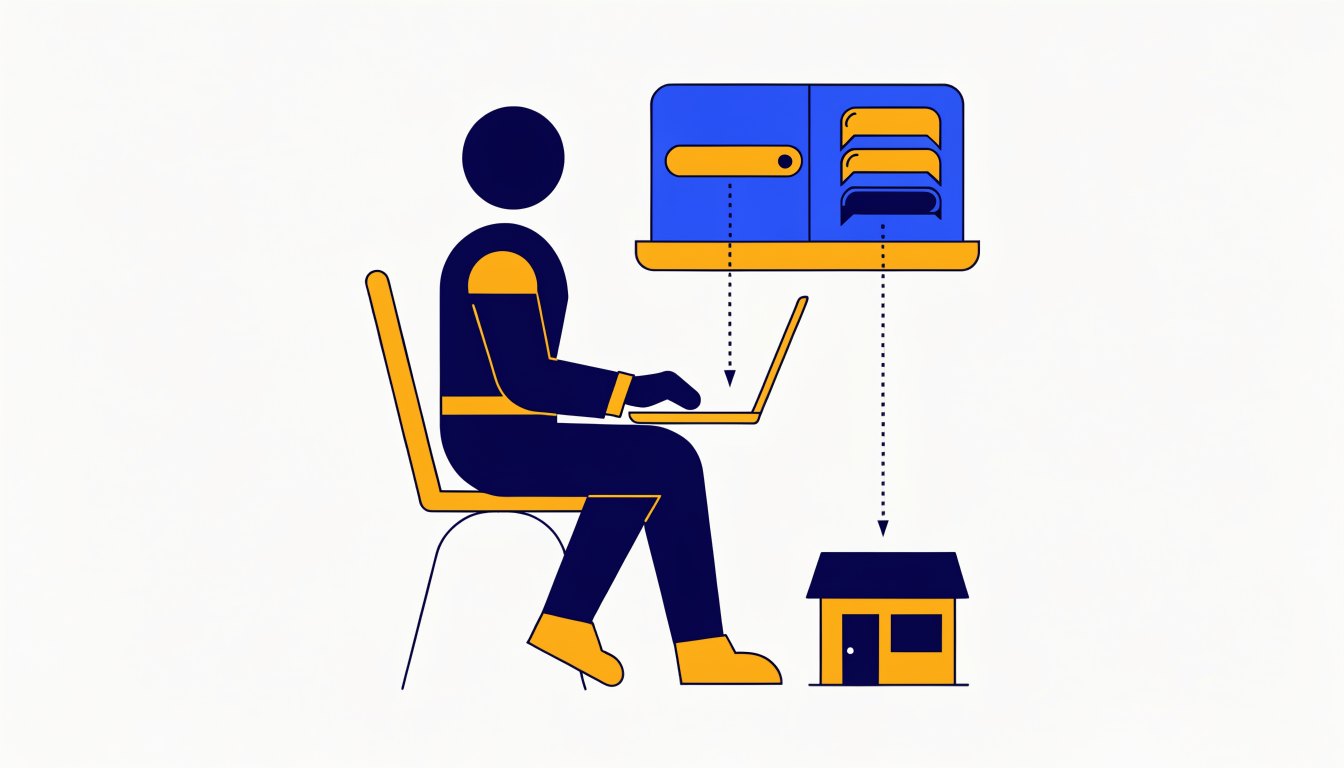
Every row on the left is something AI tools demonstrably use. Every row on the right is standard SEO work. There is no third column of AI-only tasks that SEO does not already include.
How much traffic does AI search actually send?
It is growing, but it is still small. Similarweb data for January 2026 put AI platforms at roughly 0.15 to 0.25% of all global web traffic, compared with around 48.5% from Google organic search.
The same report found AI-referred visitors converted at a much higher rate than organic visitors, which makes sense: someone who has already had a shortlist written for them arrives ready to act. So AI visibility is worth caring about. It is just not a reason to neglect the channel sending you almost all of your search traffic, and it is not a reason to pay twice.
So do you need GEO?
If you run a local or small business, here is how I would think about it.
You probably do not need a separate GEO service if:
- Your SEO provider already manages your Google Business Profile and reviews.
- They build and clean up your directory listings and trade body profiles.
- They run technical SEO checks, including making sure search and AI crawlers can reach your site.
- Your website clearly explains what you do, where you do it and why customers choose you.
You should ask harder questions of your current provider if:
- Nobody is looking after your reviews or Google Business Profile.
- Your listings on Checkatrade, Yell, trade bodies or sector directories are out of date or missing.
- Your site has never had a technical audit.
That second list is not a GEO problem. It is an SEO problem, and fixing it improves your visibility in Google and AI tools at the same time. If you are comparing quotes, what a GEO add-on actually buys breaks down the usual deliverables, and what GEO agencies are really selling you covers the tactics to be wary of. My guide on how to choose an SEO agency applies just as much to anyone selling GEO.
If you are a tradesperson, how ChatGPT finds local tradespeople turns all of this into a practical checklist.
How to keep an eye on your visibility
You do not need an expensive AI visibility dashboard to see where you stand.
- Track your Google rankings and map positions. A rank tracker such as SE Ranking shows your positions for your key services and towns. In my test, ChatGPT's local recommendations closely followed Google's map results.
- Search for your own services in ChatGPT a few times. Use the same phrasing a customer would, and run it more than once, because the answers change. I can set up ChatGPT visibility tracking for my clients, and I report it as a trend over several months rather than a single score.
- Check your reviews and listings monthly. Your rating and review count showed up in ChatGPT exactly as they appear on Google.
- Watch for AI referrals in Google Analytics. Traffic from chatgpt.com and perplexity.ai shows up as referral traffic, so you can see whether it is actually sending enquiries.
Conclusion
GEO is not nothing, but it is not a new discipline either. AI search tools run searches, read listings, weigh up reviews and look at how your business is talked about across the web. Brand mentions and technical access matter a little more than they used to, and a Google ranking alone is no longer the whole story for broad questions. All of that is still SEO, and for local businesses my own testing found ChatGPT's recommendations followed Google's map results closely.
If someone is quoting you a separate monthly fee for GEO, ask them what exactly they will do that good SEO does not. Then compare the answer with what is already included in your SEO.
Every SoNick SEO package includes Google Business Profile management, technical SEO, Bing Webmaster Tools set-up and monthly reporting as standard. I can set up ChatGPT visibility tracking too, and my local SEO service covers the listings and reviews that AI tools draw on. If you would like to see where your site stands right now, run a free SEO audit. It takes under a minute.