If you run a plumbing business and you're wondering why your website isn't bringing in enquiries, the answer is almost always the same: you're not targeting the right keywords, or you're not targeting them in the right way.
This article is part of my small business guide to SEO and my guide to marketing for tradespeople.
Keywords are the foundation of SEO. They're what connect a homeowner typing "emergency plumber near me" into Google at 10pm with your business instead of your competitor's. Get them right, and your website works for you around the clock. Get them wrong, and you're invisible.
In this guide, I'll explain what plumbing keywords are, how to use them, which tools to use for research, and give you a full list of the best keywords for plumbers, broken down by category so you can pick the ones that match your services, with real UK search volumes for each one.
What Are Plumbing Keywords and Why Do They Matter?
A keyword is any word or phrase a potential customer types into a search engine when looking for a service. For plumbers, that might be something as simple as "plumber" or as specific as "emergency boiler repair Manchester."
Search engines like Google use these keywords to decide which websites to show, and in what order. If your website contains the right keywords in the right places, Google is far more likely to rank it when someone searches for those terms in your area.
The stakes are high. The vast majority of people searching for a local tradesperson will click one of the top few results and go no further. If you're not on page one, you're essentially invisible. That's why SEO for plumbers starts and ends with getting your keyword strategy right.
The Four Types of Plumbing Keyword
Not all plumbing keywords are equal. Understanding the different types helps you build a strategy that covers every stage of the customer journey.
Service keywords. These describe exactly what you do: "boiler repair," "drain cleaning," "bathroom installation." They're often the highest volume terms and the most competitive. Every plumber is targeting them, which is why local SEO (see below) is so important.
Local keywords. These combine a service with a location: "plumber in Leeds," "emergency plumber Birmingham," "boiler service Exeter." Local keywords have lower search volume than pure service terms, but they attract people in your area who are ready to book. These are the keywords that drive real enquiries.
Problem-solution keywords. Customers don't always know the technical term for what they need. They search for the problem: "why is my boiler losing pressure," "how to unblock a sink," "what causes a dripping tap." These are brilliant for blog content because you can answer the question and introduce your services naturally.
Long-tail keywords. Longer, more specific phrases: "emergency plumber for burst pipe London," "cost of replacing a boiler UK," "air source heat pump installation quote." They have lower search volumes but much higher intent. Someone typing a long-tail query is usually close to making a decision.
A strong plumbing keyword strategy uses all four types together.
How to Use Plumbing Keywords on Your Website
Finding the right keywords is only half the job. Here's where and how to use them.
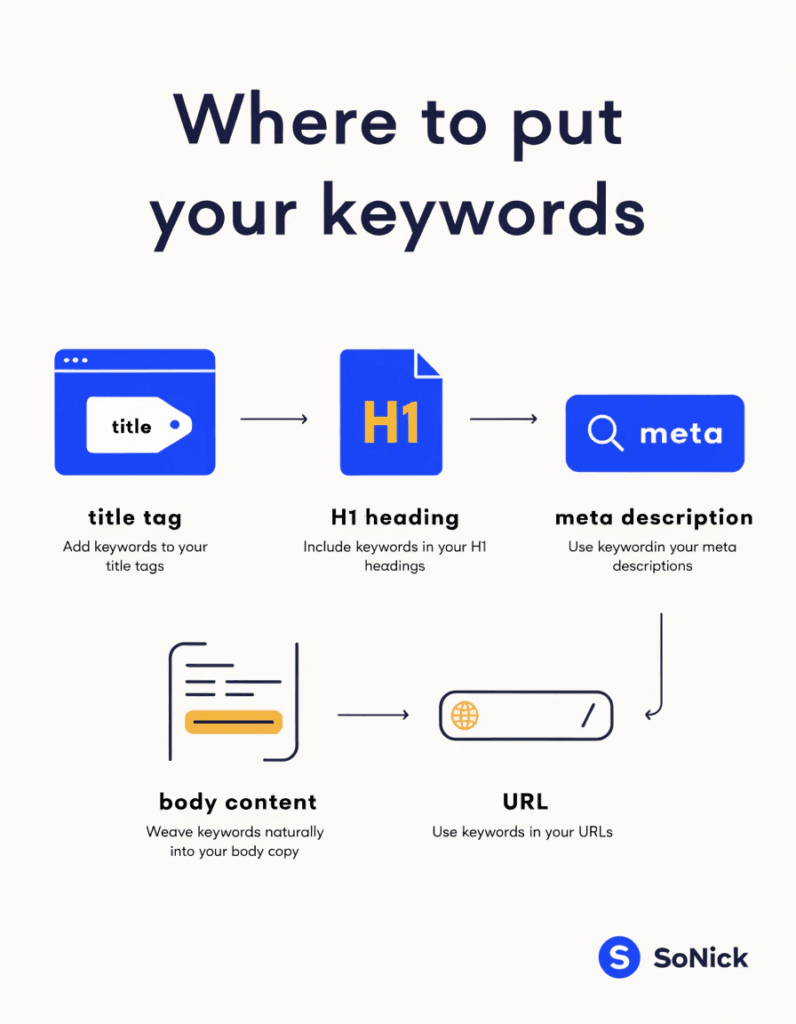
Page titles and H1 headings. Your most important keyword should appear in the title tag of each page and in the main heading. For a boiler servicing page, that means a title like "Boiler Servicing in [Your Town] | [Your Business Name]."
Meta descriptions. These don't directly affect rankings, but a well-written meta description with your keyword included will improve click-through rates from the search results page. It's worth checking this regularly against what's actually ranking above you, search behaviour and competitor titles both shift over time.
Page content. Use your target keyword and related terms naturally throughout the body copy of each page. Don't stuff them in, write for the reader first. Google is sophisticated enough to understand context, so related terms like "gas engineer," "central heating," and "boiler repair" all support a page targeting "boiler service."
URLs. Keep your page URLs clean and keyword-rich: yoursite.co.uk/boiler-servicing-manchester/ is better than yoursite.co.uk/page?id=47.
Blog posts. This is where problem-solution and long-tail keywords do their best work. A post answering "how much does a new boiler cost in the UK?" can rank for dozens of related terms and drive warm traffic to your services. Read our guide on SEO for plumbers for a full breakdown of how to structure your content strategy.
The Best Tools for Finding Plumbing Keywords
You don't need to guess which keywords to target, there are tools designed to show you exactly what people are searching for and how competitive each term is.
Google Keyword Planner. Free to use with a Google account, this is the logical starting point. Enter a service or a competitor's website and it will return related keywords along with search volume estimates. The data is broad, but it's reliable and it costs nothing.
Google Search Console. If your website is already live, Search Console shows you which keywords it's already ranking for, including ones you might not have been deliberately targeting. It's free and invaluable, and it's often where you'll spot a page that's almost ranking on page one but losing clicks to a weak title or meta description.
Google Trends. Useful for understanding seasonal patterns. "Boiler repair" spikes in autumn and winter, for example, which should inform when you publish related content and ramp up paid spend.
SE Ranking. My preferred tool for proper keyword research. SE Ranking gives you accurate search volume, keyword difficulty scores, competitor keyword gap analysis, and rank tracking, all in one platform. It's significantly more affordable than alternatives like Ahrefs or SEMrush, which makes it a sensible choice for a small plumbing business doing its own SEO.
Best Plumbing Keywords by Category
Below is a comprehensive keyword list for plumbing businesses, broken down by service type. Search volumes are UK monthly estimates, your local volumes will be lower, but the relative demand between terms holds true.
You can also download the full plumbing keywords spreadsheet for the complete list to use in your own research.
General Plumber Keywords
| Keyword | Approx. Monthly UK Search Volume |
|---|---|
| Plumber | 74,000 |
| Plumber near me | 60,500 |
| Emergency plumber | 12,100 |
| Plumbing services | 4,400 |
| Local plumber | 3,600 |
| Leak detection | 3,200 |
| Blocked sink | 1,300 |
| Plumbing company | 1,300 |
| 24 hour plumber | 60 |
| Shower repair | 480 |
| Tap repair | 320 |
| Pipe repair | 480 |
| Plumbing contractors | 260 |
| Water softener installer | 10 |
| Tap installation | 110 |
| Sump pump installation | 390 |
| Toilet installation | 540 |
| Toilet replacement | 200 |
Bathroom Installer Keywords
| Keyword | Approx. Monthly UK Search Volume |
|---|---|
| Bathroom renovation | 5,700 |
| Bathroom fitter | 3,200 |
| Shower installation | 1,300 |
| Bathroom refurbishment | 880 |
| Bathroom installer | 60 |
| Wet room installation | 10 |
Heating Engineer Keywords
| Keyword | Approx. Monthly UK Search Volume |
|---|---|
| Gas safety certificate | 12,100 |
| Boiler repair | 5,700 |
| Boiler servicing | 2,400 |
| Heating engineer | 3,600 |
| Emergency boiler repair | 1,300 |
| Gas safety certificate landlord | 540 |
| Landlord gas safety certificate | 540 |
| Air source heat pump installation | 140 |
| Radiator installation | 200 |
| Central heating engineer | 270 |
| Central heating repair | 480 |
| Water heater repair | 540 |
| Water heater servicing | 170 |
| Air source heat pump servicing | 20 |
| Renewable heating | 260 |
| Heating installation | 320 |
| Water heater installation | 390 |
| Gas pipe installation | 170 |
| Heat pump repair | 480 |
| Underfloor heating installation | 50 |
If you're a gas or heating engineer specifically rather than a general plumber, it's worth knowing that searches like "SEO for gas engineers" and "SEO for heating engineers" happen every month too, business owners in your trade looking for exactly this kind of guidance. The keyword strategy doesn't change much from general plumbing SEO, the same four keyword types and the same category tables above apply, but your site content and page titles should say "gas engineer" or "heating engineer" explicitly where that's genuinely how you describe your business, rather than defaulting to the broader "plumber" term throughout.
Commercial and Industrial Keywords
| Keyword | Approx. Monthly UK Search Volume |
|---|---|
| Commercial plumbing | 410 |
| Commercial gas engineers | 320 |
| Commercial boiler installation | 390 |
| Commercial boiler repairs | 320 |
| Commercial boiler servicing | 10 |
| Commercial boiler services | 10 |
| Commercial heating installation | 140 |
Drainage Contractor Keywords
| Keyword | Approx. Monthly UK Search Volume |
|---|---|
| Drain cleaning | 10,800 |
| Blocked drains | 5,400 |
| Drain unblocking | 5,400 |
| Drain repair | 740 |
| CCTV drain survey | 590 |
| Drain installation | 160 |
| Septic tank installation | 120 |
| Septic tank repair | 320 |
Local Plumbing Keywords, How to Build Your Own List
The tables above show national search volumes, but as a local plumber, you're not competing nationally. You're competing in your town or city.
Local keywords work by combining a service term with a location. The formula is simple:
[Service] + [Location] = your local keyword
So "boiler repair" becomes "boiler repair Bristol." "Emergency plumber" becomes "emergency plumber Sheffield." "Drain cleaning" becomes "drain cleaning Nottingham."
You should create a dedicated service page for every major service you offer, optimised for your primary location. If you cover multiple towns or cities, consider creating separate location pages for each one. This is one of the most effective things a plumber can do for local SEO, and it's something I cover in detail in the complete guide to digital marketing for plumbers.
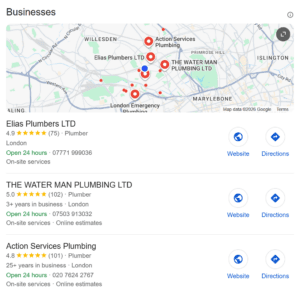
Don't forget your Google Business Profile either. The categories, services, and description you set there all influence whether you appear in the Google Maps pack, which is often the most prominent result for local plumbing searches.
Long-Tail Plumbing Keywords Worth Targeting
Long-tail keywords are where blogs and FAQs do their best work. These are lower volume, but the people searching them are usually at the "ready to hire" stage, or they're homeowners with a specific problem who'll remember you helped them.
Here are some strong long-tail plumbing keywords to build content around:
| Long-tail keyword | Why it works |
|---|---|
| How much does a new boiler cost UK | High intent, drives quote requests |
| Emergency plumber [city] no call-out charge | Very high buying intent |
| How to unblock a sink without a plumber | Problem-solution, builds trust |
| Best combi boiler for a 3 bedroom house | Research phase, high conversion potential |
| How long does boiler installation take | Pre-purchase question |
| Signs you need to replace your boiler | Awareness stage, great for blogs |
| How to get a gas safety certificate UK | Landlord audience, recurring need |
| Plumber for new bathroom cost UK | Transactional intent |
| Why is my boiler losing pressure | Problem-solution, drives calls |
| What is a power flush and do I need one | Educational, upsell opportunity |
The key is to write genuinely helpful content around these terms. A blog post titled "Why Is My Boiler Losing Pressure?" that actually explains the causes, the fixes, and when to call a professional will rank, and it'll convert readers into customers. You can see more examples of this approach in our guide to why keyword research is so important.
Conclusion
The right plumbing keywords won't just bring more traffic to your website, they'll bring the right traffic. People who are in your area, looking for exactly what you offer, and ready to pick up the phone.
Start by identifying the services you most want to win work for, combine them with your primary service areas, and build out your pages and blog content around those combinations. Use Google Keyword Planner to sense-check volumes, and consider SE Ranking if you want to go deeper with competitor analysis and rank tracking.
SEO is a long game, but targeted keyword work is one of the most cost-effective ways a plumbing business can grow its pipeline, and it compounds over time.
If you'd like help putting this into practice, get in touch and let's talk through what's possible for your business. Or, if you'd like to see where your site currently stands, run a free SEO audit, it takes under a minute.