This article is part of my small business marketing guide.
Most small business owners I speak to already know they should be doing content marketing. The hesitation is never really about whether it works — it's about time, resource, and not quite being sure where to start.
So let me make the case clearly: content marketing generates three times more leads than outbound marketing, at a fraction of the cost. Businesses that blog consistently see 55% more website traffic and 67% more leads than those that don't. And small businesses are actually 23% more likely than average to see a positive return from blog posts specifically.
In other words, this is one of the few marketing channels where the smaller player has a genuine structural advantage — if they're willing to use it.
Here's a full breakdown of what content marketing can do for your business, and how to get started.

What Is Content Marketing (and What It Isn't)?
Content marketing is a strategy built around creating and distributing genuinely useful content — blog posts, guides, videos, case studies, email newsletters — with the goal of attracting and building trust with the right audience over time.
That definition is worth dwelling on, because there's a distinction that often gets missed: content marketing is not the same thing as marketing with content.
Marketing with content means using a piece of content as part of a broader campaign — a promotional post, an ad, a product announcement. Content marketing means making the content itself the engine. The value is in answering real questions, addressing genuine pain points, and guiding prospective customers from problem-aware to ready-to-buy, without ever resorting to a hard sell.
Done well, it turns your website into a resource that people seek out — rather than a brochure they stumble across.
Is Content Marketing Worth It for Small Businesses?
The honest answer is that content marketing takes time to show results. It is not a quick-win channel. But the return it delivers over time is far more durable than most forms of paid advertising.
The average return on content marketing investment stands at around £6 for every £1 spent. Organic SEO-driven content generates leads at roughly £25 per lead, compared to around £140 per lead through paid search. And unlike PPC — where traffic stops the moment you stop paying — well-optimised content continues driving visitors for months or years after publication.
For small businesses that can't sustain large ad budgets indefinitely, that compounding effect is exactly what makes content such a powerful long-term investment.
The Key Benefits of Content Marketing for Small Businesses
It Improves Your Google Rankings
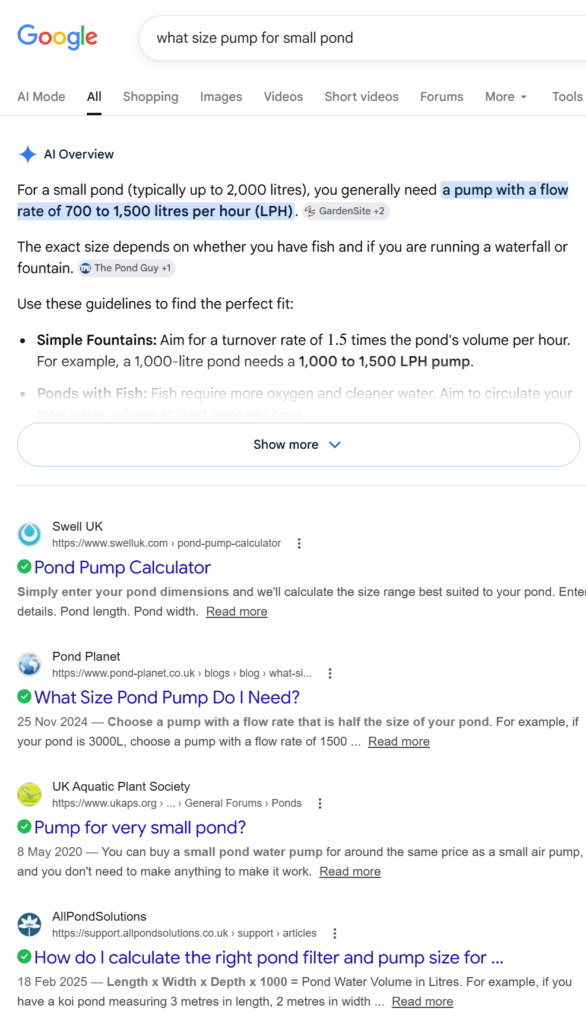
Google's job is to deliver the most useful, relevant result for any given search query. Websites that consistently publish high-quality, informative content give Google more to work with — and more reasons to rank that site over competitors who haven't bothered.
This matters enormously for small businesses trying to compete locally. If a potential customer in your area searches for advice on a problem your business solves, and your website has a thorough, well-written answer to that question, you have a real chance of appearing on page one. If your website only has a home page and a contact form, you don't.
You can read more about this in our guide to how to rank higher on Google, but the short version is this: content is one of the most controllable ranking signals available to any business.
If you'd like to understand where your site currently stands, run a free SEO audit — it takes under a minute and gives you a clear picture of what's working and what isn't.
It Positions You as a Credible Expert
For service businesses in particular — tradespeople, therapists, legal professionals, consultants — trust is often the deciding factor when a prospective client is choosing between you and a competitor.
Publishing genuinely useful content on your area of expertise demonstrates competence in a way that no amount of "we're the best" copy on a homepage ever can. It shows that you understand the problems your customers face, that you know how to solve them, and that you're confident enough in your knowledge to share it openly.
Over time, this builds a level of credibility that is very difficult for competitors to replicate quickly. It is an asset that grows with every post you publish.
It Generates Leads Without a Hard Sell
One of the things I find most valuable about content marketing is what it doesn't require: pressure, urgency, or constant promotion.
Educational content — a guide, a how-to article, a helpful explainer — attracts people who are already interested in what you offer. They find your content because they were searching for an answer. Your content provides that answer. And if your business is the one that helped them, you are naturally front of mind when they're ready to make a decision.
This is sometimes called "pull" marketing, as opposed to the "push" model of cold outreach and advertising. You're not chasing people — you're giving them a reason to come to you.
It Builds Brand Awareness on a Small Budget
One of the most persistent myths about content marketing is that it's expensive. In reality, it is one of the most cost-effective awareness channels available to a small business.
A well-written blog post costs time to produce (or a modest fee to outsource), but once it's live, it works for you indefinitely. It can be shared on social media, linked to from other websites, included in your email newsletter, and repurposed into shorter content for other platforms — all from a single piece of original writing.
Paid advertising delivers visibility for as long as you're paying for it. Content delivers visibility that compounds.
One Piece of Content Can Work in Multiple Places
This is one of the practical advantages that doesn't always get mentioned: content is highly reusable.
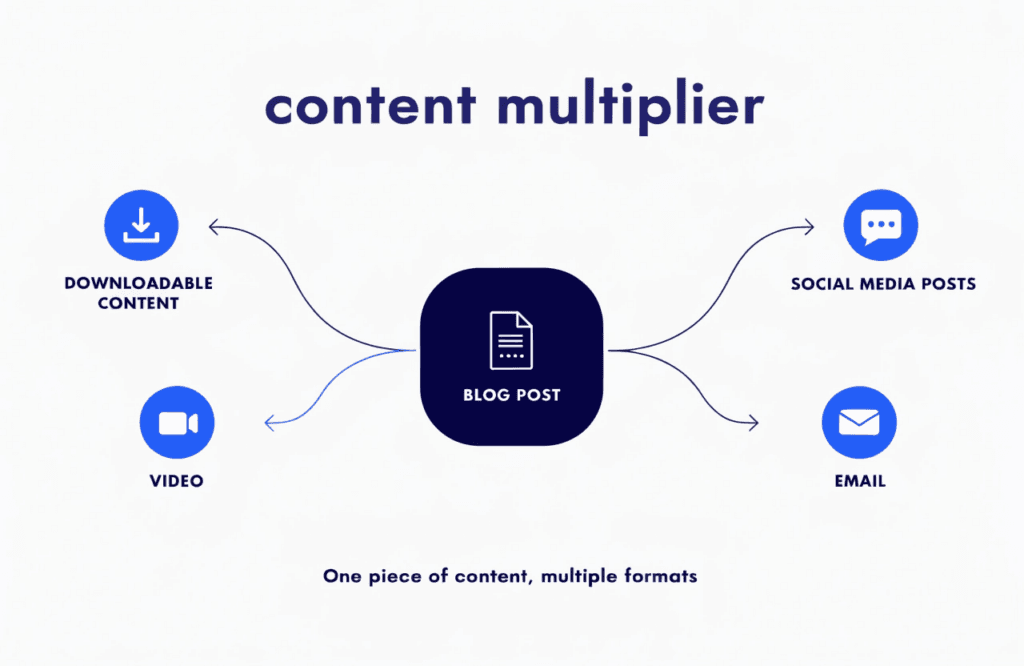
A single blog post can become:
- A series of social media posts drawing on the key points
- The subject of an email newsletter to your subscribers
- The basis of a short video or reel
- A resource linked to in future blog posts (building your internal link structure and improving SEO)
- A piece of downloadable content if expanded into a guide
This "content multiplier" effect means that the effort of producing one well-researched article yields far more than just a single URL on your website.
It Helps You Compete With Bigger Businesses
Larger businesses have bigger ad budgets. But they often move slowly, publish generic content at scale, and lack the specific local knowledge or niche expertise that a specialist small business can offer.
Content is one of the few areas where a motivated small business can genuinely outperform a larger competitor. A plumber who publishes a detailed, genuinely useful guide to common boiler problems in their local area can outrank a national brand that has published a brief, keyword-stuffed version of the same article.
Google rewards depth, relevance, and genuine helpfulness — none of which are exclusive to large organisations.
What Types of Content Should a Small Business Create?
The right content mix depends on your audience, your capacity, and your goals. But here's a practical overview of the most accessible formats:
| Content type | Best for | Effort level |
|---|---|---|
| Blog posts / articles | SEO, authority building, long-term traffic | Medium |
| Email newsletter | Nurturing existing contacts, repeat engagement | Low–Medium |
| Short-form video (Reels, TikTok, YouTube Shorts) | Awareness, social reach, personality | Medium–High |
| Case studies | Building trust, demonstrating results | Medium |
| FAQs and guides | Capturing specific search queries | Low–Medium |
| Social media posts | Staying visible, sharing content | Low |
For most small businesses starting out, I'd recommend focusing on blog posts and email first. They have the clearest SEO benefit, the lowest barrier to entry, and they complement each other naturally — your blog gives you something to send in your newsletter.
How Do You Get Started With Content Marketing?
The single biggest mistake I see is trying to do everything at once and burning out within a month. Here's a straightforward approach that actually works:
1. Audit what you already have. If your website has any existing blog posts or pages, review them. Are they optimised? Do they answer real questions? Are they targeting the right keywords? Understanding your starting point prevents you from duplicating effort.
2. Research the keywords your audience is actually using. Content that no one is searching for doesn't drive traffic. Use a tool like SE Ranking to identify the specific questions and phrases your potential customers are typing into Google, then build your content around those terms.
3. Plan a realistic content calendar. Consistency beats volume. One well-researched, genuinely useful article published monthly is worth far more than ten rushed posts that add nothing. Map out topics in advance and treat publishing dates like any other business commitment.
4. Measure what matters. Traffic, time on page, keyword rankings, and enquiries generated are all worth tracking. If you're not sure where to start, our SEO services include regular reporting so you can see exactly what your content is doing for your business.
5. Be patient — then be consistent. Content marketing typically takes three to six months before meaningful results start to appear. That timeline puts a lot of people off. But the businesses that persist through it build something that paid advertising cannot replicate: a growing, compounding source of traffic and leads that doesn't switch off the moment the budget runs out.
Final Thoughts
Content marketing is not a shortcut. But for small businesses willing to invest in it consistently, it is one of the most cost-effective and sustainable ways to build visibility, generate leads, and establish genuine authority in your market.
The businesses that are benefiting most right now started six months or a year ago. The second-best time to start is today.
If you'd like to take this further, get in touch and let's talk through what a content strategy could look like for your business.