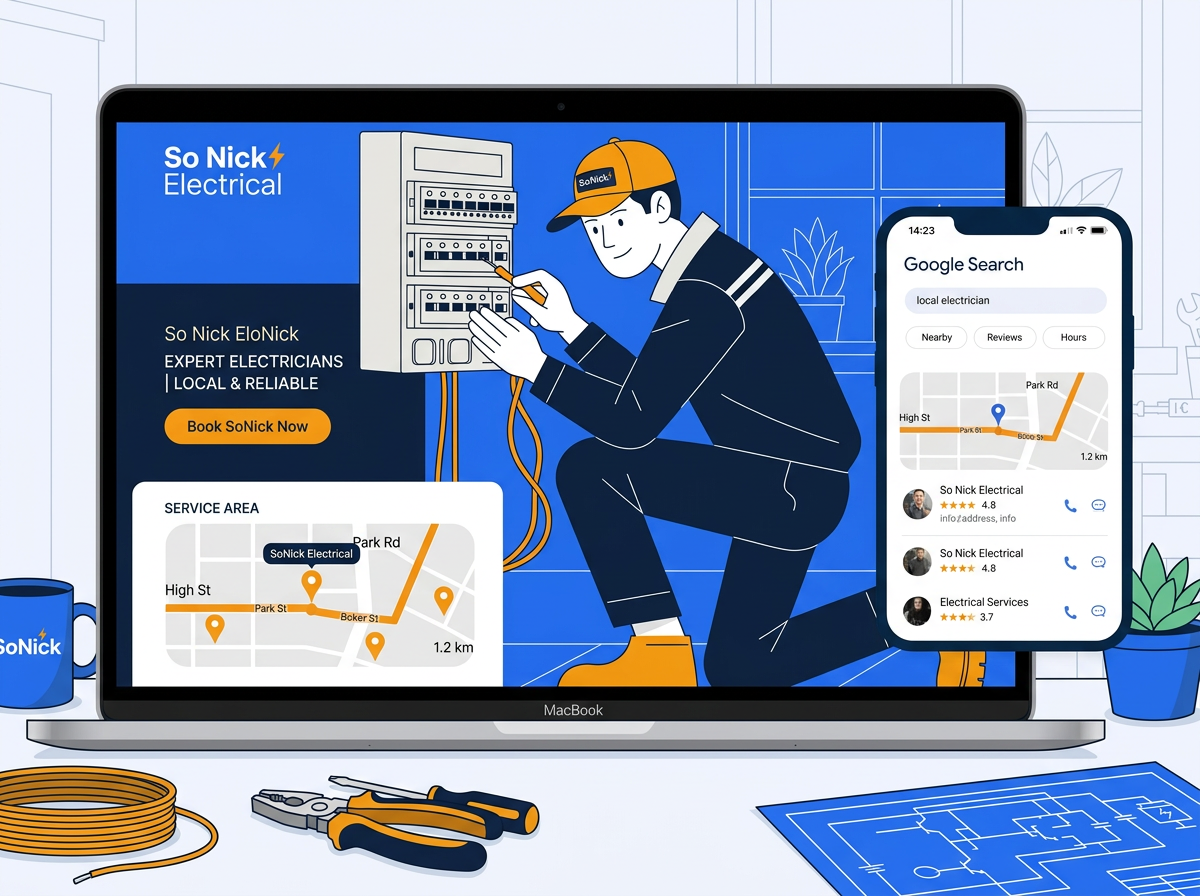
I've reviewed a lot of electrician websites over the years, and the pattern is remarkably consistent. Most look fine at a glance, a logo, a hero image, a phone number somewhere on the page, but they lose visitors within the first few seconds because the basics that actually drive enquiries are missing or buried. A slow load, a phone number that isn't tappable, no visible trust signals, and a visitor who arrived ready to book leaves and calls the next electrician on the list instead.
This article is part of my guide to marketing for tradespeople and my small business website guide.
Electrical problems carry a genuine element of fear, a tripped board, a burning smell, a fuse box that won't reset, so people call whoever looks safe, qualified and reachable first, not necessarily whoever's actually best. This guide covers what actually makes an electrician website convert on that basis, not just look presentable, along with the mistakes I see most often.
Why Electrician Websites Need to Convert Fast
Electrical enquiries split into two very different moods. Someone with no power in the house is anxious and in a hurry, they'll click the first result that looks trustworthy and call immediately. Someone planning a rewire or an EV charger installation is comparing two or three electricians and will spend longer on the site, checking pricing, reviews, and photos of past work before deciding.
A website built only for one of these visitors loses the other. Design for both: fast, obvious next steps for the urgent visitor, and enough detail and trust-building for the visitor who's comparing. This is the exact brief behind my web design service for trade businesses.
A Sticky Tap-to-Call Bar, Not Just a Number in the Header
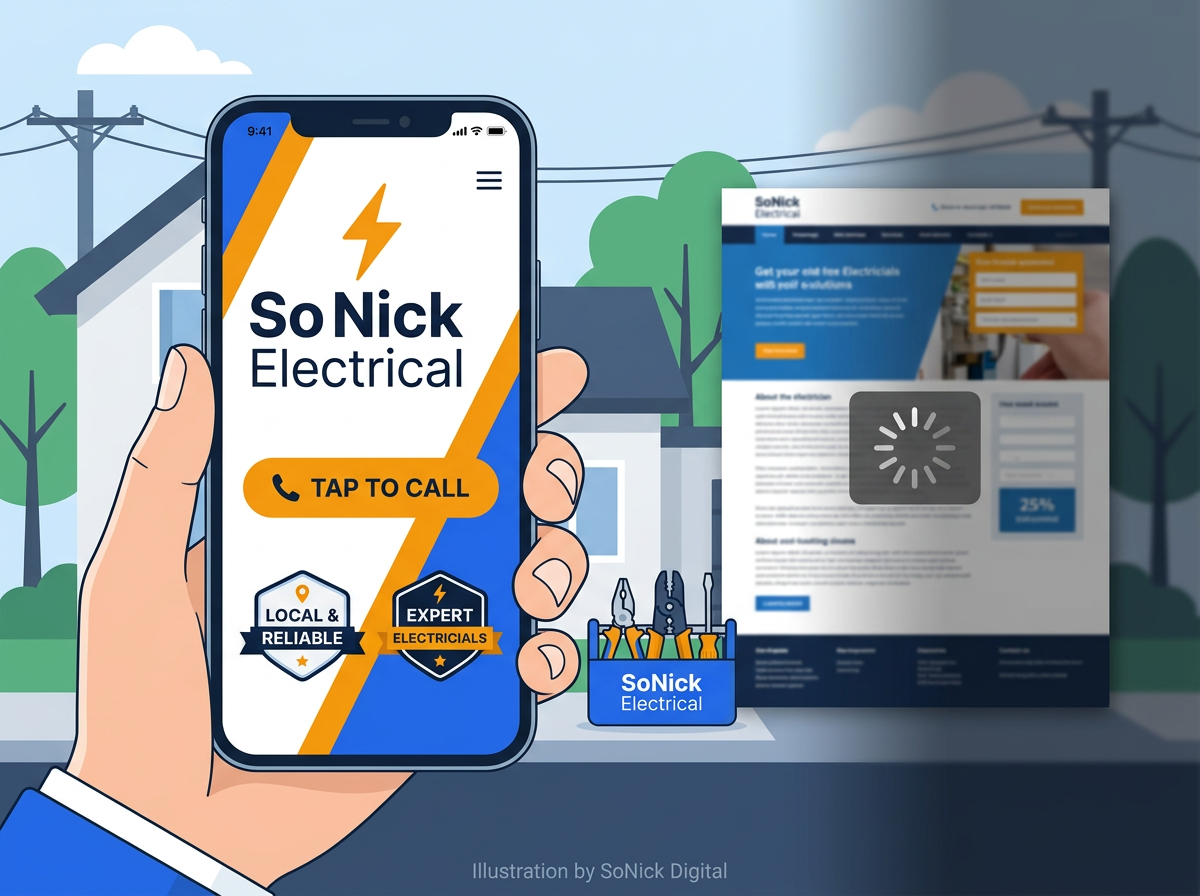
Most electrician sites put a phone number somewhere near the top and consider the job done. That's not quite enough for how these enquiries actually happen. A sticky tap-to-call bar, a bar that stays fixed on screen as the visitor scrolls, on every page, is what actually captures the anxious, one-handed searcher who's found you at 9pm with no power in the house. If they have to scroll back up to find your number, a meaningful number of them won't bother, they'll hit the back button and try the next result instead.
Trust Signals That Actually Matter for Electrical Work
Letting an electrician into your home is a genuine act of trust, more so than most trades, because the risk of getting it wrong (shocks, fire, a job that fails inspection) is frightening to most homeowners. Your website needs to answer the unspoken question, "is this person actually qualified", immediately, not after several clicks.
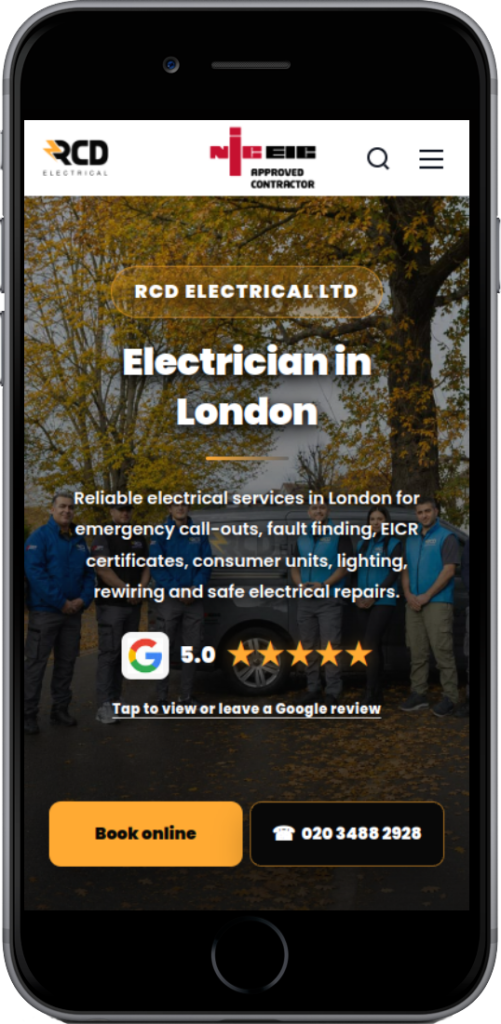
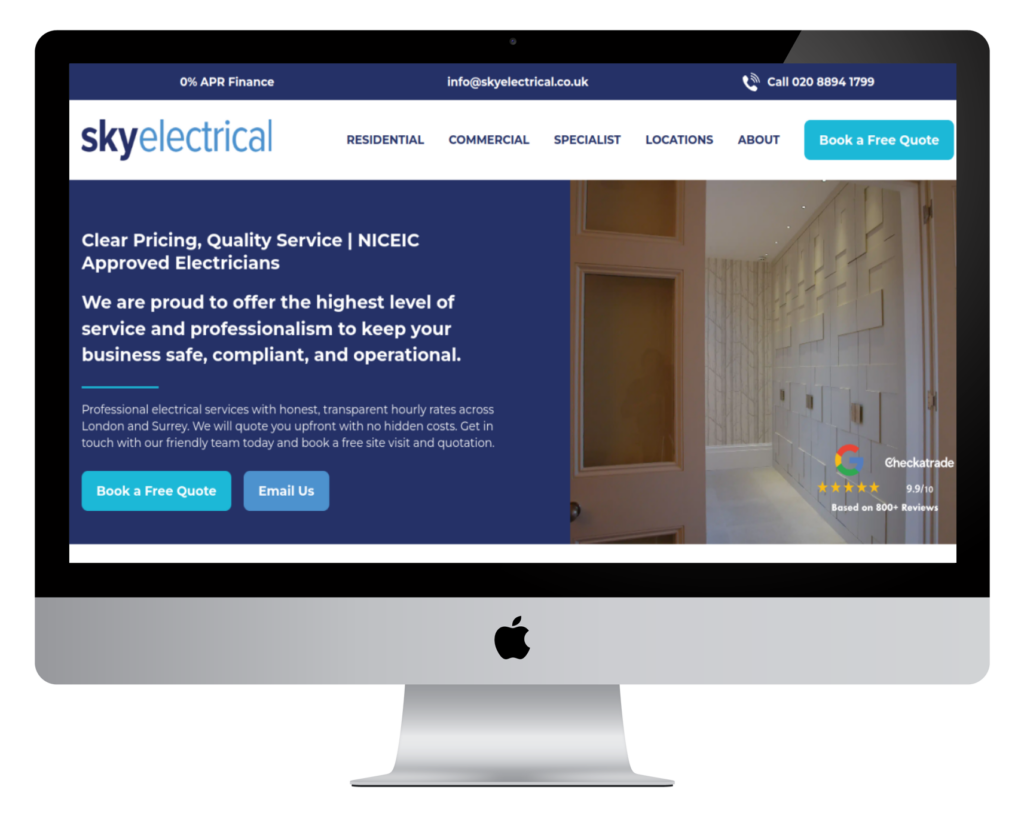
NICEIC, NAPIT or ELECSA registration and Part P compliance, shown clearly near the top of the page, not buried in a footer or an about page. These are the specific UK schemes homeowners have usually heard of, generic claims of "fully qualified" don't carry the same weight.
Public liability insurance and any guarantees offered.
Genuine reviews, ideally live-pulled from Google rather than a static testimonials page, shown on the pages that matter, your homepage and your core service pages, not isolated on a single testimonials page nobody visits.
Real photos of you, your van, and your team, not stock photography of a generic person in a hard hat.
What Every Electrician Website Needs
A clear list of services, each with its own page. Rewires, EV charger installation, consumer unit upgrades, fault finding, EICR testing, each deserves a dedicated page rather than being buried in a single paragraph on a generic services page. This helps visitors find exactly what they need quickly, and it helps the page rank for the specific service someone searched for. My guide to SEO for Electricians covers why this structure matters for rankings too, including the schema markup that helps Google and AI search tools understand each service page correctly.
A dedicated page for each area you cover, with a simple coverage map. If you serve several distinct towns, "do they cover my area" is one of the first questions a visitor has, and a generic "service areas" list buried in the footer doesn't answer it convincingly. A proper page per town, with genuinely specific content rather than a template with the name swapped, answers it and helps you rank for "electrician in [town]" searches too.
Genuine, specific pricing information, even as a range. Electricians are often reluctant to publish pricing, but hiding it entirely doesn't stop people wanting to know, it just sends them to a competitor who's more transparent. A rough bracket, "consumer unit upgrades typically start from £X," builds trust and pre-qualifies enquiries.
A simple enquiry form with photo upload, as well as a phone number. Not everyone wants to call, particularly for planned, non-urgent work. A short form asking for name, phone number, postcode, a brief job description, and an option to attach a photo removes friction and lets you price faster without an extra back-and-forth call.
Mistakes That Quietly Cost You Leads
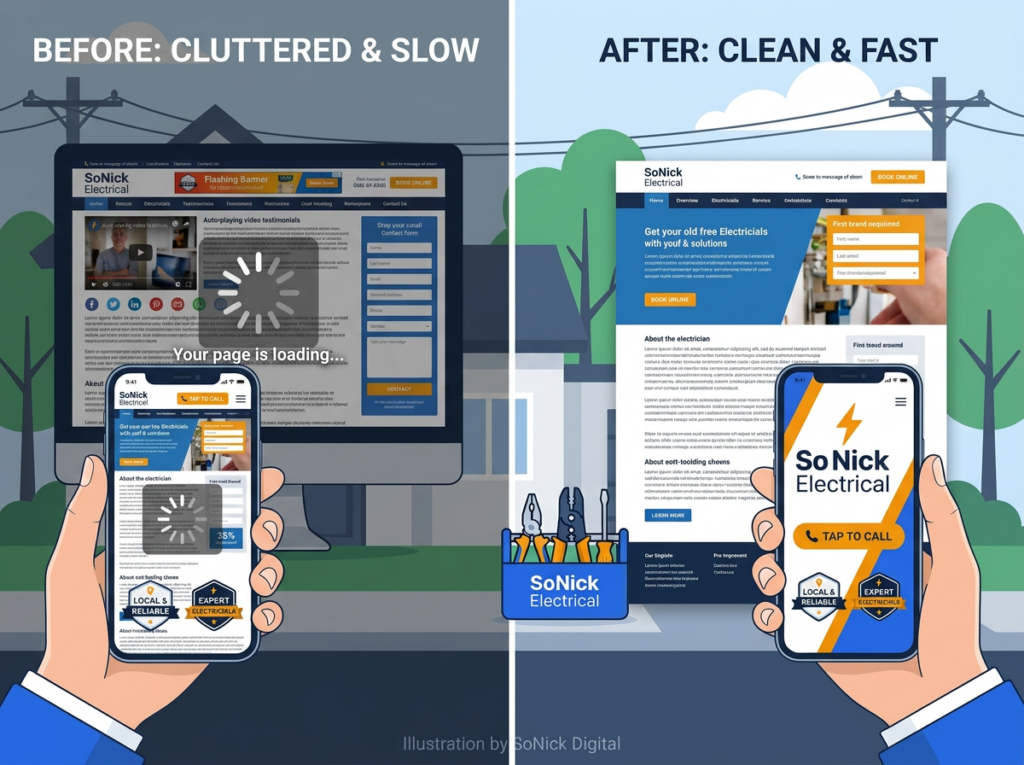
Slow load times. Conversion rates drop sharply as load time increases, and electrical enquiries in particular are often made under time pressure on a mobile connection, not office wifi. Compress images, avoid overloaded page builders, and test your actual load time on a phone on 4G.
One page trying to cover every service. Beyond the SEO cost, this makes it harder for a visitor to quickly confirm you do exactly what they need, which increases the chance they leave to check a competitor instead.
Hiding qualifications instead of leading with them. NICEIC and Part P registration are exactly what a nervous customer is looking for. Burying them in small print undersells your single strongest trust signal.
No visible service area or coverage map. If it isn't immediately obvious whether you cover someone's town, they won't spend time finding out.
Contact forms that ask for too much. Every extra field reduces completions. Name, phone number, postcode, and a brief job description is enough to qualify most enquiries, with an optional photo upload for pricing.
No way to know which pages actually generate calls. Without call tracking connected to your analytics, you're guessing which pages and traffic sources are actually producing enquiries rather than just visits.
Measuring Whether the Site Is Actually Working
A website is never really "finished". Once it's live, connect Google Analytics 4 to track form submissions, and use call tracking with dynamic number insertion so you can see which pages and which traffic sources are generating actual phone calls, not just visits. This matters more for a site redesign than most electricians expect, without it, you can't tell whether a new site is genuinely converting better or just looks better. Review this every few months, along with keeping certification details, pricing, and any safety or compliance information current, an out-of-date NICEIC badge or an old phone number quietly undermines the trust the rest of the site is built on.
What This Realistically Costs and How Long It Takes
For context when comparing quotes, a straightforward UK electrician website, five or so pages, mobile-first, with the trust signals and service structure above, typically runs from a few hundred pounds up to around £1,500 to £2,500 for a more built-out site with dedicated area pages and a quote form with photo upload. Larger, multi-service firms with several locations and more advanced tracking tend to sit higher than that. Most agencies can get a straightforward site live within two to three weeks, the main variable is usually how quickly you can supply your own photos, pricing, and certification details, not the build itself.
A Simple Structure That Works
For most electricians, a website built around this structure converts well without needing to be complicated:
- Homepage: clear statement of what you do and where, sticky tap-to-call bar, trust signals, and links to your core service pages.
- Individual service pages: one per core service, each with a description, rough pricing, relevant certification, and a call to action.
- Area pages: one per town or region you cover, with a simple coverage map.
- A reviews or testimonials page, or genuine reviews embedded throughout the site rather than isolated on one page.
- A simple about page: who you are, how long you've been trading, and your accreditations. This matters more than most electricians assume, people are inviting you into their home.
- A contact page with both a phone number and a short enquiry form with photo upload.
Frequently Asked Questions
Do I need a page for every town I cover, or can I list them on one page? A dedicated page per area performs better than a single list buried in the footer, both for visitors trying to confirm you cover them and for ranking in local search. It only works if each page has genuinely specific content though, not the same paragraph with the town name swapped.
Is a sticky tap-to-call bar really necessary, or is a phone number in the header enough? For urgent, anxious searches, no power, a burning smell, a header number that requires scrolling back to find loses a meaningful share of calls to whichever competitor makes it effortless. A bar fixed on screen throughout the page consistently converts better for this kind of enquiry.
Should I publish my pricing? At least a rough range, yes. Hiding it entirely doesn't stop people wanting to know, it just sends them to a competitor who's more upfront, and it pre-qualifies enquiries so you spend less time quoting jobs that were never a good fit.
Bringing It Together
A website doesn't need to be elaborate to convert well, it needs to load fast, make the next step obvious, and build enough trust quickly that a visitor feels comfortable picking up the phone or filling in a form, even mid-emergency. Get the fundamentals above right, and track whether the site is actually generating calls once it's live, and it will consistently outperform a more elaborate one that misses them.
For a wider look at how web design fits alongside SEO and paid ads for trade businesses, see my trades marketing page. If your current website isn't converting the way it should, get in touch and let's talk through what's holding it back.